LeetCode 365: Water and Jug Problem (Math / Number Theory)
English
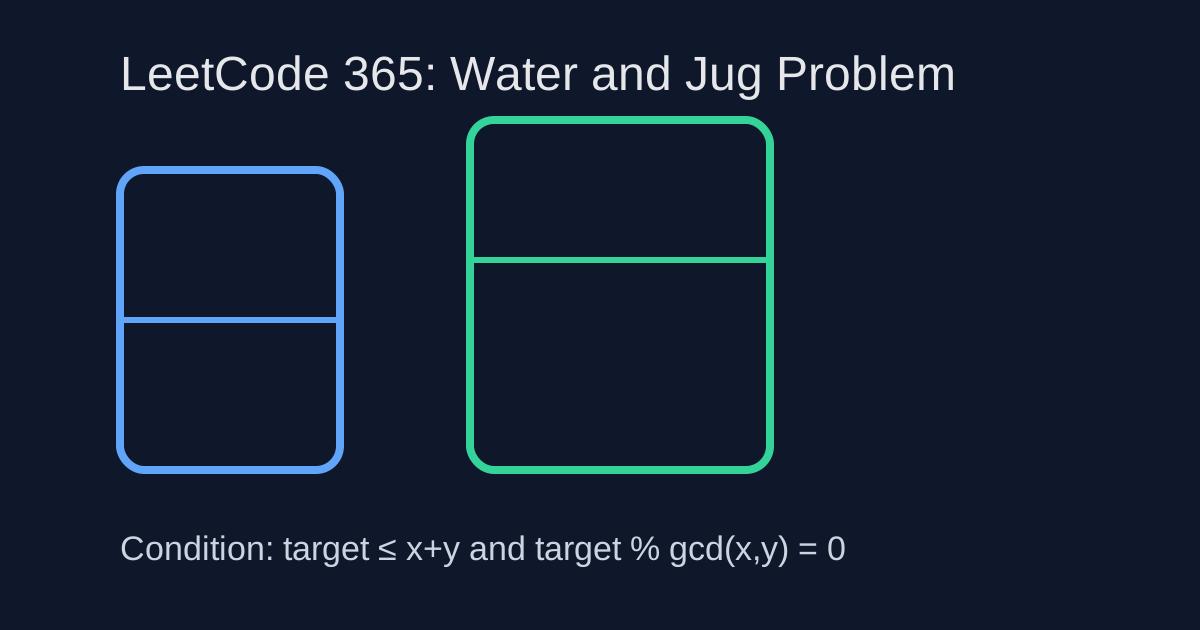
By Bézout's identity, measurable amounts are multiples of gcd(x,y). So target is possible iff target <= x+y and target % gcd(x,y) == 0.
class Solution {
    public boolean canMeasureWater(int x, int y, int target) {
        if (target == 0) return true;
        if (x + y < target) return false;
        return target % gcd(x, y) == 0;
    }
    private int gcd(int a, int b) {
        while (b != 0) {
            int t = a % b;
            a = b;
            b = t;
        }
        return a;
    }
}
func canMeasureWater(x int, y int, target int) bool {
if target == 0 { return true }
if x+y < target { return false }
return target%gcd(x,y) == 0
}
func gcd(a,b int) int {
for b != 0 { a,b = b,a%b }
return a
}class Solution {
public:
bool canMeasureWater(int x, int y, int target) {
if (target == 0) return true;
if (x + y < target) return false;
return target % std::gcd(x, y) == 0;
}
};class Solution:
def canMeasureWater(self, x: int, y: int, target: int) -> bool:
if target == 0:
return True
if x + y < target:
return False
from math import gcd
return target % gcd(x, y) == 0var canMeasureWater = function(x, y, target) {
if (target === 0) return true;
if (x + y < target) return false;
const gcd = (a, b) => b === 0 ? a : gcd(b, a % b);
return target % gcd(x, y) === 0;
};中文
根据裴蜀定理,可量出的水量一定是 gcd(x,y) 的倍数。因此只要 target <= x+y 且 target % gcd(x,y) == 0,就可以量出目标水量。
class Solution {
    public boolean canMeasureWater(int x, int y, int target) {
        if (target == 0) return true;
        if (x + y < target) return false;
        return target % gcd(x, y) == 0;
    }
    private int gcd(int a, int b) {
        while (b != 0) {
            int t = a % b;
            a = b;
            b = t;
        }
        return a;
    }
}
func canMeasureWater(x int, y int, target int) bool {
if target == 0 { return true }
if x+y < target { return false }
return target%gcd(x,y) == 0
}
func gcd(a,b int) int {
for b != 0 { a,b = b,a%b }
return a
}class Solution {
public:
bool canMeasureWater(int x, int y, int target) {
if (target == 0) return true;
if (x + y < target) return false;
return target % std::gcd(x, y) == 0;
}
};class Solution:
def canMeasureWater(self, x: int, y: int, target: int) -> bool:
if target == 0:
return True
if x + y < target:
return False
from math import gcd
return target % gcd(x, y) == 0var canMeasureWater = function(x, y, target) {
if (target === 0) return true;
if (x + y < target) return false;
const gcd = (a, b) => b === 0 ? a : gcd(b, a % b);
return target % gcd(x, y) === 0;
};