LeetCode 3211: Generate Binary Strings Without Adjacent Zeros (Backtracking)
LeetCode 3211DFSBacktrackingSource: https://leetcode.com/problems/generate-binary-strings-without-adjacent-zeros/
English
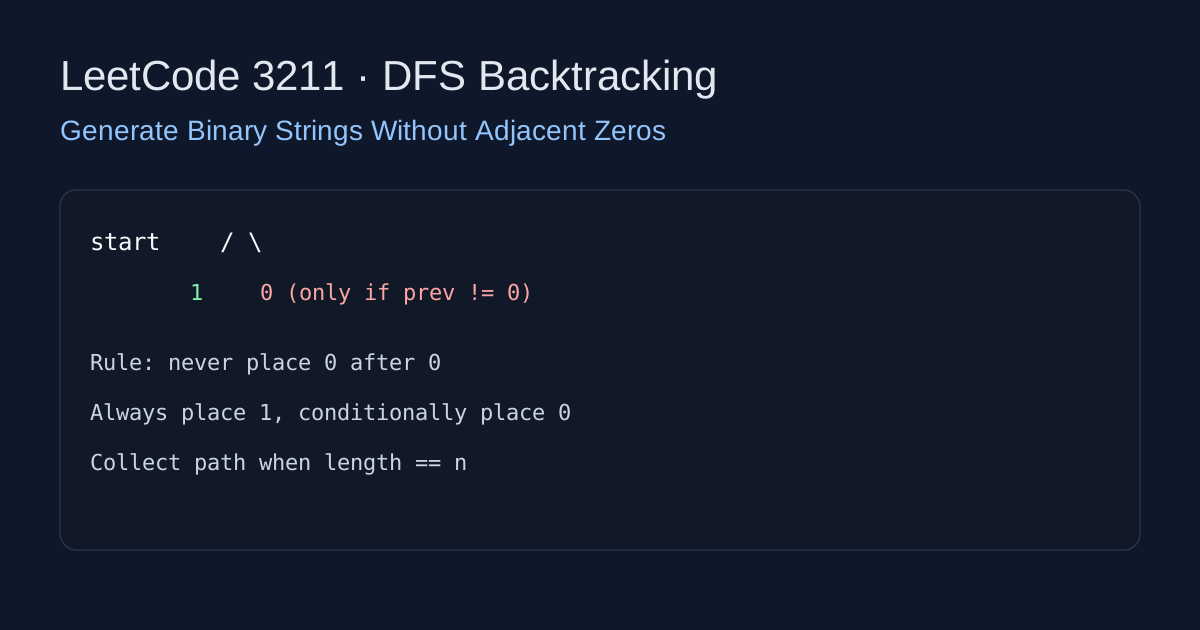
Build the string from left to right. We can always place 1. We place 0 only when the previous character is not 0. DFS/backtracking enumerates all valid paths and collects exactly the required strings.
class Solution {
    public List<String> validStrings(int n) {
        List<String> ans = new ArrayList<>();
        StringBuilder path = new StringBuilder();
        dfs(n, path, ans);
        return ans;
    }

    private void dfs(int n, StringBuilder path, List<String> ans) {
        if (path.length() == n) {
            ans.add(path.toString());
            return;
        }
        path.append('1');
        dfs(n, path, ans);
        path.deleteCharAt(path.length() - 1);

        if (path.length() == 0 || path.charAt(path.length() - 1) != '0') {
            path.append('0');
            dfs(n, path, ans);
            path.deleteCharAt(path.length() - 1);
        }
    }
}
func validStrings(n int) []string {
ans := []string{}
path := make([]byte, 0, n)
var dfs func()
dfs = func() {
if len(path) == n {
ans = append(ans, string(path))
return
}
path = append(path, '1')
dfs()
path = path[:len(path)-1]
if len(path) == 0 || path[len(path)-1] != '0' {
path = append(path, '0')
dfs()
path = path[:len(path)-1]
}
}
dfs()
return ans
}class Solution {
public:
vector<string> validStrings(int n) {
vector<string> ans;
string path;
function<void()> dfs = [&]() {
if ((int)path.size() == n) {
ans.push_back(path);
return;
}
path.push_back('1');
dfs();
path.pop_back();
if (path.empty() || path.back() != '0') {
path.push_back('0');
dfs();
path.pop_back();
}
};
dfs();
return ans;
}
};class Solution:
def validStrings(self, n: int) -> list[str]:
ans: list[str] = []
path: list[str] = []
def dfs() -> None:
if len(path) == n:
ans.append(''.join(path))
return
path.append('1')
dfs()
path.pop()
if not path or path[-1] != '0':
path.append('0')
dfs()
path.pop()
dfs()
return ansvar validStrings = function(n) {
const ans = [];
const path = [];
const dfs = () => {
if (path.length === n) {
ans.push(path.join(''));
return;
}
path.push('1');
dfs();
path.pop();
if (path.length === 0 || path[path.length - 1] !== '0') {
path.push('0');
dfs();
path.pop();
}
};
dfs();
return ans;
};中文
从左到右构造字符串。字符 1 总能放;字符 0 只有在前一个字符不是 0 时才能放。用 DFS 回溯枚举所有合法分支,最终收集到所有不含相邻 0 的二进制串。
class Solution {
    public List<String> validStrings(int n) {
        List<String> ans = new ArrayList<>();
        StringBuilder path = new StringBuilder();
        dfs(n, path, ans);
        return ans;
    }

    private void dfs(int n, StringBuilder path, List<String> ans) {
        if (path.length() == n) {
            ans.add(path.toString());
            return;
        }
        path.append('1');
        dfs(n, path, ans);
        path.deleteCharAt(path.length() - 1);

        if (path.length() == 0 || path.charAt(path.length() - 1) != '0') {
            path.append('0');
            dfs(n, path, ans);
            path.deleteCharAt(path.length() - 1);
        }
    }
}
func validStrings(n int) []string {
ans := []string{}
path := make([]byte, 0, n)
var dfs func()
dfs = func() {
if len(path) == n {
ans = append(ans, string(path))
return
}
path = append(path, '1')
dfs()
path = path[:len(path)-1]
if len(path) == 0 || path[len(path)-1] != '0' {
path = append(path, '0')
dfs()
path = path[:len(path)-1]
}
}
dfs()
return ans
}class Solution {
public:
vector<string> validStrings(int n) {
vector<string> ans;
string path;
function<void()> dfs = [&]() {
if ((int)path.size() == n) {
ans.push_back(path);
return;
}
path.push_back('1');
dfs();
path.pop_back();
if (path.empty() || path.back() != '0') {
path.push_back('0');
dfs();
path.pop_back();
}
};
dfs();
return ans;
}
};class Solution:
def validStrings(self, n: int) -> list[str]:
ans: list[str] = []
path: list[str] = []
def dfs() -> None:
if len(path) == n:
ans.append(''.join(path))
return
path.append('1')
dfs()
path.pop()
if not path or path[-1] != '0':
path.append('0')
dfs()
path.pop()
dfs()
return ansvar validStrings = function(n) {
const ans = [];
const path = [];
const dfs = () => {
if (path.length === n) {
ans.push(path.join(''));
return;
}
path.push('1');
dfs();
path.pop();
if (path.length === 0 || path[path.length - 1] !== '0') {
path.push('0');
dfs();
path.pop();
}
};
dfs();
return ans;
};
Comments