LeetCode 3201: Find the Maximum Length of Valid Subsequence I (Parity DP)
LeetCode 3201Source: https://leetcode.com/problems/find-the-maximum-length-of-valid-subsequence-i/
English
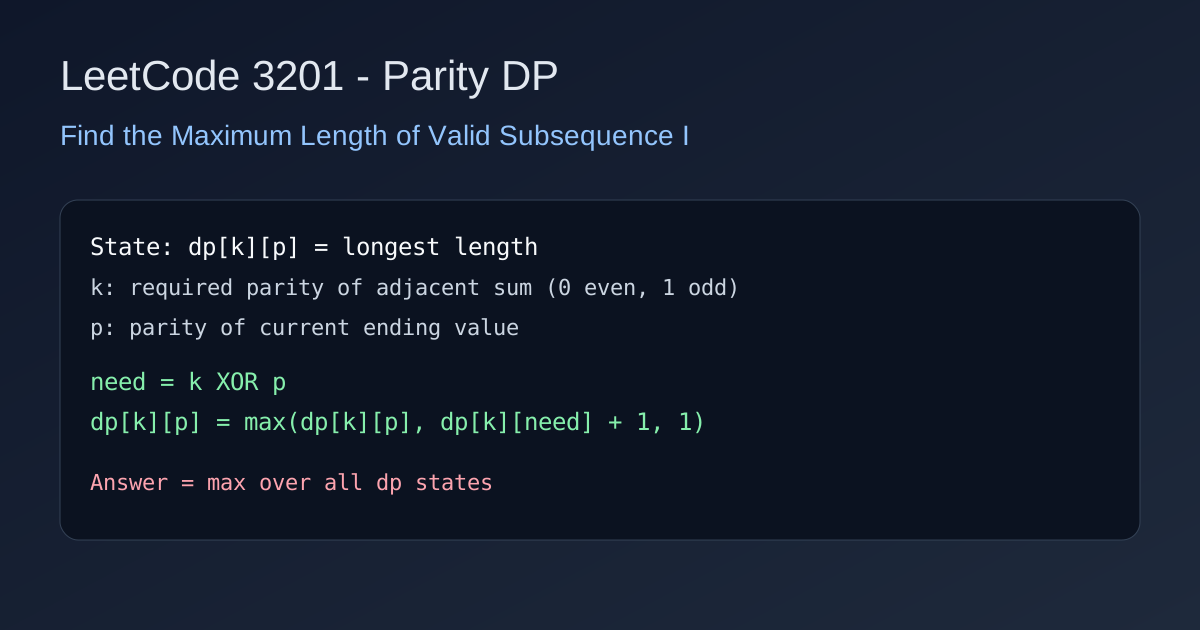
In a valid subsequence, adjacent sums must have the same parity. Since parity is only 0 or 1, we keep four states: longest subsequence ending with parity p when required adjacent-sum parity is k. For current number parity p, previous parity must be k ^ p. Transition: dp[k][p] = max(dp[k][p], dp[k][k ^ p] + 1). Also start new subsequence with length 1.
class Solution {
    public int maximumLength(int[] nums) {
        int[][] dp = new int[2][2];
        int ans = 1;
        for (int x : nums) {
            int p = x & 1;
            for (int k = 0; k < 2; k++) {
                int need = k ^ p;
                dp[k][p] = Math.max(dp[k][p], dp[k][need] + 1);
                dp[k][p] = Math.max(dp[k][p], 1);
                ans = Math.max(ans, dp[k][p]);
            }
        }
        return ans;
    }
}
func maximumLength(nums []int) int {
dp := [2][2]int{}
ans := 1
for _, x := range nums {
p := x & 1
for k := 0; k < 2; k++ {
need := k ^ p
if dp[k][need]+1 > dp[k][p] {
dp[k][p] = dp[k][need] + 1
}
if dp[k][p] < 1 {
dp[k][p] = 1
}
if dp[k][p] > ans {
ans = dp[k][p]
}
}
}
return ans
}class Solution {
public:
int maximumLength(vector<int>& nums) {
int dp[2][2] = {};
int ans = 1;
for (int x : nums) {
int p = x & 1;
for (int k = 0; k < 2; ++k) {
int need = k ^ p;
dp[k][p] = max(dp[k][p], dp[k][need] + 1);
dp[k][p] = max(dp[k][p], 1);
ans = max(ans, dp[k][p]);
}
}
return ans;
}
};class Solution:
def maximumLength(self, nums: list[int]) -> int:
dp = [[0, 0], [0, 0]]
ans = 1
for x in nums:
p = x & 1
for k in range(2):
need = k ^ p
dp[k][p] = max(dp[k][p], dp[k][need] + 1, 1)
ans = max(ans, dp[k][p])
return ansfunction maximumLength(nums) {
const dp = [[0, 0], [0, 0]];
let ans = 1;
for (const x of nums) {
const p = x & 1;
for (let k = 0; k < 2; k++) {
const need = k ^ p;
dp[k][p] = Math.max(dp[k][p], dp[k][need] + 1, 1);
ans = Math.max(ans, dp[k][p]);
}
}
return ans;
}中文
题目要求子序列里所有相邻元素和的奇偶性一致。奇偶只有 0/1 两种,所以可以维护 4 个状态:在目标奇偶 k 下,以奇偶 p 结尾的最长长度。当前数奇偶为 p 时,前一个元素奇偶必须是 k ^ p,因此有转移 dp[k][p] = max(dp[k][p], dp[k][k ^ p] + 1),并允许从长度 1 重新开始。
class Solution {
    public int maximumLength(int[] nums) {
        int[][] dp = new int[2][2];
        int ans = 1;
        for (int x : nums) {
            int p = x & 1;
            for (int k = 0; k < 2; k++) {
                int need = k ^ p;
                dp[k][p] = Math.max(dp[k][p], dp[k][need] + 1);
                dp[k][p] = Math.max(dp[k][p], 1);
                ans = Math.max(ans, dp[k][p]);
            }
        }
        return ans;
    }
}
func maximumLength(nums []int) int {
dp := [2][2]int{}
ans := 1
for _, x := range nums {
p := x & 1
for k := 0; k < 2; k++ {
need := k ^ p
if dp[k][need]+1 > dp[k][p] {
dp[k][p] = dp[k][need] + 1
}
if dp[k][p] < 1 {
dp[k][p] = 1
}
if dp[k][p] > ans {
ans = dp[k][p]
}
}
}
return ans
}class Solution {
public:
int maximumLength(vector<int>& nums) {
int dp[2][2] = {};
int ans = 1;
for (int x : nums) {
int p = x & 1;
for (int k = 0; k < 2; ++k) {
int need = k ^ p;
dp[k][p] = max(dp[k][p], dp[k][need] + 1);
dp[k][p] = max(dp[k][p], 1);
ans = max(ans, dp[k][p]);
}
}
return ans;
}
};class Solution:
def maximumLength(self, nums: list[int]) -> int:
dp = [[0, 0], [0, 0]]
ans = 1
for x in nums:
p = x & 1
for k in range(2):
need = k ^ p
dp[k][p] = max(dp[k][p], dp[k][need] + 1, 1)
ans = max(ans, dp[k][p])
return ansfunction maximumLength(nums) {
const dp = [[0, 0], [0, 0]];
let ans = 1;
for (const x of nums) {
const p = x & 1;
for (let k = 0; k < 2; k++) {
const need = k ^ p;
dp[k][p] = Math.max(dp[k][p], dp[k][need] + 1, 1);
ans = Math.max(ans, dp[k][p]);
}
}
return ans;
}
Comments