LeetCode 272: Closest Binary Search Tree Value II (Inorder + Sliding Window)
LeetCode 272BSTInorderSource: https://leetcode.com/problems/closest-binary-search-tree-value-ii/
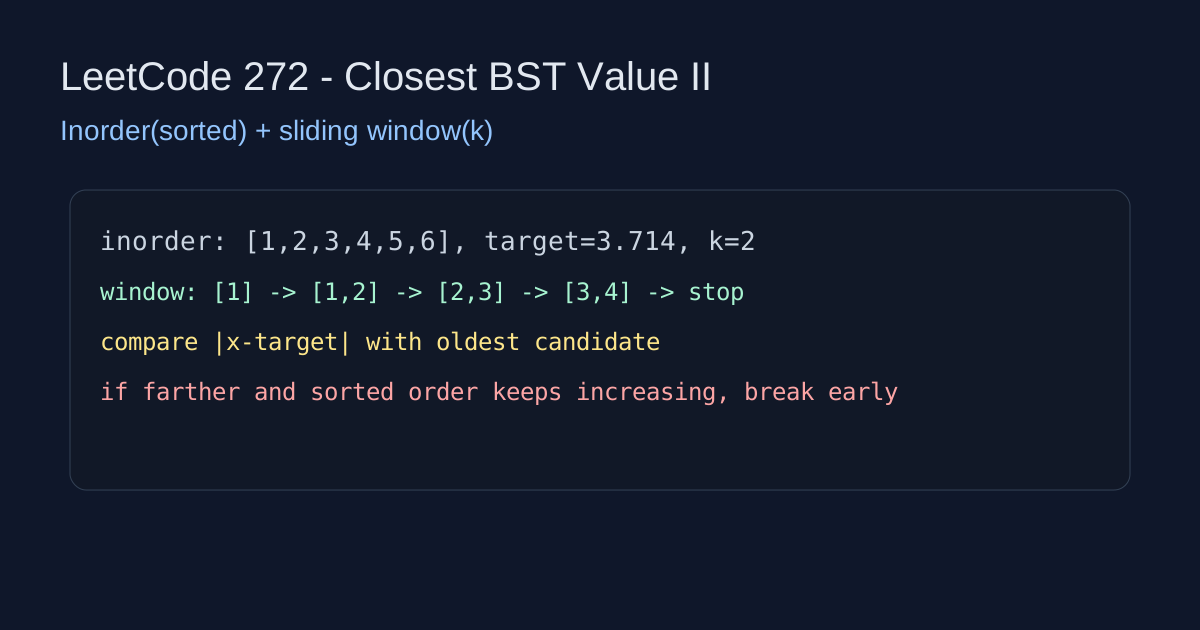
Inorder gives sorted values, then we keep the best k values near target by dropping farther elements.
English
Because BST inorder traversal is sorted, we can scan the list once and maintain a deque of size at most k. For each value x, if we still need numbers, push it. Otherwise compare distances: if |x - target| is smaller than the leftmost distance, pop left and push x. If not, later values will only be farther, so we can stop early.
Reference Implementations (Java / Go / C++ / Python / JavaScript)
class Solution {
    public List<Integer> closestKValues(TreeNode root, double target, int k) {
        List<Integer> vals = new ArrayList<>();
        inorder(root, vals);
        Deque<Integer> dq = new ArrayDeque<>();
        for (int x : vals) {
            if (dq.size() < k) dq.addLast(x);
            else if (Math.abs(x - target) < Math.abs(dq.peekFirst() - target)) {
                dq.pollFirst();
                dq.addLast(x);
            } else break;
        }
        return new ArrayList<>(dq);
    }
    private void inorder(TreeNode n, List<Integer> vals) {
        if (n == null) return;
        inorder(n.left, vals); vals.add(n.val); inorder(n.right, vals);
    }
}
func closestKValues(root *TreeNode, target float64, k int) []int {
vals := []int{}
var inorder func(*TreeNode)
inorder = func(n *TreeNode) {
if n == nil { return }
inorder(n.Left); vals = append(vals, n.Val); inorder(n.Right)
}
inorder(root)
dq := []int{}
for _, x := range vals {
if len(dq) < k {
dq = append(dq, x)
} else if math.Abs(float64(x)-target) < math.Abs(float64(dq[0])-target) {
dq = dq[1:]
dq = append(dq, x)
} else { break }
}
return dq
}class Solution {
public:
void inorder(TreeNode* n, vector<int>& a) {
if (!n) return;
inorder(n->left, a); a.push_back(n->val); inorder(n->right, a);
}
vector<int> closestKValues(TreeNode* root, double target, int k) {
vector<int> a; inorder(root, a);
deque<int> dq;
for (int x : a) {
if ((int)dq.size() < k) dq.push_back(x);
else if (abs(x - target) < abs(dq.front() - target)) {
dq.pop_front(); dq.push_back(x);
} else break;
}
return vector<int>(dq.begin(), dq.end());
}
};class Solution:
def closestKValues(self, root: Optional[TreeNode], target: float, k: int) -> List[int]:
vals = []
def inorder(n):
if not n: return
inorder(n.left); vals.append(n.val); inorder(n.right)
inorder(root)
dq = collections.deque()
for x in vals:
if len(dq) < k:
dq.append(x)
elif abs(x - target) < abs(dq[0] - target):
dq.popleft(); dq.append(x)
else:
break
return list(dq)var closestKValues = function(root, target, k) {
const vals = [];
const inorder = (n) => {
if (!n) return;
inorder(n.left); vals.push(n.val); inorder(n.right);
};
inorder(root);
const dq = [];
for (const x of vals) {
if (dq.length < k) dq.push(x);
else if (Math.abs(x - target) < Math.abs(dq[0] - target)) {
dq.shift(); dq.push(x);
} else break;
}
return dq;
};中文
BST 的中序遍历结果是有序数组。我们顺序扫描这些值,维护一个长度不超过 k 的队列。若队列未满直接加入;若已满就比较当前值与目标的距离,若当前更近则弹出队首(当前最差)并加入新值,否则可以提前结束,因为后续值只会更远。
多语言参考实现(Java / Go / C++ / Python / JavaScript)
class Solution {
    public List<Integer> closestKValues(TreeNode root, double target, int k) {
        List<Integer> vals = new ArrayList<>();
        inorder(root, vals);
        Deque<Integer> dq = new ArrayDeque<>();
        for (int x : vals) {
            if (dq.size() < k) dq.addLast(x);
            else if (Math.abs(x - target) < Math.abs(dq.peekFirst() - target)) {
                dq.pollFirst();
                dq.addLast(x);
            } else break;
        }
        return new ArrayList<>(dq);
    }
    private void inorder(TreeNode n, List<Integer> vals) {
        if (n == null) return;
        inorder(n.left, vals); vals.add(n.val); inorder(n.right, vals);
    }
}
func closestKValues(root *TreeNode, target float64, k int) []int {
vals := []int{}
var inorder func(*TreeNode)
inorder = func(n *TreeNode) {
if n == nil { return }
inorder(n.Left); vals = append(vals, n.Val); inorder(n.Right)
}
inorder(root)
dq := []int{}
for _, x := range vals {
if len(dq) < k {
dq = append(dq, x)
} else if math.Abs(float64(x)-target) < math.Abs(float64(dq[0])-target) {
dq = dq[1:]
dq = append(dq, x)
} else { break }
}
return dq
}class Solution {
public:
void inorder(TreeNode* n, vector<int>& a) {
if (!n) return;
inorder(n->left, a); a.push_back(n->val); inorder(n->right, a);
}
vector<int> closestKValues(TreeNode* root, double target, int k) {
vector<int> a; inorder(root, a);
deque<int> dq;
for (int x : a) {
if ((int)dq.size() < k) dq.push_back(x);
else if (abs(x - target) < abs(dq.front() - target)) {
dq.pop_front(); dq.push_back(x);
} else break;
}
return vector<int>(dq.begin(), dq.end());
}
};class Solution:
def closestKValues(self, root: Optional[TreeNode], target: float, k: int) -> List[int]:
vals = []
def inorder(n):
if not n: return
inorder(n.left); vals.append(n.val); inorder(n.right)
inorder(root)
dq = collections.deque()
for x in vals:
if len(dq) < k:
dq.append(x)
elif abs(x - target) < abs(dq[0] - target):
dq.popleft(); dq.append(x)
else:
break
return list(dq)var closestKValues = function(root, target, k) {
const vals = [];
const inorder = (n) => {
if (!n) return;
inorder(n.left); vals.push(n.val); inorder(n.right);
};
inorder(root);
const dq = [];
for (const x of vals) {
if (dq.length < k) dq.push(x);
else if (Math.abs(x - target) < Math.abs(dq[0] - target)) {
dq.shift(); dq.push(x);
} else break;
}
return dq;
};
Comments