LeetCode 271: Encode and Decode Strings (Length Prefix)
LeetCode 271StringDesignSource: https://leetcode.com/problems/encode-and-decode-strings/
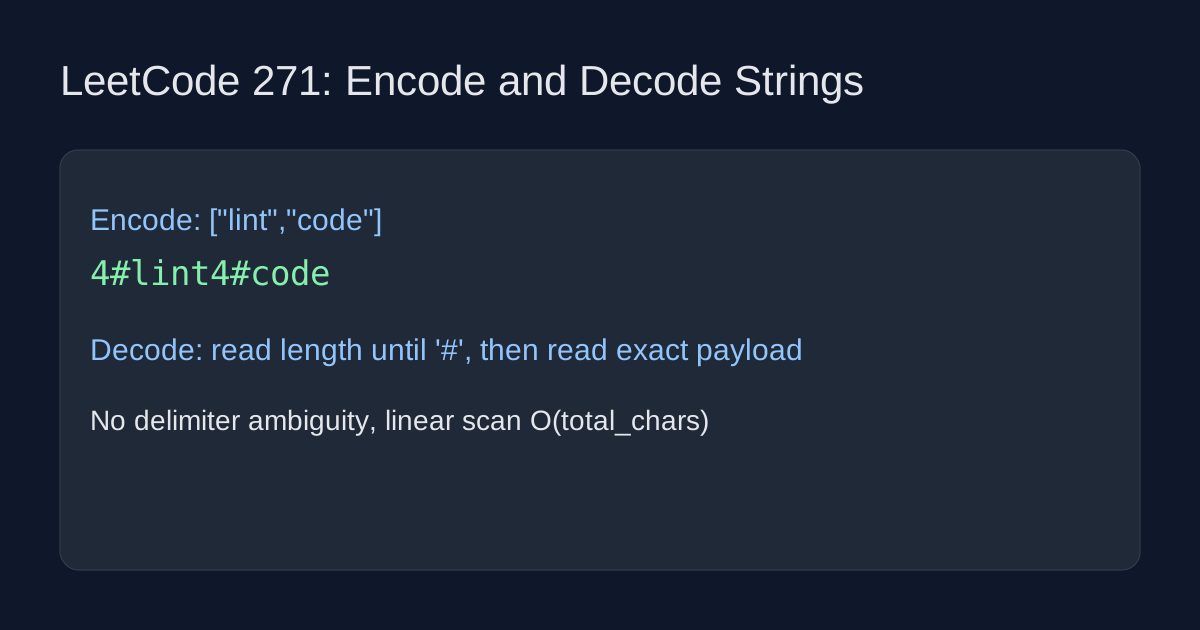
Use length#content chunks to avoid delimiter ambiguity.
English
Plain delimiter split fails when original strings contain the delimiter. A robust method is to serialize each string as len#s. During decoding, parse digits until # to get the next length, then read exactly that many characters.
Reference Implementations (Java / Go / C++ / Python / JavaScript)
class Codec {
    public String encode(List<String> strs) {
        StringBuilder sb = new StringBuilder();
        for (String s : strs) {
            sb.append(s.length()).append('#').append(s);
        }
        return sb.toString();
    }

    public List<String> decode(String s) {
        List<String> out = new ArrayList<>();
        int i = 0;
        while (i < s.length()) {
            int j = i;
            while (s.charAt(j) != '#') j++;
            int len = Integer.parseInt(s.substring(i, j));
            j++;
            out.add(s.substring(j, j + len));
            i = j + len;
        }
        return out;
    }
}
type Codec struct{}
func (Codec) Encode(strs []string) string {
var b strings.Builder
for _, s := range strs {
b.WriteString(strconv.Itoa(len(s)))
b.WriteByte('#')
b.WriteString(s)
}
return b.String()
}
func (Codec) Decode(s string) []string {
res := []string{}
for i := 0; i < len(s); {
j := i
for s[j] != '#' { j++ }
n, _ := strconv.Atoi(s[i:j])
j++
res = append(res, s[j:j+n])
i = j + n
}
return res
}class Codec {
public:
string encode(vector<string>& strs) {
string out;
for (auto& s : strs) out += to_string(s.size()) + "#" + s;
return out;
}
vector<string> decode(string s) {
vector<string> out;
int i = 0, n = s.size();
while (i < n) {
int j = i;
while (s[j] != '#') j++;
int len = stoi(s.substr(i, j - i));
j++;
out.push_back(s.substr(j, len));
i = j + len;
}
return out;
}
};class Codec:
def encode(self, strs: List[str]) -> str:
return ''.join(f"{len(s)}#{s}" for s in strs)
def decode(self, s: str) -> List[str]:
out, i = [], 0
while i < len(s):
j = i
while s[j] != '#':
j += 1
size = int(s[i:j])
j += 1
out.append(s[j:j + size])
i = j + size
return outvar Codec = function() {};
Codec.prototype.encode = function(strs) {
let out = "";
for (const s of strs) out += s.length + "#" + s;
return out;
};
Codec.prototype.decode = function(s) {
const out = [];
for (let i = 0; i < s.length;) {
let j = i;
while (s[j] !== '#') j++;
const len = Number(s.slice(i, j));
j++;
out.push(s.slice(j, j + len));
i = j + len;
}
return out;
};中文
如果只靠分隔符切分,当原字符串里也包含分隔符时就会出错。更稳妥的做法是把每个字符串编码为 长度#内容。解码时先读到 # 得到长度,再精确读取对应字符数。
多语言参考实现(Java / Go / C++ / Python / JavaScript)
class Codec {
    public String encode(List<String> strs) {
        StringBuilder sb = new StringBuilder();
        for (String s : strs) {
            sb.append(s.length()).append('#').append(s);
        }
        return sb.toString();
    }

    public List<String> decode(String s) {
        List<String> out = new ArrayList<>();
        int i = 0;
        while (i < s.length()) {
            int j = i;
            while (s.charAt(j) != '#') j++;
            int len = Integer.parseInt(s.substring(i, j));
            j++;
            out.add(s.substring(j, j + len));
            i = j + len;
        }
        return out;
    }
}
type Codec struct{}
func (Codec) Encode(strs []string) string {
var b strings.Builder
for _, s := range strs {
b.WriteString(strconv.Itoa(len(s)))
b.WriteByte('#')
b.WriteString(s)
}
return b.String()
}
func (Codec) Decode(s string) []string {
res := []string{}
for i := 0; i < len(s); {
j := i
for s[j] != '#' { j++ }
n, _ := strconv.Atoi(s[i:j])
j++
res = append(res, s[j:j+n])
i = j + n
}
return res
}class Codec {
public:
string encode(vector<string>& strs) {
string out;
for (auto& s : strs) out += to_string(s.size()) + "#" + s;
return out;
}
vector<string> decode(string s) {
vector<string> out;
int i = 0, n = s.size();
while (i < n) {
int j = i;
while (s[j] != '#') j++;
int len = stoi(s.substr(i, j - i));
j++;
out.push_back(s.substr(j, len));
i = j + len;
}
return out;
}
};class Codec:
def encode(self, strs: List[str]) -> str:
return ''.join(f"{len(s)}#{s}" for s in strs)
def decode(self, s: str) -> List[str]:
out, i = [], 0
while i < len(s):
j = i
while s[j] != '#':
j += 1
size = int(s[i:j])
j += 1
out.append(s[j:j + size])
i = j + size
return outvar Codec = function() {};
Codec.prototype.encode = function(strs) {
let out = "";
for (const s of strs) out += s.length + "#" + s;
return out;
};
Codec.prototype.decode = function(s) {
const out = [];
for (let i = 0; i < s.length;) {
let j = i;
while (s[j] !== '#') j++;
const len = Number(s.slice(i, j));
j++;
out.push(s.slice(j, j + len));
i = j + len;
}
return out;
};
Comments