LeetCode 1448: Count Good Nodes in Binary Tree (DFS with Path Maximum)
LeetCode 1448Binary TreeDFSToday we solve LeetCode 1448 - Count Good Nodes in Binary Tree.
Source: https://leetcode.com/problems/count-good-nodes-in-binary-tree/
English
Problem Summary
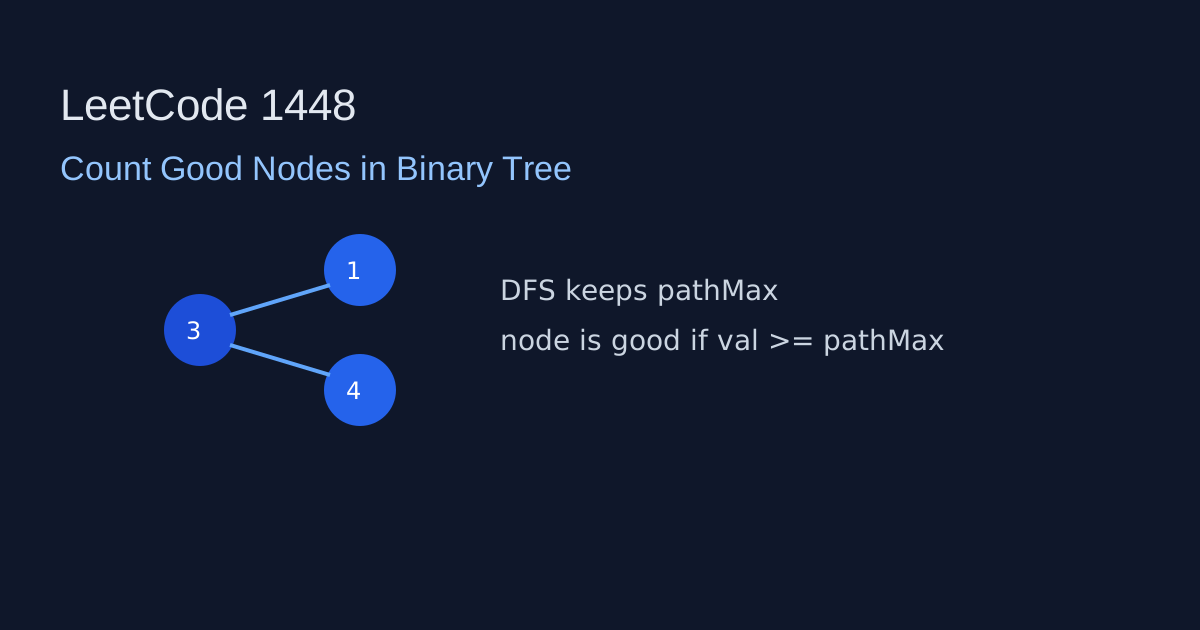
A node X in the tree is good if on the path from root to X, there is no node with a value greater than X.
Key Insight
During DFS, keep the maximum value seen on the current root-to-node path. A node is good if node.val >= pathMax.
Complexity Analysis
Time: O(n), each node visited once. Space: O(h) recursion stack.
Reference Implementations (Java / Go / C++ / Python / JavaScript)
class Solution {
    public int goodNodes(TreeNode root) {
        return dfs(root, Integer.MIN_VALUE);
    }
    private int dfs(TreeNode node, int pathMax) {
        if (node == null) return 0;
        int good = node.val >= pathMax ? 1 : 0;
        int nextMax = Math.max(pathMax, node.val);
        return good + dfs(node.left, nextMax) + dfs(node.right, nextMax);
    }
}
func goodNodes(root *TreeNode) int {
var dfs func(*TreeNode, int) int
dfs = func(node *TreeNode, pathMax int) int {
if node == nil { return 0 }
good := 0
if node.Val >= pathMax { good = 1 }
nextMax := pathMax
if node.Val > nextMax { nextMax = node.Val }
return good + dfs(node.Left, nextMax) + dfs(node.Right, nextMax)
}
return dfs(root, -1<<31)
}class Solution {
public:
int goodNodes(TreeNode* root) {
return dfs(root, INT_MIN);
}
int dfs(TreeNode* node, int pathMax) {
if (!node) return 0;
int good = node->val >= pathMax ? 1 : 0;
int nextMax = max(pathMax, node->val);
return good + dfs(node->left, nextMax) + dfs(node->right, nextMax);
}
};class Solution:
def goodNodes(self, root: TreeNode) -> int:
def dfs(node, path_max):
if not node:
return 0
good = 1 if node.val >= path_max else 0
nxt = max(path_max, node.val)
return good + dfs(node.left, nxt) + dfs(node.right, nxt)
return dfs(root, float('-inf'))var goodNodes = function(root) {
const dfs = (node, pathMax) => {
if (!node) return 0;
const good = node.val >= pathMax ? 1 : 0;
const nextMax = Math.max(pathMax, node.val);
return good + dfs(node.left, nextMax) + dfs(node.right, nextMax);
};
return dfs(root, -Infinity);
};中文
题目概述
若从根到当前节点路径上不存在比当前节点值更大的节点,则该节点为 good node。
核心思路
DFS 遍历时维护路径最大值 pathMax。若 node.val >= pathMax,则答案加一,并把新路径最大值传给子节点。
复杂度分析
时间复杂度 O(n),空间复杂度 O(h)。
多语言参考实现(Java / Go / C++ / Python / JavaScript)
class Solution {
    public int goodNodes(TreeNode root) {
        return dfs(root, Integer.MIN_VALUE);
    }
    private int dfs(TreeNode node, int pathMax) {
        if (node == null) return 0;
        int good = node.val >= pathMax ? 1 : 0;
        int nextMax = Math.max(pathMax, node.val);
        return good + dfs(node.left, nextMax) + dfs(node.right, nextMax);
    }
}
func goodNodes(root *TreeNode) int {
var dfs func(*TreeNode, int) int
dfs = func(node *TreeNode, pathMax int) int {
if node == nil { return 0 }
good := 0
if node.Val >= pathMax { good = 1 }
nextMax := pathMax
if node.Val > nextMax { nextMax = node.Val }
return good + dfs(node.Left, nextMax) + dfs(node.Right, nextMax)
}
return dfs(root, -1<<31)
}class Solution {
public:
int goodNodes(TreeNode* root) {
return dfs(root, INT_MIN);
}
int dfs(TreeNode* node, int pathMax) {
if (!node) return 0;
int good = node->val >= pathMax ? 1 : 0;
int nextMax = max(pathMax, node->val);
return good + dfs(node->left, nextMax) + dfs(node->right, nextMax);
}
};class Solution:
def goodNodes(self, root: TreeNode) -> int:
def dfs(node, path_max):
if not node:
return 0
good = 1 if node.val >= path_max else 0
nxt = max(path_max, node.val)
return good + dfs(node.left, nxt) + dfs(node.right, nxt)
return dfs(root, float('-inf'))var goodNodes = function(root) {
const dfs = (node, pathMax) => {
if (!node) return 0;
const good = node.val >= pathMax ? 1 : 0;
const nextMax = Math.max(pathMax, node.val);
return good + dfs(node.left, nextMax) + dfs(node.right, nextMax);
};
return dfs(root, -Infinity);
};
Comments