LeetCode 972: Equal Rational Numbers (Fraction Normalization with Repeating Decimals)
LeetCode 972MathNumber TheoryToday we solve LeetCode 972 - Equal Rational Numbers.
Source: https://leetcode.com/problems/equal-rational-numbers/
English
Problem Summary
Given two rational numbers in decimal form, where a repeating part may appear in parentheses, determine whether they represent the same value.
Key Insight
Floating-point comparison is unsafe here. Instead, convert each string into an exact reduced fraction p / q, then compare normalized pairs.
Exact Conversion
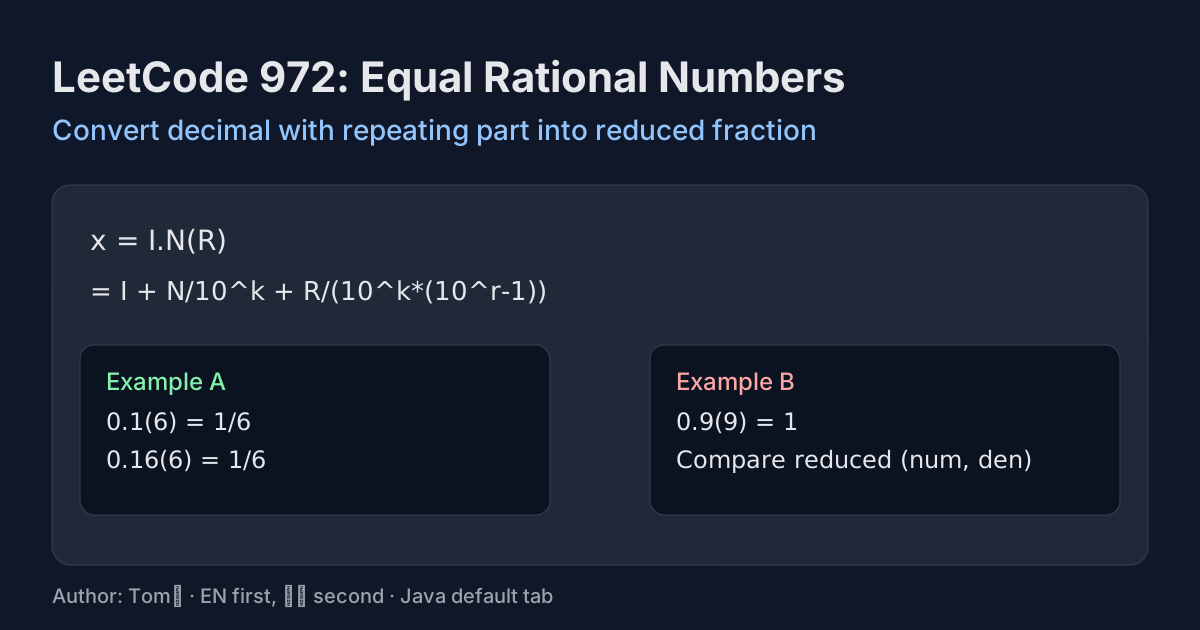
Suppose a number is I.N(R): integer part I, non-repeating decimals N (length k), repeating decimals R (length r).
- If R is empty: value = I + N / 10^k.
- If R exists: value = I + N / 10^k + R / (10^k * (10^r - 1)).
Build numerator/denominator with big integers, then divide by gcd.
Complexity Analysis
Time: O(L) per string (plus big-integer arithmetic), where L is string length.
Space: O(L).
Common Pitfalls
- Comparing doubles directly (precision issues).
- Mishandling forms like 0.9(9) and 1. which are equal.
- Forgetting to reduce fractions before comparison.
Reference Implementations (Java / Go / C++ / Python / JavaScript)
import java.math.BigInteger;

class Solution {
    public boolean isRationalEqual(String s, String t) {
        Fraction a = parse(s), b = parse(t);
        return a.num.equals(b.num) && a.den.equals(b.den);
    }

    static class Fraction {
        BigInteger num, den;
        Fraction(BigInteger n, BigInteger d) {
            BigInteger g = n.gcd(d);
            num = n.divide(g);
            den = d.divide(g);
        }
    }

    private Fraction parse(String x) {
        String intPart = x;
        String frac = "";
        int dot = x.indexOf('.');
        if (dot >= 0) {
            intPart = x.substring(0, dot);
            frac = x.substring(dot + 1);
        }

        String nonRep = frac, rep = "";
        int lp = frac.indexOf('(');
        if (lp >= 0) {
            nonRep = frac.substring(0, lp);
            rep = frac.substring(lp + 1, frac.length() - 1);
        }

        BigInteger I = new BigInteger(intPart.isEmpty() ? "0" : intPart);
        BigInteger pow10k = BigInteger.TEN.pow(nonRep.length());

        BigInteger num = I.multiply(pow10k);
        if (!nonRep.isEmpty()) num = num.add(new BigInteger(nonRep));
        BigInteger den = pow10k;

        if (!rep.isEmpty()) {
            BigInteger pow10r = BigInteger.TEN.pow(rep.length());
            BigInteger repDen = pow10k.multiply(pow10r.subtract(BigInteger.ONE));
            BigInteger repNum = new BigInteger(rep);
            num = num.multiply(repDen).add(repNum.multiply(den));
            den = den.multiply(repDen);
        }

        return new Fraction(num, den);
    }
}
import "math/big"
type Fraction struct {
num *big.Int
den *big.Int
}
func isRationalEqual(s string, t string) bool {
a := parse(s)
b := parse(t)
return a.num.Cmp(b.num) == 0 && a.den.Cmp(b.den) == 0
}
func parse(x string) Fraction {
intPart, frac := x, ""
if i := indexByte(x, '.'); i >= 0 {
intPart = x[:i]
frac = x[i+1:]
}
nonRep, rep := frac, ""
if i := indexByte(frac, '('); i >= 0 {
nonRep = frac[:i]
rep = frac[i+1 : len(frac)-1]
}
I := new(big.Int)
I.SetString(zeroIfEmpty(intPart), 10)
pow10k := new(big.Int).Exp(big.NewInt(10), big.NewInt(int64(len(nonRep))), nil)
num := new(big.Int).Mul(I, pow10k)
if len(nonRep) > 0 {
n := new(big.Int)
n.SetString(nonRep, 10)
num.Add(num, n)
}
den := new(big.Int).Set(pow10k)
if len(rep) > 0 {
pow10r := new(big.Int).Exp(big.NewInt(10), big.NewInt(int64(len(rep))), nil)
repDen := new(big.Int).Mul(pow10k, new(big.Int).Sub(pow10r, big.NewInt(1)))
repNum := new(big.Int)
repNum.SetString(rep, 10)
left := new(big.Int).Mul(num, repDen)
right := new(big.Int).Mul(repNum, den)
num = new(big.Int).Add(left, right)
den = new(big.Int).Mul(den, repDen)
}
g := new(big.Int).GCD(nil, nil, num, den)
return Fraction{new(big.Int).Div(num, g), new(big.Int).Div(den, g)}
}
func zeroIfEmpty(s string) string {
if len(s) == 0 {
return "0"
}
return s
}
func indexByte(s string, b byte) int {
for i := 0; i < len(s); i++ {
if s[i] == b {
return i
}
}
return -1
}#include <bits/stdc++.h>
#include <boost/multiprecision/cpp_int.hpp>
using namespace std;
using boost::multiprecision::cpp_int;
class Solution {
struct Fraction {
cpp_int num, den;
};
cpp_int gcdBig(cpp_int a, cpp_int b) {
while (b != 0) {
cpp_int t = a % b;
a = b;
b = t;
}
return a;
}
cpp_int pow10(int k) {
cpp_int x = 1;
while (k--) x *= 10;
return x;
}
cpp_int toInt(const string& s) {
cpp_int x = 0;
for (char c : s) if (isdigit(c)) x = x * 10 + (c - '0');
return x;
}
Fraction norm(cpp_int n, cpp_int d) {
cpp_int g = gcdBig(n, d);
return {n / g, d / g};
}
Fraction parse(const string& x) {
string intPart = x, frac;
size_t dot = x.find('.');
if (dot != string::npos) {
intPart = x.substr(0, dot);
frac = x.substr(dot + 1);
}
string nonRep = frac, rep;
size_t lp = frac.find('(');
if (lp != string::npos) {
nonRep = frac.substr(0, lp);
rep = frac.substr(lp + 1, frac.size() - lp - 2);
}
cpp_int I = intPart.empty() ? 0 : toInt(intPart);
cpp_int p10k = pow10((int)nonRep.size());
cpp_int num = I * p10k + (nonRep.empty() ? 0 : toInt(nonRep));
cpp_int den = p10k;
if (!rep.empty()) {
cpp_int p10r = pow10((int)rep.size());
cpp_int repDen = p10k * (p10r - 1);
cpp_int repNum = toInt(rep);
num = num * repDen + repNum * den;
den = den * repDen;
}
return norm(num, den);
}
public:
bool isRationalEqual(string s, string t) {
Fraction a = parse(s), b = parse(t);
return a.num == b.num && a.den == b.den;
}
};from math import gcd
class Solution:
def isRationalEqual(self, s: str, t: str) -> bool:
return self.parse(s) == self.parse(t)
def parse(self, x: str):
if "." in x:
int_part, frac = x.split(".", 1)
else:
int_part, frac = x, ""
non_rep, rep = frac, ""
if "(" in frac:
i = frac.index("(")
non_rep = frac[:i]
rep = frac[i + 1:-1]
I = int(int_part or "0")
p10k = 10 ** len(non_rep)
num = I * p10k + (int(non_rep) if non_rep else 0)
den = p10k
if rep:
p10r = 10 ** len(rep)
rep_den = p10k * (p10r - 1)
rep_num = int(rep)
num = num * rep_den + rep_num * den
den = den * rep_den
g = gcd(num, den)
return num // g, den // gvar isRationalEqual = function(s, t) {
const a = parseFrac(s);
const b = parseFrac(t);
return a[0] === b[0] && a[1] === b[1];
};
function parseFrac(x) {
let intPart = x, frac = "";
const dot = x.indexOf(".");
if (dot >= 0) {
intPart = x.slice(0, dot);
frac = x.slice(dot + 1);
}
let nonRep = frac, rep = "";
const lp = frac.indexOf("(");
if (lp >= 0) {
nonRep = frac.slice(0, lp);
rep = frac.slice(lp + 1, -1);
}
const I = BigInt(intPart || "0");
const p10k = 10n ** BigInt(nonRep.length);
let num = I * p10k + (nonRep ? BigInt(nonRep) : 0n);
let den = p10k;
if (rep) {
const p10r = 10n ** BigInt(rep.length);
const repDen = p10k * (p10r - 1n);
const repNum = BigInt(rep);
num = num * repDen + repNum * den;
den = den * repDen;
}
const g = gcd(num, den);
return [num / g, den / g];
}
function gcd(a, b) {
while (b !== 0n) {
const t = a % b;
a = b;
b = t;
}
return a;
}中文
题目概述
给你两个有理数的字符串表示,小数部分可能带循环节(括号表示),判断它们是否表示同一个数值。
核心思路
不能用浮点数直接比较。把每个字符串都转换成约分后的精确分数 p / q,再比较分子分母是否相同。
精确转换公式
若表示为 I.N(R):整数部分 I,不循环部分 N(长度 k),循环部分 R(长度 r)。
- 若无循环节:值 = I + N / 10^k。
- 若有循环节:值 = I + N / 10^k + R / (10^k * (10^r - 1))。
用大整数构造分子分母,最后用 gcd 约分即可。
复杂度分析
时间复杂度:每个字符串约 O(L)(含大整数运算开销),L 为字符串长度。
空间复杂度:O(L)。
常见陷阱
- 直接比较 double/float,精度会出错。
- 没处理好 0.9(9) 与 1. 这种等价表示。
- 比较前未约分,导致本应相等却判不等。
多语言参考实现(Java / Go / C++ / Python / JavaScript)
import java.math.BigInteger;

class Solution {
    public boolean isRationalEqual(String s, String t) {
        Fraction a = parse(s), b = parse(t);
        return a.num.equals(b.num) && a.den.equals(b.den);
    }

    static class Fraction {
        BigInteger num, den;
        Fraction(BigInteger n, BigInteger d) {
            BigInteger g = n.gcd(d);
            num = n.divide(g);
            den = d.divide(g);
        }
    }

    private Fraction parse(String x) {
        String intPart = x;
        String frac = "";
        int dot = x.indexOf('.');
        if (dot >= 0) {
            intPart = x.substring(0, dot);
            frac = x.substring(dot + 1);
        }

        String nonRep = frac, rep = "";
        int lp = frac.indexOf('(');
        if (lp >= 0) {
            nonRep = frac.substring(0, lp);
            rep = frac.substring(lp + 1, frac.length() - 1);
        }

        BigInteger I = new BigInteger(intPart.isEmpty() ? "0" : intPart);
        BigInteger pow10k = BigInteger.TEN.pow(nonRep.length());

        BigInteger num = I.multiply(pow10k);
        if (!nonRep.isEmpty()) num = num.add(new BigInteger(nonRep));
        BigInteger den = pow10k;

        if (!rep.isEmpty()) {
            BigInteger pow10r = BigInteger.TEN.pow(rep.length());
            BigInteger repDen = pow10k.multiply(pow10r.subtract(BigInteger.ONE));
            BigInteger repNum = new BigInteger(rep);
            num = num.multiply(repDen).add(repNum.multiply(den));
            den = den.multiply(repDen);
        }

        return new Fraction(num, den);
    }
}
import "math/big"
type Fraction struct {
num *big.Int
den *big.Int
}
func isRationalEqual(s string, t string) bool {
a := parse(s)
b := parse(t)
return a.num.Cmp(b.num) == 0 && a.den.Cmp(b.den) == 0
}
func parse(x string) Fraction {
intPart, frac := x, ""
if i := indexByte(x, '.'); i >= 0 {
intPart = x[:i]
frac = x[i+1:]
}
nonRep, rep := frac, ""
if i := indexByte(frac, '('); i >= 0 {
nonRep = frac[:i]
rep = frac[i+1 : len(frac)-1]
}
I := new(big.Int)
I.SetString(zeroIfEmpty(intPart), 10)
pow10k := new(big.Int).Exp(big.NewInt(10), big.NewInt(int64(len(nonRep))), nil)
num := new(big.Int).Mul(I, pow10k)
if len(nonRep) > 0 {
n := new(big.Int)
n.SetString(nonRep, 10)
num.Add(num, n)
}
den := new(big.Int).Set(pow10k)
if len(rep) > 0 {
pow10r := new(big.Int).Exp(big.NewInt(10), big.NewInt(int64(len(rep))), nil)
repDen := new(big.Int).Mul(pow10k, new(big.Int).Sub(pow10r, big.NewInt(1)))
repNum := new(big.Int)
repNum.SetString(rep, 10)
left := new(big.Int).Mul(num, repDen)
right := new(big.Int).Mul(repNum, den)
num = new(big.Int).Add(left, right)
den = new(big.Int).Mul(den, repDen)
}
g := new(big.Int).GCD(nil, nil, num, den)
return Fraction{new(big.Int).Div(num, g), new(big.Int).Div(den, g)}
}
func zeroIfEmpty(s string) string {
if len(s) == 0 {
return "0"
}
return s
}
func indexByte(s string, b byte) int {
for i := 0; i < len(s); i++ {
if s[i] == b {
return i
}
}
return -1
}#include <bits/stdc++.h>
#include <boost/multiprecision/cpp_int.hpp>
using namespace std;
using boost::multiprecision::cpp_int;
class Solution {
struct Fraction {
cpp_int num, den;
};
cpp_int gcdBig(cpp_int a, cpp_int b) {
while (b != 0) {
cpp_int t = a % b;
a = b;
b = t;
}
return a;
}
cpp_int pow10(int k) {
cpp_int x = 1;
while (k--) x *= 10;
return x;
}
cpp_int toInt(const string& s) {
cpp_int x = 0;
for (char c : s) if (isdigit(c)) x = x * 10 + (c - '0');
return x;
}
Fraction norm(cpp_int n, cpp_int d) {
cpp_int g = gcdBig(n, d);
return {n / g, d / g};
}
Fraction parse(const string& x) {
string intPart = x, frac;
size_t dot = x.find('.');
if (dot != string::npos) {
intPart = x.substr(0, dot);
frac = x.substr(dot + 1);
}
string nonRep = frac, rep;
size_t lp = frac.find('(');
if (lp != string::npos) {
nonRep = frac.substr(0, lp);
rep = frac.substr(lp + 1, frac.size() - lp - 2);
}
cpp_int I = intPart.empty() ? 0 : toInt(intPart);
cpp_int p10k = pow10((int)nonRep.size());
cpp_int num = I * p10k + (nonRep.empty() ? 0 : toInt(nonRep));
cpp_int den = p10k;
if (!rep.empty()) {
cpp_int p10r = pow10((int)rep.size());
cpp_int repDen = p10k * (p10r - 1);
cpp_int repNum = toInt(rep);
num = num * repDen + repNum * den;
den = den * repDen;
}
return norm(num, den);
}
public:
bool isRationalEqual(string s, string t) {
Fraction a = parse(s), b = parse(t);
return a.num == b.num && a.den == b.den;
}
};from math import gcd
class Solution:
def isRationalEqual(self, s: str, t: str) -> bool:
return self.parse(s) == self.parse(t)
def parse(self, x: str):
if "." in x:
int_part, frac = x.split(".", 1)
else:
int_part, frac = x, ""
non_rep, rep = frac, ""
if "(" in frac:
i = frac.index("(")
non_rep = frac[:i]
rep = frac[i + 1:-1]
I = int(int_part or "0")
p10k = 10 ** len(non_rep)
num = I * p10k + (int(non_rep) if non_rep else 0)
den = p10k
if rep:
p10r = 10 ** len(rep)
rep_den = p10k * (p10r - 1)
rep_num = int(rep)
num = num * rep_den + rep_num * den
den = den * rep_den
g = gcd(num, den)
return num // g, den // gvar isRationalEqual = function(s, t) {
const a = parseFrac(s);
const b = parseFrac(t);
return a[0] === b[0] && a[1] === b[1];
};
function parseFrac(x) {
let intPart = x, frac = "";
const dot = x.indexOf(".");
if (dot >= 0) {
intPart = x.slice(0, dot);
frac = x.slice(dot + 1);
}
let nonRep = frac, rep = "";
const lp = frac.indexOf("(");
if (lp >= 0) {
nonRep = frac.slice(0, lp);
rep = frac.slice(lp + 1, -1);
}
const I = BigInt(intPart || "0");
const p10k = 10n ** BigInt(nonRep.length);
let num = I * p10k + (nonRep ? BigInt(nonRep) : 0n);
let den = p10k;
if (rep) {
const p10r = 10n ** BigInt(rep.length);
const repDen = p10k * (p10r - 1n);
const repNum = BigInt(rep);
num = num * repDen + repNum * den;
den = den * repDen;
}
const g = gcd(num, den);
return [num / g, den / g];
}
function gcd(a, b) {
while (b !== 0n) {
const t = a % b;
a = b;
b = t;
}
return a;
}
Comments