LeetCode 671: Second Minimum Node In a Binary Tree (DFS Candidate Pruning)
LeetCode 671DFSBinary TreeToday we solve LeetCode 671 - Second Minimum Node In a Binary Tree.
Source: https://leetcode.com/problems/second-minimum-node-in-a-binary-tree/
English
Problem Summary
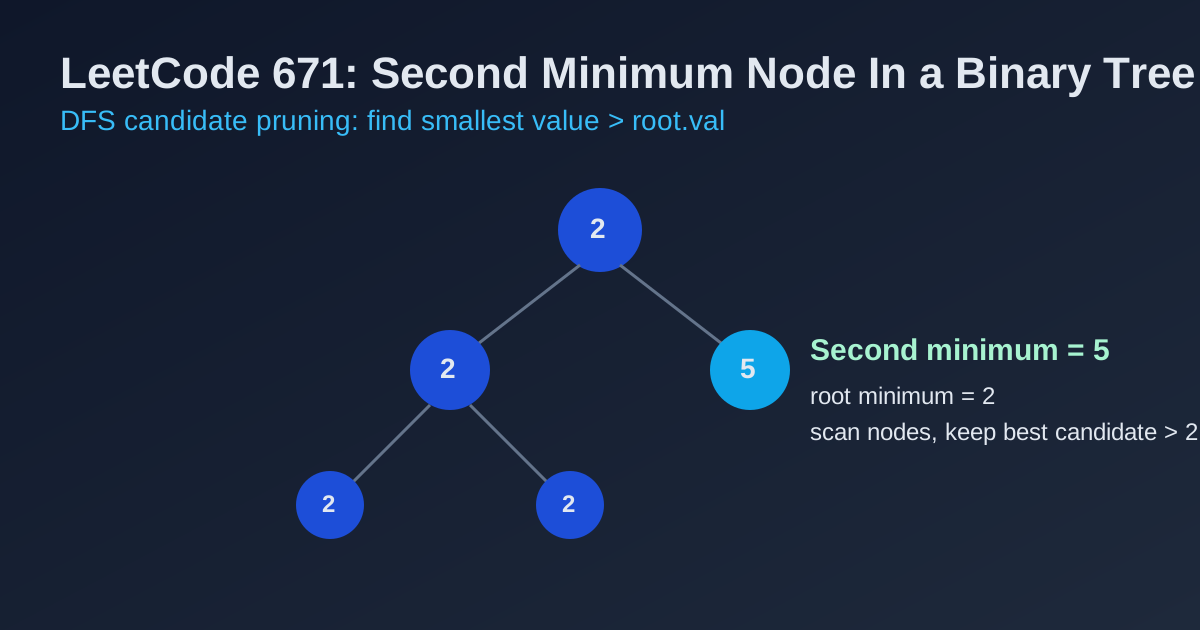
In this special binary tree, each node either has two children or none, and if a node has children then node.val = min(left.val, right.val). Find the second smallest distinct value in the tree, or return -1 if it does not exist.
Key Insight
The root value is always the global minimum. So we only need the smallest value strictly greater than root.val. During DFS:
- if node.val == rootMin, continue exploring children;
- if node.val > rootMin, it is a candidate for second minimum.
Algorithm
- Set base = root.val and ans = +∞.
- DFS each node:
• if node is null, return;
• if base < node.val < ans, update ans;
• if node.val == base, continue DFS on children.
- Return ans if updated, else -1.
Complexity Analysis
Time: O(n) in worst case.
Space: O(h) recursion stack, where h is tree height.
Common Pitfalls
- Forgetting that second minimum must be distinct from root value.
- Returning the first value larger than root without scanning all branches.
- Not handling the "all values equal" case, which should return -1.
Reference Implementations (Java / Go / C++ / Python / JavaScript)
class Solution {
    private long ans;
    private int base;

    public int findSecondMinimumValue(TreeNode root) {
        base = root.val;
        ans = Long.MAX_VALUE;
        dfs(root);
        return ans == Long.MAX_VALUE ? -1 : (int) ans;
    }

    private void dfs(TreeNode node) {
        if (node == null) return;
        if (node.val > base && node.val < ans) {
            ans = node.val;
            return;
        }
        if (node.val == base) {
            dfs(node.left);
            dfs(node.right);
        }
    }
}
func findSecondMinimumValue(root *TreeNode) int {
base := root.Val
ans := int64(1<<62 - 1)
var dfs func(*TreeNode)
dfs = func(node *TreeNode) {
if node == nil {
return
}
if node.Val > base && int64(node.Val) < ans {
ans = int64(node.Val)
return
}
if node.Val == base {
dfs(node.Left)
dfs(node.Right)
}
}
dfs(root)
if ans == int64(1<<62-1) {
return -1
}
return int(ans)
}class Solution {
public:
long long ans;
int base;
int findSecondMinimumValue(TreeNode* root) {
base = root->val;
ans = LLONG_MAX;
dfs(root);
return ans == LLONG_MAX ? -1 : (int)ans;
}
void dfs(TreeNode* node) {
if (!node) return;
if (node->val > base && node->val < ans) {
ans = node->val;
return;
}
if (node->val == base) {
dfs(node->left);
dfs(node->right);
}
}
};class Solution:
def findSecondMinimumValue(self, root: Optional[TreeNode]) -> int:
base = root.val
ans = float('inf')
def dfs(node: Optional[TreeNode]) -> None:
nonlocal ans
if not node:
return
if base < node.val < ans:
ans = node.val
return
if node.val == base:
dfs(node.left)
dfs(node.right)
dfs(root)
return -1 if ans == float('inf') else int(ans)var findSecondMinimumValue = function(root) {
const base = root.val;
let ans = Number.POSITIVE_INFINITY;
const dfs = (node) => {
if (!node) return;
if (node.val > base && node.val < ans) {
ans = node.val;
return;
}
if (node.val === base) {
dfs(node.left);
dfs(node.right);
}
};
dfs(root);
return Number.isFinite(ans) ? ans : -1;
};中文
题目概述
这棵特殊二叉树满足:每个节点要么有两个子节点要么没有,并且若有子节点则 node.val = min(left.val, right.val)。请返回树中第二小的不同值,若不存在返回 -1。
核心思路
根节点一定是全局最小值。因此目标是找“严格大于根值”的最小候选。DFS 时:
- 若 node.val == base,继续向下搜索;
- 若 node.val > base,它是候选第二小值。
算法步骤
- 记录 base = root.val,并令 ans = +∞。
- 深度优先遍历节点:
• 空节点直接返回;
• 若 base < node.val < ans,更新 ans;
• 若 node.val == base,继续遍历左右子树。
- 遍历结束后,若 ans 未更新则返回 -1。
复杂度分析
时间复杂度:O(n)(最坏遍历所有节点)。
空间复杂度:O(h)(递归栈高度)。
常见陷阱
- 忽略“不同值”要求,把根值重复计入答案。
- 只看局部就返回,未遍历完所有可能更小的候选。
- 全树值都相同的情况应返回 -1。
多语言参考实现(Java / Go / C++ / Python / JavaScript)
class Solution {
    private long ans;
    private int base;

    public int findSecondMinimumValue(TreeNode root) {
        base = root.val;
        ans = Long.MAX_VALUE;
        dfs(root);
        return ans == Long.MAX_VALUE ? -1 : (int) ans;
    }

    private void dfs(TreeNode node) {
        if (node == null) return;
        if (node.val > base && node.val < ans) {
            ans = node.val;
            return;
        }
        if (node.val == base) {
            dfs(node.left);
            dfs(node.right);
        }
    }
}
func findSecondMinimumValue(root *TreeNode) int {
base := root.Val
ans := int64(1<<62 - 1)
var dfs func(*TreeNode)
dfs = func(node *TreeNode) {
if node == nil {
return
}
if node.Val > base && int64(node.Val) < ans {
ans = int64(node.Val)
return
}
if node.Val == base {
dfs(node.Left)
dfs(node.Right)
}
}
dfs(root)
if ans == int64(1<<62-1) {
return -1
}
return int(ans)
}class Solution {
public:
long long ans;
int base;
int findSecondMinimumValue(TreeNode* root) {
base = root->val;
ans = LLONG_MAX;
dfs(root);
return ans == LLONG_MAX ? -1 : (int)ans;
}
void dfs(TreeNode* node) {
if (!node) return;
if (node->val > base && node->val < ans) {
ans = node->val;
return;
}
if (node->val == base) {
dfs(node->left);
dfs(node->right);
}
}
};class Solution:
def findSecondMinimumValue(self, root: Optional[TreeNode]) -> int:
base = root.val
ans = float('inf')
def dfs(node: Optional[TreeNode]) -> None:
nonlocal ans
if not node:
return
if base < node.val < ans:
ans = node.val
return
if node.val == base:
dfs(node.left)
dfs(node.right)
dfs(root)
return -1 if ans == float('inf') else int(ans)var findSecondMinimumValue = function(root) {
const base = root.val;
let ans = Number.POSITIVE_INFINITY;
const dfs = (node) => {
if (!node) return;
if (node.val > base && node.val < ans) {
ans = node.val;
return;
}
if (node.val === base) {
dfs(node.left);
dfs(node.right);
}
};
dfs(root);
return Number.isFinite(ans) ? ans : -1;
};
Comments