LeetCode 594: Longest Harmonious Subsequence (Frequency Map + Adjacent Value Pairing)
LeetCode 594Hash TableCountingToday we solve LeetCode 594 - Longest Harmonious Subsequence.
Source: https://leetcode.com/problems/longest-harmonious-subsequence/
English
Problem Summary
Given an integer array nums, find the length of its longest harmonious subsequence. A harmonious subsequence is one where the difference between its maximum and minimum value is exactly 1.
Key Insight
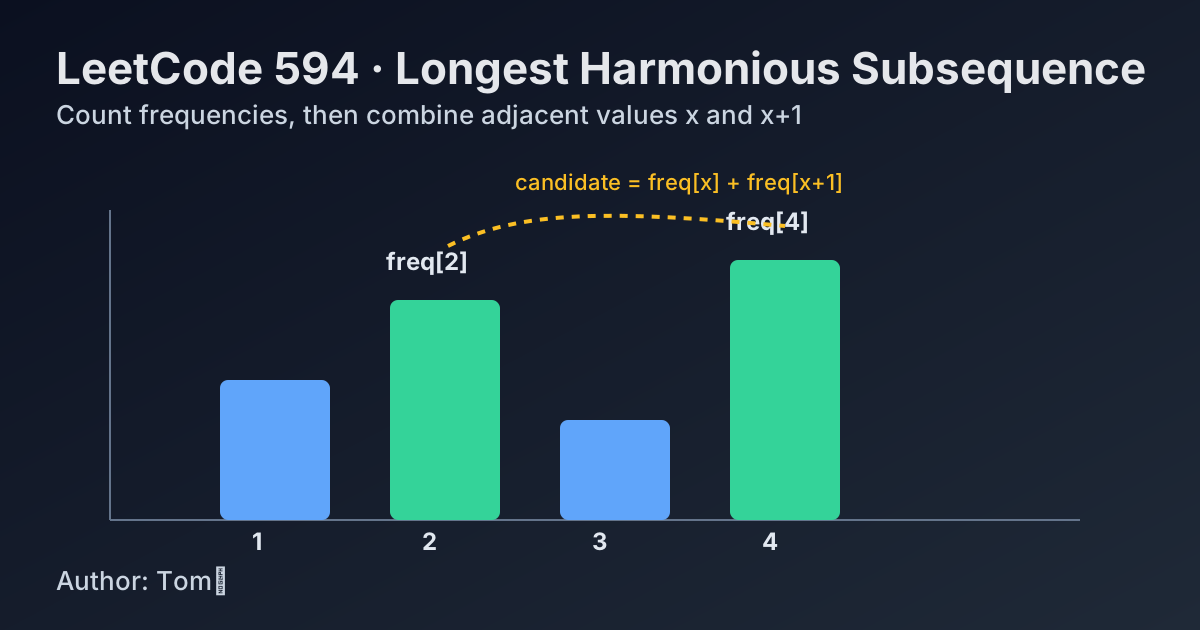
Only values differing by exactly 1 can form a valid harmonious subsequence. So we count frequencies of each value, then for each value x, check whether x + 1 exists and maximize freq[x] + freq[x+1].
Algorithm
- Build a frequency map of all numbers.
- Iterate each key x in the map.
- If x + 1 exists, candidate length is freq[x] + freq[x+1].
- Keep the maximum candidate; if no adjacent pair exists, answer is 0.
Complexity Analysis
Let n be the array length and k be the number of distinct values.
Time: O(n + k).
Space: O(k).
Common Pitfalls
- Treating difference <= 1 as valid; it must be exactly 1.
- Sorting and scanning but forgetting duplicate counts are required for subsequence length.
- Returning largest frequency alone when no adjacent value exists (correct answer should be 0).
Reference Implementations (Java / Go / C++ / Python / JavaScript)
class Solution {
    public int findLHS(int[] nums) {
        Map<Integer, Integer> freq = new HashMap<>();
        for (int num : nums) {
            freq.put(num, freq.getOrDefault(num, 0) + 1);
        }

        int ans = 0;
        for (int x : freq.keySet()) {
            if (freq.containsKey(x + 1)) {
                ans = Math.max(ans, freq.get(x) + freq.get(x + 1));
            }
        }
        return ans;
    }
}
func findLHS(nums []int) int {
freq := make(map[int]int)
for _, num := range nums {
freq[num]++
}
ans := 0
for x, cnt := range freq {
if next, ok := freq[x+1]; ok {
if cnt+next > ans {
ans = cnt + next
}
}
}
return ans
}class Solution {
public:
int findLHS(vector<int>& nums) {
unordered_map<int, int> freq;
for (int x : nums) {
freq[x]++;
}
int ans = 0;
for (auto& [x, cnt] : freq) {
auto it = freq.find(x + 1);
if (it != freq.end()) {
ans = max(ans, cnt + it->second);
}
}
return ans;
}
};class Solution:
def findLHS(self, nums: List[int]) -> int:
freq = Counter(nums)
ans = 0
for x, cnt in freq.items():
if x + 1 in freq:
ans = max(ans, cnt + freq[x + 1])
return ansvar findLHS = function(nums) {
const freq = new Map();
for (const num of nums) {
freq.set(num, (freq.get(num) || 0) + 1);
}
let ans = 0;
for (const [x, cnt] of freq.entries()) {
if (freq.has(x + 1)) {
ans = Math.max(ans, cnt + freq.get(x + 1));
}
}
return ans;
};中文
题目概述
给定整数数组 nums,求最长和谐子序列的长度。和谐子序列要求其最大值与最小值之差恰好为 1。
核心思路
合法子序列只可能由相邻数值(例如 x 和 x+1)组成。先统计每个数出现次数,再枚举 x,若存在 x+1,候选长度就是 freq[x] + freq[x+1]。
算法步骤
- 用哈希表统计频次。
- 遍历每个键 x。
- 若存在 x+1,计算候选值 freq[x] + freq[x+1]。
- 维护最大值;若始终没有相邻键,返回 0。
复杂度分析
设数组长度为 n,不同数字个数为 k。
时间复杂度:O(n + k)。
空间复杂度:O(k)。
常见陷阱
- 把条件写成“差值小于等于 1”,题目要求是“恰好等于 1”。
- 只做排序扫描却忽略了重复元素频次统计。
- 当不存在相邻值时返回最大频次,正确答案应为 0。
多语言参考实现(Java / Go / C++ / Python / JavaScript)
class Solution {
    public int findLHS(int[] nums) {
        Map<Integer, Integer> freq = new HashMap<>();
        for (int num : nums) {
            freq.put(num, freq.getOrDefault(num, 0) + 1);
        }

        int ans = 0;
        for (int x : freq.keySet()) {
            if (freq.containsKey(x + 1)) {
                ans = Math.max(ans, freq.get(x) + freq.get(x + 1));
            }
        }
        return ans;
    }
}
func findLHS(nums []int) int {
freq := make(map[int]int)
for _, num := range nums {
freq[num]++
}
ans := 0
for x, cnt := range freq {
if next, ok := freq[x+1]; ok {
if cnt+next > ans {
ans = cnt + next
}
}
}
return ans
}class Solution {
public:
int findLHS(vector<int>& nums) {
unordered_map<int, int> freq;
for (int x : nums) {
freq[x]++;
}
int ans = 0;
for (auto& [x, cnt] : freq) {
auto it = freq.find(x + 1);
if (it != freq.end()) {
ans = max(ans, cnt + it->second);
}
}
return ans;
}
};class Solution:
def findLHS(self, nums: List[int]) -> int:
freq = Counter(nums)
ans = 0
for x, cnt in freq.items():
if x + 1 in freq:
ans = max(ans, cnt + freq[x + 1])
return ansvar findLHS = function(nums) {
const freq = new Map();
for (const num of nums) {
freq.set(num, (freq.get(num) || 0) + 1);
}
let ans = 0;
for (const [x, cnt] of freq.entries()) {
if (freq.has(x + 1)) {
ans = Math.max(ans, cnt + freq.get(x + 1));
}
}
return ans;
};
Comments