LeetCode 3914: Check if Any Element Has Prime Frequency (Hash Map + Prime Test)
LeetCode 3914Hash MapSource: https://leetcode.com/problems/check-if-any-element-has-prime-frequency/
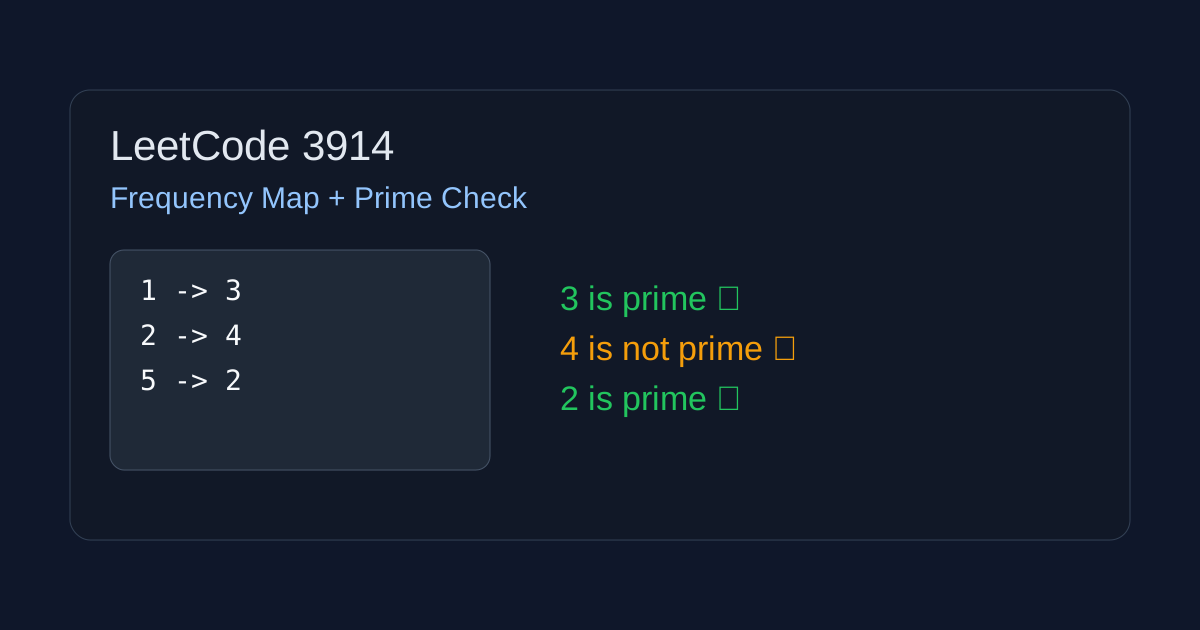
Count each value first, then test whether any frequency is a prime number (>= 2 and divisible only by 1 and itself).
English
Build a frequency map. For each count, run a primality test up to sqrt(count). If any count is prime, return true; otherwise false.
Complexity
Time O(n + u*sqrt(f)), space O(u), where u is distinct values and f is a frequency value.
Reference Implementations (Java / Go / C++ / Python / JavaScript)
class Solution {
    public boolean checkPrimeFrequency(int[] nums) {
        Map freq = new HashMap<>();
        for (int x : nums) freq.put(x, freq.getOrDefault(x, 0) + 1);
        for (int c : freq.values()) {
            if (isPrime(c)) return true;
        }
        return false;
    }

    private boolean isPrime(int x) {
        if (x < 2) return false;
        for (int d = 2; d * d <= x; d++) {
            if (x % d == 0) return false;
        }
        return true;
    }
}
func checkPrimeFrequency(nums []int) bool {
freq := map[int]int{}
for _, x := range nums { freq[x]++ }
for _, c := range freq {
if isPrime(c) { return true }
}
return false
}
func isPrime(x int) bool {
if x < 2 { return false }
for d := 2; d*d <= x; d++ {
if x%d == 0 { return false }
}
return true
}class Solution {
public:
bool checkPrimeFrequency(vector& nums) {
unordered_map freq;
for (int x : nums) freq[x]++;
for (auto &kv : freq) {
if (isPrime(kv.second)) return true;
}
return false;
}
bool isPrime(int x) {
if (x < 2) return false;
for (int d = 2; d * d <= x; d++) {
if (x % d == 0) return false;
}
return true;
}
}; class Solution:
def checkPrimeFrequency(self, nums: List[int]) -> bool:
from collections import Counter
freq = Counter(nums)
for c in freq.values():
if self.is_prime(c):
return True
return False
def is_prime(self, x: int) -> bool:
if x < 2:
return False
d = 2
while d * d <= x:
if x % d == 0:
return False
d += 1
return Truefunction checkPrimeFrequency(nums) {
const freq = new Map();
for (const x of nums) freq.set(x, (freq.get(x) || 0) + 1);
for (const c of freq.values()) {
if (isPrime(c)) return true;
}
return false;
}
function isPrime(x) {
if (x < 2) return false;
for (let d = 2; d * d <= x; d++) {
if (x % d === 0) return false;
}
return true;
}中文
先统计每个数出现次数,再判断是否存在某个出现次数是质数。质数判断只需试除到 sqrt(count)。
复杂度
时间复杂度 O(n + u*sqrt(f)),空间复杂度 O(u)。
多语言参考实现(Java / Go / C++ / Python / JavaScript)
class Solution {
    public boolean checkPrimeFrequency(int[] nums) {
        Map freq = new HashMap<>();
        for (int x : nums) freq.put(x, freq.getOrDefault(x, 0) + 1);
        for (int c : freq.values()) {
            if (isPrime(c)) return true;
        }
        return false;
    }

    private boolean isPrime(int x) {
        if (x < 2) return false;
        for (int d = 2; d * d <= x; d++) {
            if (x % d == 0) return false;
        }
        return true;
    }
}
func checkPrimeFrequency(nums []int) bool {
freq := map[int]int{}
for _, x := range nums { freq[x]++ }
for _, c := range freq {
if isPrime(c) { return true }
}
return false
}
func isPrime(x int) bool {
if x < 2 { return false }
for d := 2; d*d <= x; d++ {
if x%d == 0 { return false }
}
return true
}class Solution {
public:
bool checkPrimeFrequency(vector& nums) {
unordered_map freq;
for (int x : nums) freq[x]++;
for (auto &kv : freq) {
if (isPrime(kv.second)) return true;
}
return false;
}
bool isPrime(int x) {
if (x < 2) return false;
for (int d = 2; d * d <= x; d++) {
if (x % d == 0) return false;
}
return true;
}
}; class Solution:
def checkPrimeFrequency(self, nums: List[int]) -> bool:
from collections import Counter
freq = Counter(nums)
for c in freq.values():
if self.is_prime(c):
return True
return False
def is_prime(self, x: int) -> bool:
if x < 2:
return False
d = 2
while d * d <= x:
if x % d == 0:
return False
d += 1
return Truefunction checkPrimeFrequency(nums) {
const freq = new Map();
for (const x of nums) freq.set(x, (freq.get(x) || 0) + 1);
for (const c of freq.values()) {
if (isPrime(c)) return true;
}
return false;
}
function isPrime(x) {
if (x < 2) return false;
for (let d = 2; d * d <= x; d++) {
if (x % d === 0) return false;
}
return true;
}