LeetCode 331: Verify Preorder Serialization of a Binary Tree (Slot Counting)
LeetCode 331TreeGreedyToday we solve LeetCode 331 - Verify Preorder Serialization of a Binary Tree.
Source: https://leetcode.com/problems/verify-preorder-serialization-of-a-binary-tree/
English
Problem Summary
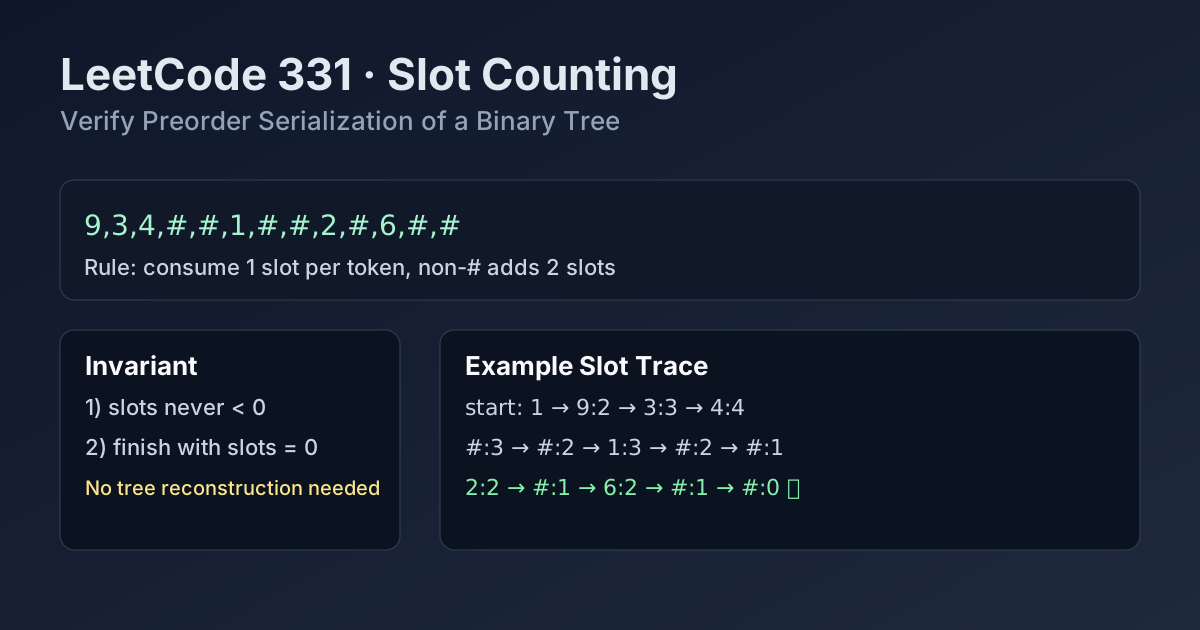
Given a comma-separated preorder serialization where null nodes are represented by #, determine whether it can represent a valid binary tree, without rebuilding the tree.
Key Insight
Track how many child slots are available. Start with one slot for the root. Every token consumes one slot. A non-null node creates two new child slots, so net change is +1. A null node creates none, so net change is -1. Slots must never go negative, and must end at exactly zero.
Algorithm
- Initialize slots = 1.
- For each token in preorder:
1) Consume one slot: slots--.
2) If slots < 0, invalid.
3) If token is not #, add two slots: slots += 2.
- Valid iff final slots == 0.
Complexity Analysis
Let n be the number of tokens.
Time: O(n).
Space: O(1) extra.
Common Pitfalls
- Only checking final slot count, but forgetting intermediate negative slots.
- Trying to build an explicit tree, which is unnecessary.
- Mishandling single token input like # (which is valid).
Reference Implementations (Java / Go / C++ / Python / JavaScript)
class Solution {
    public boolean isValidSerialization(String preorder) {
        int slots = 1;
        String[] nodes = preorder.split(",");

        for (String node : nodes) {
            slots--;
            if (slots < 0) return false;
            if (!node.equals("#")) {
                slots += 2;
            }
        }
        return slots == 0;
    }
}
func isValidSerialization(preorder string) bool {
slots := 1
nodes := strings.Split(preorder, ",")
for _, node := range nodes {
slots--
if slots < 0 {
return false
}
if node != "#" {
slots += 2
}
}
return slots == 0
}class Solution {
public:
bool isValidSerialization(string preorder) {
int slots = 1;
string token;
stringstream ss(preorder);
while (getline(ss, token, ',')) {
slots--;
if (slots < 0) return false;
if (token != "#") {
slots += 2;
}
}
return slots == 0;
}
};class Solution:
def isValidSerialization(self, preorder: str) -> bool:
slots = 1
for node in preorder.split(','):
slots -= 1
if slots < 0:
return False
if node != '#':
slots += 2
return slots == 0/**
* @param {string} preorder
* @return {boolean}
*/
var isValidSerialization = function(preorder) {
let slots = 1;
const nodes = preorder.split(',');
for (const node of nodes) {
slots -= 1;
if (slots < 0) return false;
if (node !== '#') {
slots += 2;
}
}
return slots === 0;
};中文
题目概述
给定一串逗号分隔的二叉树前序序列化字符串,空节点用 # 表示。要求在不重建树的情况下判断该序列是否有效。
核心思路
用“槽位(slot)”表示还可以放多少个节点。初始有 1 个槽位(根节点位置)。每读到一个节点都会占用 1 个槽位。若是非空节点,还会额外提供 2 个子槽位,因此净变化是 +1;若是 #,净变化是 -1。过程中槽位不能为负,最后必须正好为 0。
算法步骤
- 初始化 slots = 1。
- 按逗号遍历每个 token:
1) 先消耗一个槽位:slots--。
2) 若 slots < 0,立即判无效。
3) 若 token 不是 #,补充两个子槽位:slots += 2。
- 遍历结束后,slots == 0 才是有效序列。
复杂度分析
设 token 数量为 n。
时间复杂度:O(n)。
额外空间复杂度:O(1)。
常见陷阱
- 只检查最后是否为 0,但没有检查中途是否出现负数。
- 误以为必须真的构建二叉树。
- 忽略输入仅为 # 的情况(这是合法空树)。
多语言参考实现(Java / Go / C++ / Python / JavaScript)
class Solution {
    public boolean isValidSerialization(String preorder) {
        int slots = 1;
        String[] nodes = preorder.split(",");

        for (String node : nodes) {
            slots--;
            if (slots < 0) return false;
            if (!node.equals("#")) {
                slots += 2;
            }
        }
        return slots == 0;
    }
}
func isValidSerialization(preorder string) bool {
slots := 1
nodes := strings.Split(preorder, ",")
for _, node := range nodes {
slots--
if slots < 0 {
return false
}
if node != "#" {
slots += 2
}
}
return slots == 0
}class Solution {
public:
bool isValidSerialization(string preorder) {
int slots = 1;
string token;
stringstream ss(preorder);
while (getline(ss, token, ',')) {
slots--;
if (slots < 0) return false;
if (token != "#") {
slots += 2;
}
}
return slots == 0;
}
};class Solution:
def isValidSerialization(self, preorder: str) -> bool:
slots = 1
for node in preorder.split(','):
slots -= 1
if slots < 0:
return False
if node != '#':
slots += 2
return slots == 0/**
* @param {string} preorder
* @return {boolean}
*/
var isValidSerialization = function(preorder) {
let slots = 1;
const nodes = preorder.split(',');
for (const node of nodes) {
slots -= 1;
if (slots < 0) return false;
if (node !== '#') {
slots += 2;
}
}
return slots === 0;
};
Comments