LeetCode 320: Generalized Abbreviation (Backtracking)
LeetCode 320BacktrackingStringToday we solve LeetCode 320 - Generalized Abbreviation.
Source: https://leetcode.com/problems/generalized-abbreviation/
English
Problem Summary
Generate all generalized abbreviations of a word. At each position, we can keep the character or abbreviate it as part of a number.
Key Insight
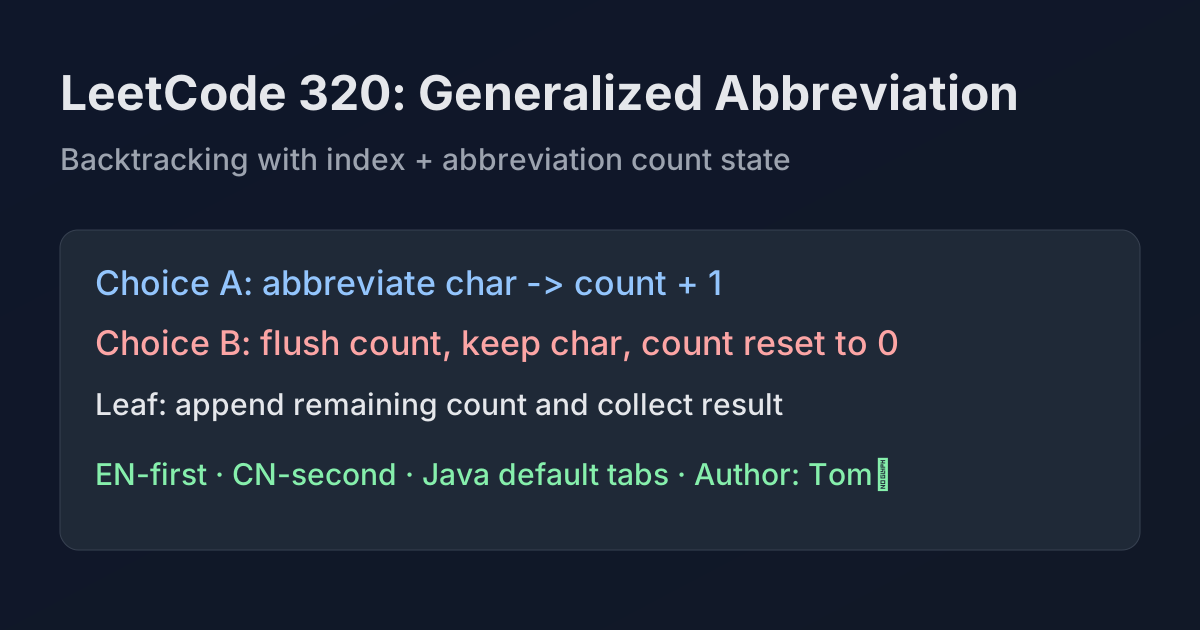
Use DFS with two states: current index and current abbreviation count. When keeping a letter, flush count first; when abbreviating, increase count.
Brute Force and Limitations
There are two choices per character, so total combinations are 2^n. DFS naturally enumerates them all without missing states.
Optimal Algorithm Steps
1) DFS(index, count, path).
2) Branch A: abbreviate current char, recurse with count+1.
3) Branch B: append count (if >0), append char, recurse with count=0.
4) At end, append pending count and save result.
Complexity Analysis
Time: O(n * 2^n).
Space: O(n) recursion path (excluding output).
Common Pitfalls
- Forgetting to append pending count at leaf.
- Writing consecutive numbers directly without character split.
- Not backtracking path length correctly.
Reference Implementations (Java / Go / C++ / Python / JavaScript)
class Solution {
    public List<String> generateAbbreviations(String word) {
        List<String> ans = new ArrayList<>();
        dfs(word, 0, 0, new StringBuilder(), ans);
        return ans;
    }

    private void dfs(String word, int i, int count, StringBuilder path, List<String> ans) {
        int len = path.length();
        if (i == word.length()) {
            if (count > 0) path.append(count);
            ans.add(path.toString());
            path.setLength(len);
            return;
        }

        dfs(word, i + 1, count + 1, path, ans);

        if (count > 0) path.append(count);
        path.append(word.charAt(i));
        dfs(word, i + 1, 0, path, ans);
        path.setLength(len);
    }
}
func generateAbbreviations(word string) []string {
ans := []string{}
var dfs func(i, count int, path []byte)
dfs = func(i, count int, path []byte) {
if i == len(word) {
if count > 0 {
path = append(path, []byte(strconv.Itoa(count))...)
}
ans = append(ans, string(path))
return
}
dfs(i+1, count+1, path)
path2 := append([]byte{}, path...)
if count > 0 {
path2 = append(path2, []byte(strconv.Itoa(count))...)
}
path2 = append(path2, word[i])
dfs(i+1, 0, path2)
}
dfs(0, 0, []byte{})
return ans
}class Solution {
public:
vector<string> generateAbbreviations(string word) {
vector<string> ans;
string path;
dfs(word, 0, 0, path, ans);
return ans;
}
void dfs(const string& word, int i, int count, string& path, vector<string>& ans) {
int len = path.size();
if (i == (int)word.size()) {
if (count > 0) path += to_string(count);
ans.push_back(path);
path.resize(len);
return;
}
dfs(word, i + 1, count + 1, path, ans);
if (count > 0) path += to_string(count);
path.push_back(word[i]);
dfs(word, i + 1, 0, path, ans);
path.resize(len);
}
};class Solution:
def generateAbbreviations(self, word: str) -> list[str]:
ans = []
def dfs(i: int, count: int, path: list[str]) -> None:
if i == len(word):
if count:
path.append(str(count))
ans.append("".join(path))
if count:
path.pop()
return
dfs(i + 1, count + 1, path)
if count:
path.append(str(count))
path.append(word[i])
dfs(i + 1, 0, path)
path.pop()
if count:
path.pop()
dfs(0, 0, [])
return ans/**
* @param {string} word
* @return {string[]}
*/
var generateAbbreviations = function(word) {
const ans = [];
const dfs = (i, count, path) => {
const len = path.length;
if (i === word.length) {
if (count > 0) path += String(count);
ans.push(path);
return;
}
dfs(i + 1, count + 1, path);
if (count > 0) path += String(count);
dfs(i + 1, 0, path + word[i]);
};
dfs(0, 0, "");
return ans;
};中文
题目概述
给你一个单词,返回它所有广义缩写。每个字符位置都可选择“保留字符”或“计入缩写数字”。
核心思路
DFS 维护两个状态:当前位置 index 和连续缩写计数 count。遇到保留字符分支时,先把 count 写入,再写字符。
暴力解法与不足
每个字符两种决策,总数是 2^n。回溯可以完整枚举,逻辑清晰。
最优算法步骤
1)dfs(index, count, path)。
2)分支A:缩写当前字符,count+1。
3)分支B:若 count>0 先写数字,再写字符,count 归零。
4)到达末尾时补上剩余 count 并收集答案。
复杂度分析
时间复杂度:O(n * 2^n)。
空间复杂度:O(n)(不含输出)。
常见陷阱
- 叶子节点忘记写入尾部 count。
- 连续数字处理错误。
- 回溯后 path 没恢复导致串污染。
多语言参考实现(Java / Go / C++ / Python / JavaScript)
class Solution {
    public List<String> generateAbbreviations(String word) {
        List<String> ans = new ArrayList<>();
        dfs(word, 0, 0, new StringBuilder(), ans);
        return ans;
    }

    private void dfs(String word, int i, int count, StringBuilder path, List<String> ans) {
        int len = path.length();
        if (i == word.length()) {
            if (count > 0) path.append(count);
            ans.add(path.toString());
            path.setLength(len);
            return;
        }

        dfs(word, i + 1, count + 1, path, ans);

        if (count > 0) path.append(count);
        path.append(word.charAt(i));
        dfs(word, i + 1, 0, path, ans);
        path.setLength(len);
    }
}
func generateAbbreviations(word string) []string {
ans := []string{}
var dfs func(i, count int, path []byte)
dfs = func(i, count int, path []byte) {
if i == len(word) {
if count > 0 {
path = append(path, []byte(strconv.Itoa(count))...)
}
ans = append(ans, string(path))
return
}
dfs(i+1, count+1, path)
path2 := append([]byte{}, path...)
if count > 0 {
path2 = append(path2, []byte(strconv.Itoa(count))...)
}
path2 = append(path2, word[i])
dfs(i+1, 0, path2)
}
dfs(0, 0, []byte{})
return ans
}class Solution {
public:
vector<string> generateAbbreviations(string word) {
vector<string> ans;
string path;
dfs(word, 0, 0, path, ans);
return ans;
}
void dfs(const string& word, int i, int count, string& path, vector<string>& ans) {
int len = path.size();
if (i == (int)word.size()) {
if (count > 0) path += to_string(count);
ans.push_back(path);
path.resize(len);
return;
}
dfs(word, i + 1, count + 1, path, ans);
if (count > 0) path += to_string(count);
path.push_back(word[i]);
dfs(word, i + 1, 0, path, ans);
path.resize(len);
}
};class Solution:
def generateAbbreviations(self, word: str) -> list[str]:
ans = []
def dfs(i: int, count: int, path: list[str]) -> None:
if i == len(word):
if count:
path.append(str(count))
ans.append("".join(path))
if count:
path.pop()
return
dfs(i + 1, count + 1, path)
if count:
path.append(str(count))
path.append(word[i])
dfs(i + 1, 0, path)
path.pop()
if count:
path.pop()
dfs(0, 0, [])
return ans/**
* @param {string} word
* @return {string[]}
*/
var generateAbbreviations = function(word) {
const ans = [];
const dfs = (i, count, path) => {
if (i === word.length) {
if (count > 0) path += String(count);
ans.push(path);
return;
}
dfs(i + 1, count + 1, path);
if (count > 0) path += String(count);
dfs(i + 1, 0, path + word[i]);
};
dfs(0, 0, "");
return ans;
};
Comments