LeetCode 270: Closest Binary Search Tree Value (BST Guided Search)
LeetCode 270Binary Search TreeTreeToday we solve LeetCode 270 - Closest Binary Search Tree Value.
Source: https://leetcode.com/problems/closest-binary-search-tree-value/
English
Problem Summary
Given the root of a binary search tree and a target floating-point value, return the node value that is closest to the target. The answer is guaranteed to be unique.
Key Insight
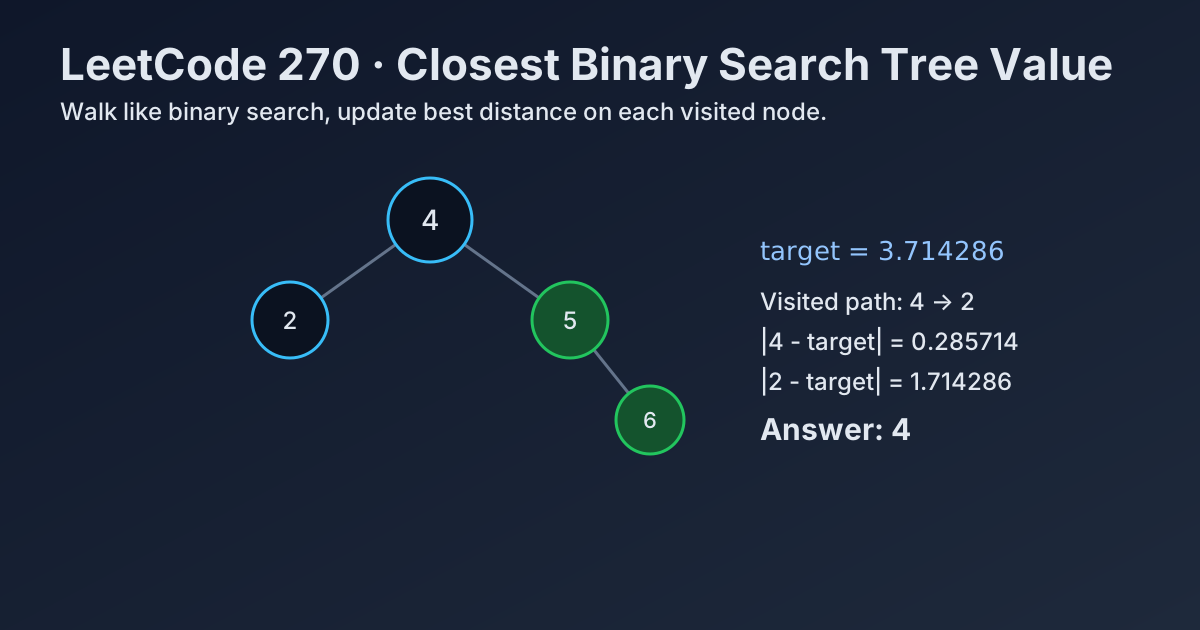
In a BST, if target < node.val, only the left subtree can contain closer smaller values; if target > node.val, only the right subtree can contain closer larger values. So we can walk one path like binary search, updating the best answer along the way.
Algorithm
- Initialize closest = root.val.
- Start from cur = root.
- At each node, compare |cur.val - target| with |closest - target|; update closest if better.
- Move left when target < cur.val, otherwise move right.
- Stop at null and return closest.
Complexity Analysis
Let h be tree height.
Time: O(h) (one root-to-leaf path).
Space: O(1) iterative extra space.
Common Pitfalls
- Doing full DFS/BFS and losing BST pruning advantage.
- Comparing raw difference instead of absolute difference.
- Ignoring uniqueness guarantee and writing unstable tie handling.
Reference Implementations (Java / Go / C++ / Python / JavaScript)
class Solution {
    public int closestValue(TreeNode root, double target) {
        int closest = root.val;
        TreeNode cur = root;
        while (cur != null) {
            if (Math.abs(cur.val - target) < Math.abs(closest - target)) {
                closest = cur.val;
            }
            cur = target < cur.val ? cur.left : cur.right;
        }
        return closest;
    }
}
func closestValue(root *TreeNode, target float64) int {
closest := root.Val
cur := root
for cur != nil {
if math.Abs(float64(cur.Val)-target) < math.Abs(float64(closest)-target) {
closest = cur.Val
}
if target < float64(cur.Val) {
cur = cur.Left
} else {
cur = cur.Right
}
}
return closest
}class Solution {
public:
int closestValue(TreeNode* root, double target) {
int closest = root->val;
TreeNode* cur = root;
while (cur != nullptr) {
if (fabs(cur->val - target) < fabs(closest - target)) {
closest = cur->val;
}
cur = (target < cur->val) ? cur->left : cur->right;
}
return closest;
}
};class Solution:
def closestValue(self, root: Optional[TreeNode], target: float) -> int:
closest = root.val
cur = root
while cur:
if abs(cur.val - target) < abs(closest - target):
closest = cur.val
cur = cur.left if target < cur.val else cur.right
return closestvar closestValue = function(root, target) {
let closest = root.val;
let cur = root;
while (cur !== null) {
if (Math.abs(cur.val - target) < Math.abs(closest - target)) {
closest = cur.val;
}
cur = target < cur.val ? cur.left : cur.right;
}
return closest;
};中文
题目概述
给定一棵二叉搜索树和一个浮点数 target,返回与 target 最接近的节点值。题目保证答案唯一。
核心思路
利用 BST 有序性:当 target < node.val 时,更接近的候选只可能在左子树;当 target > node.val 时只可能在右子树。于是像二分一样沿一条路径向下,同时维护当前最优答案。
算法步骤
- 初始化 closest = root.val。
- 从根开始遍历指针 cur。
- 若 |cur.val - target| 更小,则更新 closest。
- 若 target < cur.val 向左走,否则向右走。
- 到达空节点后返回 closest。
复杂度分析
设树高为 h。
时间复杂度:O(h)。
空间复杂度:O(1)(迭代写法)。
常见陷阱
- 不利用 BST 剪枝而遍历整棵树。
- 比较差值时忘记取绝对值。
- 对“答案唯一”处理不当,写出不稳定的相等分支。
多语言参考实现(Java / Go / C++ / Python / JavaScript)
class Solution {
    public int closestValue(TreeNode root, double target) {
        int closest = root.val;
        TreeNode cur = root;
        while (cur != null) {
            if (Math.abs(cur.val - target) < Math.abs(closest - target)) {
                closest = cur.val;
            }
            cur = target < cur.val ? cur.left : cur.right;
        }
        return closest;
    }
}
func closestValue(root *TreeNode, target float64) int {
closest := root.Val
cur := root
for cur != nil {
if math.Abs(float64(cur.Val)-target) < math.Abs(float64(closest)-target) {
closest = cur.Val
}
if target < float64(cur.Val) {
cur = cur.Left
} else {
cur = cur.Right
}
}
return closest
}class Solution {
public:
int closestValue(TreeNode* root, double target) {
int closest = root->val;
TreeNode* cur = root;
while (cur != nullptr) {
if (fabs(cur->val - target) < fabs(closest - target)) {
closest = cur->val;
}
cur = (target < cur->val) ? cur->left : cur->right;
}
return closest;
}
};class Solution:
def closestValue(self, root: Optional[TreeNode], target: float) -> int:
closest = root.val
cur = root
while cur:
if abs(cur.val - target) < abs(closest - target):
closest = cur.val
cur = cur.left if target < cur.val else cur.right
return closestvar closestValue = function(root, target) {
let closest = root.val;
let cur = root;
while (cur !== null) {
if (Math.abs(cur.val - target) < Math.abs(closest - target)) {
closest = cur.val;
}
cur = target < cur.val ? cur.left : cur.right;
}
return closest;
};
Comments