LeetCode 2614: Prime In Diagonal (Scan Both Diagonals + Primality Test)
LeetCode 2614MatrixNumber TheoryToday we solve LeetCode 2614 - Prime In Diagonal.
Source: https://leetcode.com/problems/prime-in-diagonal/
English
Problem Summary
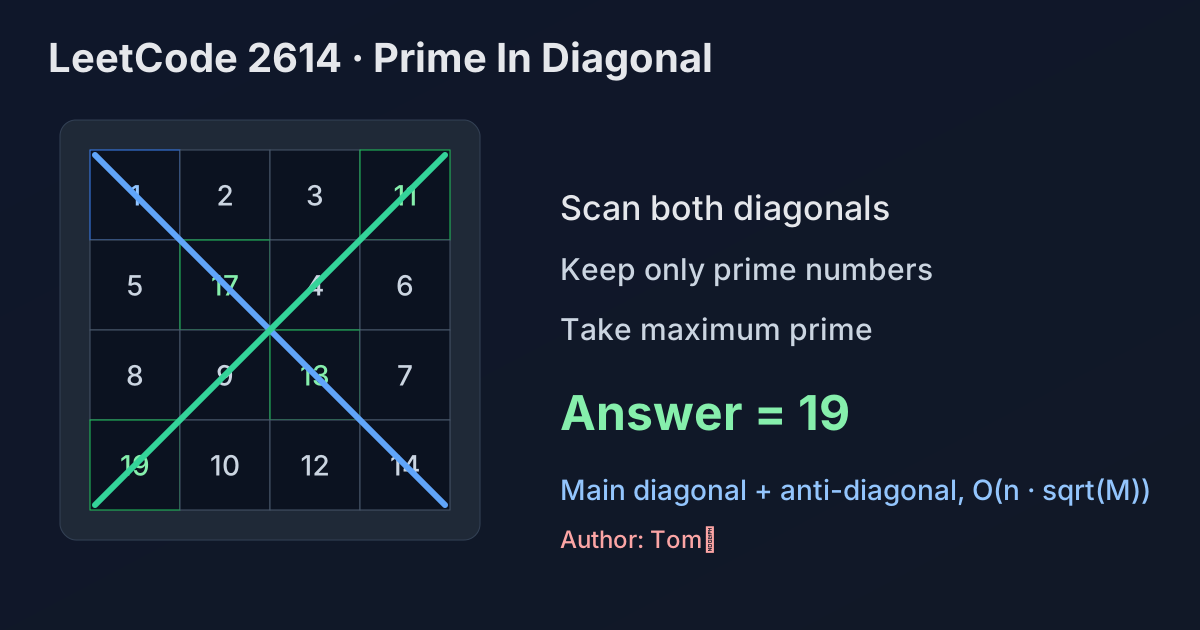
Given an n x n integer matrix, examine values on the main diagonal and anti-diagonal, and return the largest prime number among them. If there is no prime, return 0.
Key Insight
Only 2n cells matter (with center overlap when n is odd). So we can directly scan those diagonal cells and run a fast primality check (trial division up to sqrt(x)).
Algorithm
- Initialize answer ans = 0.
- For each row i, inspect nums[i][i] and nums[i][n-1-i].
- For each inspected value x, if x is prime, update ans = max(ans, x).
- Return ans.
Complexity Analysis
Let M be the largest diagonal value. We check at most 2n values, each primality test costs O(sqrt(M)).
Total: O(n * sqrt(M)), extra space: O(1).
Reference Implementations (Java / Go / C++ / Python / JavaScript)
class Solution {
    public int diagonalPrime(int[][] nums) {
        int n = nums.length;
        int ans = 0;
        for (int i = 0; i < n; i++) {
            int a = nums[i][i];
            int b = nums[i][n - 1 - i];
            if (isPrime(a)) ans = Math.max(ans, a);
            if (isPrime(b)) ans = Math.max(ans, b);
        }
        return ans;
    }

    private boolean isPrime(int x) {
        if (x < 2) return false;
        if (x % 2 == 0) return x == 2;
        for (int d = 3; d * d <= x; d += 2) {
            if (x % d == 0) return false;
        }
        return true;
    }
}
func diagonalPrime(nums [][]int) int {
n := len(nums)
ans := 0
for i := 0; i < n; i++ {
a := nums[i][i]
b := nums[i][n-1-i]
if isPrime(a) && a > ans {
ans = a
}
if isPrime(b) && b > ans {
ans = b
}
}
return ans
}
func isPrime(x int) bool {
if x < 2 {
return false
}
if x%2 == 0 {
return x == 2
}
for d := 3; d*d <= x; d += 2 {
if x%d == 0 {
return false
}
}
return true
}class Solution {
public:
int diagonalPrime(vector<vector<int>>& nums) {
int n = nums.size();
int ans = 0;
for (int i = 0; i < n; ++i) {
int a = nums[i][i];
int b = nums[i][n - 1 - i];
if (isPrime(a)) ans = max(ans, a);
if (isPrime(b)) ans = max(ans, b);
}
return ans;
}
private:
bool isPrime(int x) {
if (x < 2) return false;
if (x % 2 == 0) return x == 2;
for (int d = 3; d * d <= x; d += 2) {
if (x % d == 0) return false;
}
return true;
}
};class Solution:
def diagonalPrime(self, nums: List[List[int]]) -> int:
n = len(nums)
ans = 0
def is_prime(x: int) -> bool:
if x < 2:
return False
if x % 2 == 0:
return x == 2
d = 3
while d * d <= x:
if x % d == 0:
return False
d += 2
return True
for i in range(n):
a = nums[i][i]
b = nums[i][n - 1 - i]
if is_prime(a):
ans = max(ans, a)
if is_prime(b):
ans = max(ans, b)
return ansvar diagonalPrime = function(nums) {
const n = nums.length;
let ans = 0;
const isPrime = (x) => {
if (x < 2) return false;
if (x % 2 === 0) return x === 2;
for (let d = 3; d * d <= x; d += 2) {
if (x % d === 0) return false;
}
return true;
};
for (let i = 0; i < n; i++) {
const a = nums[i][i];
const b = nums[i][n - 1 - i];
if (isPrime(a)) ans = Math.max(ans, a);
if (isPrime(b)) ans = Math.max(ans, b);
}
return ans;
};中文
题目概述
给你一个 n x n 的整数矩阵,只看主对角线和副对角线上的元素,返回其中最大的质数;若不存在质数则返回 0。
核心思路
真正需要检查的格子最多只有 2n 个(奇数阶矩阵中心点会重合)。因此直接遍历两条对角线,并对每个数做一次 sqrt(x) 级别的质数判定即可。
算法步骤
- 初始化答案 ans=0。
- 遍历每一行 i,取主对角元素 nums[i][i] 与副对角元素 nums[i][n-1-i]。
- 如果当前值是质数,就用它更新最大值。
- 遍历结束后返回 ans。
复杂度分析
设对角线元素中的最大值为 M。最多检查 2n 个数,每个判质复杂度为 O(sqrt(M))。
总时间复杂度 O(n * sqrt(M)),额外空间复杂度 O(1)。
多语言参考实现(Java / Go / C++ / Python / JavaScript)
class Solution {
    public int diagonalPrime(int[][] nums) {
        int n = nums.length;
        int ans = 0;
        for (int i = 0; i < n; i++) {
            int a = nums[i][i];
            int b = nums[i][n - 1 - i];
            if (isPrime(a)) ans = Math.max(ans, a);
            if (isPrime(b)) ans = Math.max(ans, b);
        }
        return ans;
    }

    private boolean isPrime(int x) {
        if (x < 2) return false;
        if (x % 2 == 0) return x == 2;
        for (int d = 3; d * d <= x; d += 2) {
            if (x % d == 0) return false;
        }
        return true;
    }
}
func diagonalPrime(nums [][]int) int {
n := len(nums)
ans := 0
for i := 0; i < n; i++ {
a := nums[i][i]
b := nums[i][n-1-i]
if isPrime(a) && a > ans {
ans = a
}
if isPrime(b) && b > ans {
ans = b
}
}
return ans
}
func isPrime(x int) bool {
if x < 2 {
return false
}
if x%2 == 0 {
return x == 2
}
for d := 3; d*d <= x; d += 2 {
if x%d == 0 {
return false
}
}
return true
}class Solution {
public:
int diagonalPrime(vector<vector<int>>& nums) {
int n = nums.size();
int ans = 0;
for (int i = 0; i < n; ++i) {
int a = nums[i][i];
int b = nums[i][n - 1 - i];
if (isPrime(a)) ans = max(ans, a);
if (isPrime(b)) ans = max(ans, b);
}
return ans;
}
private:
bool isPrime(int x) {
if (x < 2) return false;
if (x % 2 == 0) return x == 2;
for (int d = 3; d * d <= x; d += 2) {
if (x % d == 0) return false;
}
return true;
}
};class Solution:
def diagonalPrime(self, nums: List[List[int]]) -> int:
n = len(nums)
ans = 0
def is_prime(x: int) -> bool:
if x < 2:
return False
if x % 2 == 0:
return x == 2
d = 3
while d * d <= x:
if x % d == 0:
return False
d += 2
return True
for i in range(n):
a = nums[i][i]
b = nums[i][n - 1 - i]
if is_prime(a):
ans = max(ans, a)
if is_prime(b):
ans = max(ans, b)
return ansvar diagonalPrime = function(nums) {
const n = nums.length;
let ans = 0;
const isPrime = (x) => {
if (x < 2) return false;
if (x % 2 === 0) return x === 2;
for (let d = 3; d * d <= x; d += 2) {
if (x % d === 0) return false;
}
return true;
};
for (let i = 0; i < n; i++) {
const a = nums[i][i];
const b = nums[i][n - 1 - i];
if (isPrime(a)) ans = Math.max(ans, a);
if (isPrime(b)) ans = Math.max(ans, b);
}
return ans;
};
Comments