LeetCode 2586: Count the Number of Vowel Strings in Range (Boundary Check per Word)
LeetCode 2586StringCountingToday we solve LeetCode 2586 - Count the Number of Vowel Strings in Range.
Source: https://leetcode.com/problems/count-the-number-of-vowel-strings-in-range/
English
Problem Summary
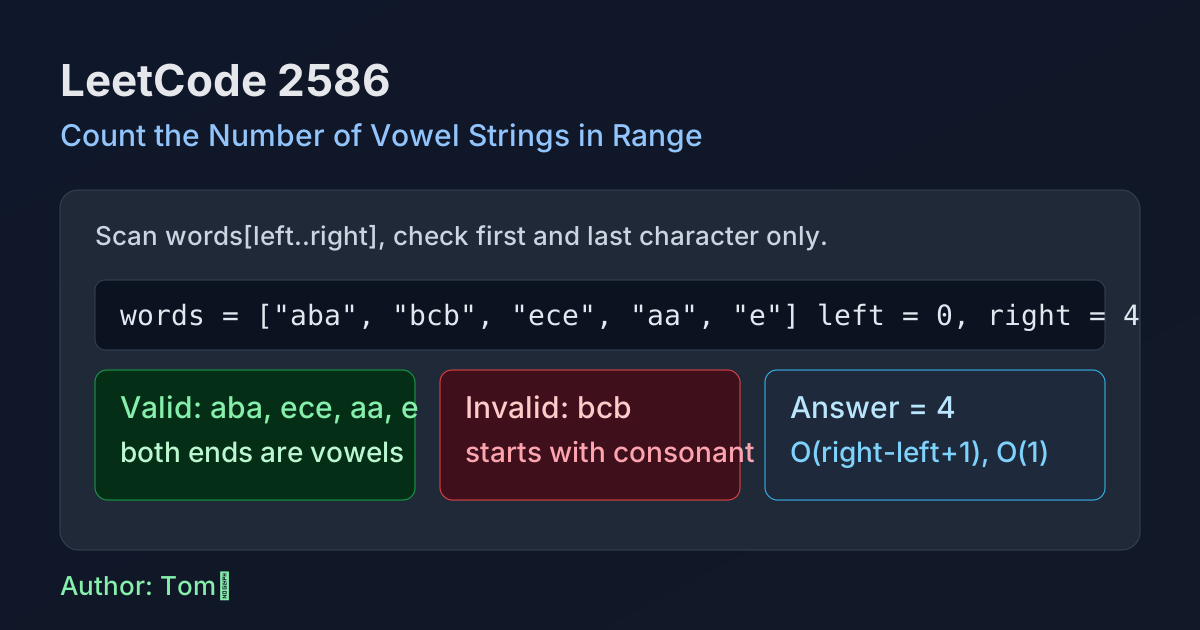
Given an array of lowercase strings words and two indices left and right, count how many words in [left, right] start and end with a vowel.
Key Insight
Each word can be validated independently by checking only its first and last characters. That makes a direct one-pass scan optimal.
Algorithm
- Build a vowel set: {a, e, i, o, u}.
- Loop i from left to right.
- Let w = words[i], check w[0] and w[-1] (or last index).
- If both are vowels, increment answer.
- Return the final count.
Complexity Analysis
Time: O(right - left + 1).
Space: O(1).
Reference Implementations (Java / Go / C++ / Python / JavaScript)
class Solution {
    private boolean isVowel(char c) {
        return c == 'a' || c == 'e' || c == 'i' || c == 'o' || c == 'u';
    }

    public int vowelStrings(String[] words, int left, int right) {
        int ans = 0;
        for (int i = left; i <= right; i++) {
            String w = words[i];
            if (isVowel(w.charAt(0)) && isVowel(w.charAt(w.length() - 1))) {
                ans++;
            }
        }
        return ans;
    }
}
func isVowel(c byte) bool {
return c == 'a' || c == 'e' || c == 'i' || c == 'o' || c == 'u'
}
func vowelStrings(words []string, left int, right int) int {
ans := 0
for i := left; i <= right; i++ {
w := words[i]
if isVowel(w[0]) && isVowel(w[len(w)-1]) {
ans++
}
}
return ans
}class Solution {
public:
bool isVowel(char c) {
return c == 'a' || c == 'e' || c == 'i' || c == 'o' || c == 'u';
}
int vowelStrings(vector<string>& words, int left, int right) {
int ans = 0;
for (int i = left; i <= right; ++i) {
const string& w = words[i];
if (isVowel(w.front()) && isVowel(w.back())) {
++ans;
}
}
return ans;
}
};class Solution:
def vowelStrings(self, words: List[str], left: int, right: int) -> int:
vowels = {"a", "e", "i", "o", "u"}
ans = 0
for i in range(left, right + 1):
w = words[i]
if w[0] in vowels and w[-1] in vowels:
ans += 1
return ansconst isVowel = (c) => {
return c === 'a' || c === 'e' || c === 'i' || c === 'o' || c === 'u';
};
var vowelStrings = function(words, left, right) {
let ans = 0;
for (let i = left; i <= right; i++) {
const w = words[i];
if (isVowel(w[0]) && isVowel(w[w.length - 1])) {
ans++;
}
}
return ans;
};中文
题目概述
给定小写字符串数组 words 和下标 left、right,统计区间 [left, right] 内首尾字符都为元音字母的单词数量。
核心思路
每个单词是否符合条件只取决于首字符和尾字符,所以直接按区间遍历并判断即可,不需要额外复杂结构。
算法步骤
- 准备元音集合 {a, e, i, o, u}。
- 遍历 i 从 left 到 right。
- 取 words[i] 的首字符与尾字符。
- 若二者都在元音集合中,计数加一。
- 返回最终计数。
复杂度分析
时间复杂度:O(right - left + 1)。
空间复杂度:O(1)。
多语言参考实现(Java / Go / C++ / Python / JavaScript)
class Solution {
    private boolean isVowel(char c) {
        return c == 'a' || c == 'e' || c == 'i' || c == 'o' || c == 'u';
    }

    public int vowelStrings(String[] words, int left, int right) {
        int ans = 0;
        for (int i = left; i <= right; i++) {
            String w = words[i];
            if (isVowel(w.charAt(0)) && isVowel(w.charAt(w.length() - 1))) {
                ans++;
            }
        }
        return ans;
    }
}
func isVowel(c byte) bool {
return c == 'a' || c == 'e' || c == 'i' || c == 'o' || c == 'u'
}
func vowelStrings(words []string, left int, right int) int {
ans := 0
for i := left; i <= right; i++ {
w := words[i]
if isVowel(w[0]) && isVowel(w[len(w)-1]) {
ans++
}
}
return ans
}class Solution {
public:
bool isVowel(char c) {
return c == 'a' || c == 'e' || c == 'i' || c == 'o' || c == 'u';
}
int vowelStrings(vector<string>& words, int left, int right) {
int ans = 0;
for (int i = left; i <= right; ++i) {
const string& w = words[i];
if (isVowel(w.front()) && isVowel(w.back())) {
++ans;
}
}
return ans;
}
};class Solution:
def vowelStrings(self, words: List[str], left: int, right: int) -> int:
vowels = {"a", "e", "i", "o", "u"}
ans = 0
for i in range(left, right + 1):
w = words[i]
if w[0] in vowels and w[-1] in vowels:
ans += 1
return ansconst isVowel = (c) => {
return c === 'a' || c === 'e' || c === 'i' || c === 'o' || c === 'u';
};
var vowelStrings = function(words, left, right) {
let ans = 0;
for (let i = left; i <= right; i++) {
const w = words[i];
if (isVowel(w[0]) && isVowel(w[w.length - 1])) {
ans++;
}
}
return ans;
};
Comments