LeetCode 1007: Minimum Domino Rotations For Equal Row (Candidate Value Feasibility Check)
LeetCode 1007GreedyArrayToday we solve LeetCode 1007 - Minimum Domino Rotations For Equal Row.
Source: https://leetcode.com/problems/minimum-domino-rotations-for-equal-row/
English
Problem Summary
Given two arrays tops and bottoms (values from 1 to 6), each index represents one domino. You may rotate a domino (swap top/bottom at that index). Return the minimum rotations needed so that all values in tops are equal, or all values in bottoms are equal. If impossible, return -1.
Key Insight
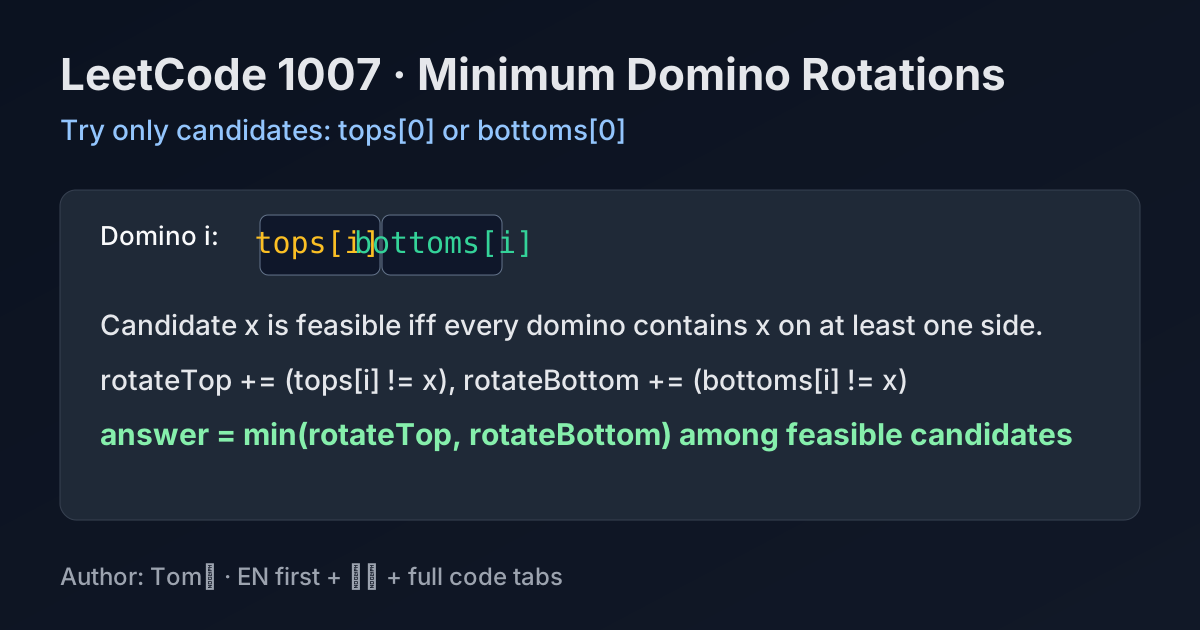
If a final unified value exists, it must be either tops[0] or bottoms[0]. For a candidate value x, each domino must contain x on at least one side; otherwise x is impossible. While scanning, count rotations needed to make all tops equal to x and all bottoms equal to x, then take the smaller one.
Algorithm
- Try candidate x = tops[0] and candidate x = bottoms[0].
- For each index i:
• If neither tops[i] nor bottoms[i] equals x, candidate fails.
• If tops[i] != x, one rotation is needed for top-unified case.
• If bottoms[i] != x, one rotation is needed for bottom-unified case.
- Candidate answer is min(topRotations, bottomRotations) if feasible.
- Final answer is minimum feasible candidate answer, else -1.
Complexity Analysis
Time: O(n) (at most two scans).
Space: O(1).
Common Pitfalls
- Trying all values 1..6 with unnecessary extra logic.
- Forgetting to count both directions (make top all x vs make bottom all x).
- Missing impossible condition when one domino contains neither candidate value.
Reference Implementations (Java / Go / C++ / Python / JavaScript)
class Solution {
    public int minDominoRotations(int[] tops, int[] bottoms) {
        int ans = check(tops, bottoms, tops[0]);
        if (ans != -1) return ans;
        return check(tops, bottoms, bottoms[0]);
    }

    private int check(int[] tops, int[] bottoms, int x) {
        int rotateTop = 0;
        int rotateBottom = 0;
        for (int i = 0; i < tops.length; i++) {
            if (tops[i] != x && bottoms[i] != x) return -1;
            if (tops[i] != x) rotateTop++;
            if (bottoms[i] != x) rotateBottom++;
        }
        return Math.min(rotateTop, rotateBottom);
    }
}
func minDominoRotations(tops []int, bottoms []int) int {
if ans := check(tops, bottoms, tops[0]); ans != -1 {
return ans
}
return check(tops, bottoms, bottoms[0])
}
func check(tops []int, bottoms []int, x int) int {
rotateTop, rotateBottom := 0, 0
for i := 0; i < len(tops); i++ {
if tops[i] != x && bottoms[i] != x {
return -1
}
if tops[i] != x {
rotateTop++
}
if bottoms[i] != x {
rotateBottom++
}
}
if rotateTop < rotateBottom {
return rotateTop
}
return rotateBottom
}class Solution {
public:
int minDominoRotations(vector<int>& tops, vector<int>& bottoms) {
int ans = check(tops, bottoms, tops[0]);
if (ans != -1) return ans;
return check(tops, bottoms, bottoms[0]);
}
private:
int check(vector<int>& tops, vector<int>& bottoms, int x) {
int rotateTop = 0, rotateBottom = 0;
for (int i = 0; i < (int)tops.size(); ++i) {
if (tops[i] != x && bottoms[i] != x) return -1;
if (tops[i] != x) ++rotateTop;
if (bottoms[i] != x) ++rotateBottom;
}
return min(rotateTop, rotateBottom);
}
};class Solution:
def minDominoRotations(self, tops: List[int], bottoms: List[int]) -> int:
ans = self.check(tops, bottoms, tops[0])
if ans != -1:
return ans
return self.check(tops, bottoms, bottoms[0])
def check(self, tops: List[int], bottoms: List[int], x: int) -> int:
rotate_top = 0
rotate_bottom = 0
for t, b in zip(tops, bottoms):
if t != x and b != x:
return -1
if t != x:
rotate_top += 1
if b != x:
rotate_bottom += 1
return min(rotate_top, rotate_bottom)var minDominoRotations = function(tops, bottoms) {
let ans = check(tops, bottoms, tops[0]);
if (ans !== -1) return ans;
return check(tops, bottoms, bottoms[0]);
};
function check(tops, bottoms, x) {
let rotateTop = 0;
let rotateBottom = 0;
for (let i = 0; i < tops.length; i++) {
if (tops[i] !== x && bottoms[i] !== x) return -1;
if (tops[i] !== x) rotateTop++;
if (bottoms[i] !== x) rotateBottom++;
}
return Math.min(rotateTop, rotateBottom);
}中文
题目概述
给定两个数组 tops 和 bottoms(元素范围 1~6),每个位置代表一张多米诺骨牌。你可以对任意位置翻转(上下交换)。目标是让 tops 全相等,或 bottoms 全相等,返回最少翻转次数;若无法做到,返回 -1。
核心思路
最终统一值如果存在,必然是 tops[0] 或 bottoms[0]。对候选值 x 来说,每张骨牌都必须至少有一面是 x,否则该候选直接失败。扫描时同时统计两种代价:把 top 统一为 x 需要多少次翻转、把 bottom 统一为 x 需要多少次翻转,取较小值即可。
算法步骤
- 候选值只需要尝试 tops[0] 与 bottoms[0]。
- 遍历每个位置 i:
• 若 tops[i] 与 bottoms[i] 都不等于候选值,直接失败。
• 若 tops[i] != x,说明要把 top 统一成 x 时该位置要翻转。
• 若 bottoms[i] != x,说明要把 bottom 统一成 x 时该位置要翻转。
- 候选成功时答案为两者较小值。
- 两个候选都失败则返回 -1。
复杂度分析
时间复杂度:O(n)(最多两次线性扫描)。
空间复杂度:O(1)。
常见陷阱
- 没利用“候选只可能是首张骨牌的两个值”这一关键性质。
- 只统计了统一 top,忘了统一 bottom 的代价。
- 遇到某张骨牌两面都不是候选值时没有及时判失败。
多语言参考实现(Java / Go / C++ / Python / JavaScript)
class Solution {
    public int minDominoRotations(int[] tops, int[] bottoms) {
        int ans = check(tops, bottoms, tops[0]);
        if (ans != -1) return ans;
        return check(tops, bottoms, bottoms[0]);
    }

    private int check(int[] tops, int[] bottoms, int x) {
        int rotateTop = 0;
        int rotateBottom = 0;
        for (int i = 0; i < tops.length; i++) {
            if (tops[i] != x && bottoms[i] != x) return -1;
            if (tops[i] != x) rotateTop++;
            if (bottoms[i] != x) rotateBottom++;
        }
        return Math.min(rotateTop, rotateBottom);
    }
}
func minDominoRotations(tops []int, bottoms []int) int {
if ans := check(tops, bottoms, tops[0]); ans != -1 {
return ans
}
return check(tops, bottoms, bottoms[0])
}
func check(tops []int, bottoms []int, x int) int {
rotateTop, rotateBottom := 0, 0
for i := 0; i < len(tops); i++ {
if tops[i] != x && bottoms[i] != x {
return -1
}
if tops[i] != x {
rotateTop++
}
if bottoms[i] != x {
rotateBottom++
}
}
if rotateTop < rotateBottom {
return rotateTop
}
return rotateBottom
}class Solution {
public:
int minDominoRotations(vector<int>& tops, vector<int>& bottoms) {
int ans = check(tops, bottoms, tops[0]);
if (ans != -1) return ans;
return check(tops, bottoms, bottoms[0]);
}
private:
int check(vector<int>& tops, vector<int>& bottoms, int x) {
int rotateTop = 0, rotateBottom = 0;
for (int i = 0; i < (int)tops.size(); ++i) {
if (tops[i] != x && bottoms[i] != x) return -1;
if (tops[i] != x) ++rotateTop;
if (bottoms[i] != x) ++rotateBottom;
}
return min(rotateTop, rotateBottom);
}
};class Solution:
def minDominoRotations(self, tops: List[int], bottoms: List[int]) -> int:
ans = self.check(tops, bottoms, tops[0])
if ans != -1:
return ans
return self.check(tops, bottoms, bottoms[0])
def check(self, tops: List[int], bottoms: List[int], x: int) -> int:
rotate_top = 0
rotate_bottom = 0
for t, b in zip(tops, bottoms):
if t != x and b != x:
return -1
if t != x:
rotate_top += 1
if b != x:
rotate_bottom += 1
return min(rotate_top, rotate_bottom)var minDominoRotations = function(tops, bottoms) {
let ans = check(tops, bottoms, tops[0]);
if (ans !== -1) return ans;
return check(tops, bottoms, bottoms[0]);
};
function check(tops, bottoms, x) {
let rotateTop = 0;
let rotateBottom = 0;
for (let i = 0; i < tops.length; i++) {
if (tops[i] !== x && bottoms[i] !== x) return -1;
if (tops[i] !== x) rotateTop++;
if (bottoms[i] !== x) rotateBottom++;
}
return Math.min(rotateTop, rotateBottom);
}
Comments