LeetCode 59: Spiral Matrix II (Layer-by-Layer Boundary Fill)
LeetCode 59MatrixSimulationToday we solve LeetCode 59 - Spiral Matrix II.
Source: https://leetcode.com/problems/spiral-matrix-ii/
English
Problem Summary
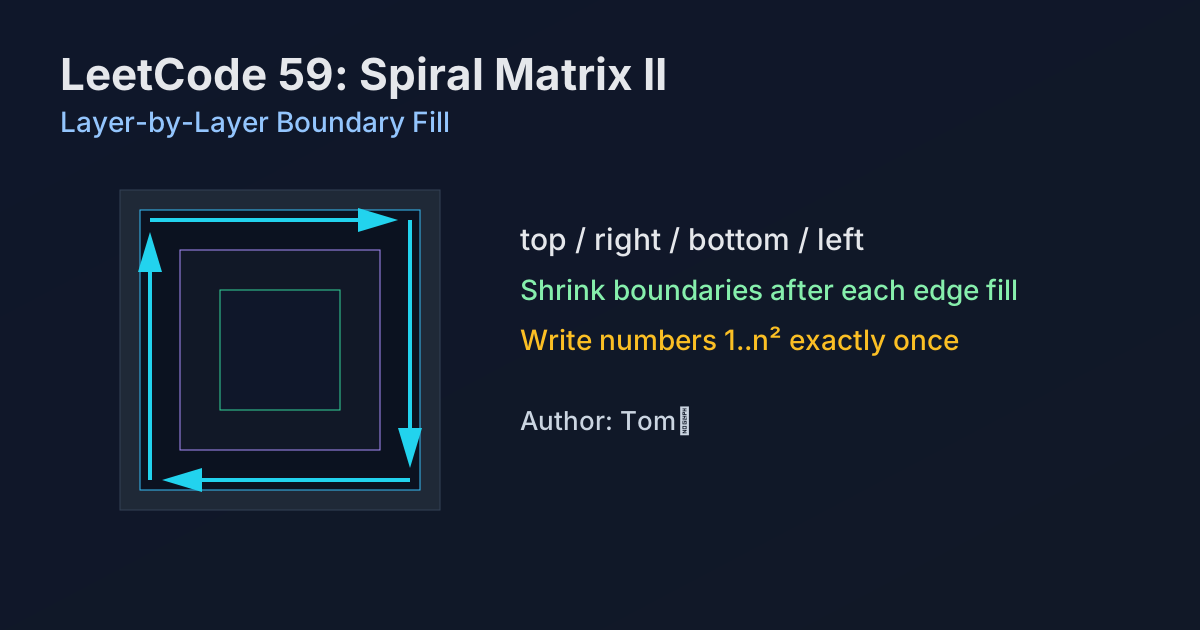
Given an integer n, generate an n x n matrix filled with values from 1 to n² in spiral order (clockwise, from outer layer to inner layer).
Key Insight
Maintain four shrinking boundaries: top, bottom, left, right. Fill one side at a time (top row, right column, bottom row, left column), then move boundaries inward.
Brute Force and Limitations
A direction-walking simulation with visited markers works, but needs extra memory for visited checks. Boundary-shrink simulation is cleaner and keeps space overhead minimal.
Optimal Algorithm Steps (Boundary Shrink)
1) Initialize an n x n matrix and set num = 1.
2) While left <= right and top <= bottom, fill the top row from left→right, then top++.
3) Fill the right column from top→bottom, then right--.
4) If boundaries still valid, fill bottom row right→left, then bottom--.
5) If boundaries still valid, fill left column bottom→top, then left++.
Complexity Analysis
Time: O(n²), every cell is written once.
Space: O(1) extra (excluding output matrix).
Common Pitfalls
- Forgetting boundary checks before bottom-row / left-column passes causes overwrite.
- Wrong update order of boundaries leading to skipped or duplicated cells.
- Off-by-one loop conditions on each edge.
Reference Implementations (Java / Go / C++ / Python / JavaScript)
class Solution {
    public int[][] generateMatrix(int n) {
        int[][] ans = new int[n][n];
        int top = 0, bottom = n - 1;
        int left = 0, right = n - 1;
        int num = 1;

        while (left <= right && top <= bottom) {
            for (int j = left; j <= right; j++) ans[top][j] = num++;
            top++;

            for (int i = top; i <= bottom; i++) ans[i][right] = num++;
            right--;

            if (top <= bottom) {
                for (int j = right; j >= left; j--) ans[bottom][j] = num++;
                bottom--;
            }

            if (left <= right) {
                for (int i = bottom; i >= top; i--) ans[i][left] = num++;
                left++;
            }
        }
        return ans;
    }
}
func generateMatrix(n int) [][]int {
ans := make([][]int, n)
for i := range ans {
ans[i] = make([]int, n)
}
top, bottom := 0, n-1
left, right := 0, n-1
num := 1
for left <= right && top <= bottom {
for j := left; j <= right; j++ {
ans[top][j] = num
num++
}
top++
for i := top; i <= bottom; i++ {
ans[i][right] = num
num++
}
right--
if top <= bottom {
for j := right; j >= left; j-- {
ans[bottom][j] = num
num++
}
bottom--
}
if left <= right {
for i := bottom; i >= top; i-- {
ans[i][left] = num
num++
}
left++
}
}
return ans
}class Solution {
public:
vector<vector<int>> generateMatrix(int n) {
vector<vector<int>> ans(n, vector<int>(n));
int top = 0, bottom = n - 1;
int left = 0, right = n - 1;
int num = 1;
while (left <= right && top <= bottom) {
for (int j = left; j <= right; ++j) ans[top][j] = num++;
++top;
for (int i = top; i <= bottom; ++i) ans[i][right] = num++;
--right;
if (top <= bottom) {
for (int j = right; j >= left; --j) ans[bottom][j] = num++;
--bottom;
}
if (left <= right) {
for (int i = bottom; i >= top; --i) ans[i][left] = num++;
++left;
}
}
return ans;
}
};class Solution:
def generateMatrix(self, n: int) -> list[list[int]]:
ans = [[0] * n for _ in range(n)]
top, bottom = 0, n - 1
left, right = 0, n - 1
num = 1
while left <= right and top <= bottom:
for j in range(left, right + 1):
ans[top][j] = num
num += 1
top += 1
for i in range(top, bottom + 1):
ans[i][right] = num
num += 1
right -= 1
if top <= bottom:
for j in range(right, left - 1, -1):
ans[bottom][j] = num
num += 1
bottom -= 1
if left <= right:
for i in range(bottom, top - 1, -1):
ans[i][left] = num
num += 1
left += 1
return ans/**
* @param {number} n
* @return {number[][]}
*/
var generateMatrix = function(n) {
const ans = Array.from({ length: n }, () => Array(n).fill(0));
let top = 0, bottom = n - 1;
let left = 0, right = n - 1;
let num = 1;
while (left <= right && top <= bottom) {
for (let j = left; j <= right; j++) ans[top][j] = num++;
top++;
for (let i = top; i <= bottom; i++) ans[i][right] = num++;
right--;
if (top <= bottom) {
for (let j = right; j >= left; j--) ans[bottom][j] = num++;
bottom--;
}
if (left <= right) {
for (let i = bottom; i >= top; i--) ans[i][left] = num++;
left++;
}
}
return ans;
};中文
题目概述
给定整数 n,生成一个 n x n 矩阵,将 1 到 n² 按顺时针螺旋顺序填入。
核心思路
用四个边界 top / bottom / left / right 表示当前待填充“外圈”。每填完一条边,就向内收缩对应边界。
基线解法与不足
可以用“方向数组 + visited 标记”逐格行走,但需要额外标记空间。边界收缩法逻辑更直接,额外空间更小。
最优算法步骤(边界收缩)
1)初始化 n x n 结果矩阵,计数器 num = 1。
2)填上边(左→右),top++。
3)填右边(上→下),right--。
4)若 top <= bottom,填下边(右→左),bottom--。
5)若 left <= right,填左边(下→上),left++。
复杂度分析
时间复杂度:O(n²)(每个格子只写一次)。
空间复杂度:O(1) 额外空间(不含输出矩阵)。
常见陷阱
- 下边和左边填充前不做边界判断,会重复覆盖。
- 边界更新顺序写错,导致漏填或重复填充。
- 循环边界 off-by-one。
多语言参考实现(Java / Go / C++ / Python / JavaScript)
class Solution {
    public int[][] generateMatrix(int n) {
        int[][] ans = new int[n][n];
        int top = 0, bottom = n - 1;
        int left = 0, right = n - 1;
        int num = 1;

        while (left <= right && top <= bottom) {
            for (int j = left; j <= right; j++) ans[top][j] = num++;
            top++;

            for (int i = top; i <= bottom; i++) ans[i][right] = num++;
            right--;

            if (top <= bottom) {
                for (int j = right; j >= left; j--) ans[bottom][j] = num++;
                bottom--;
            }

            if (left <= right) {
                for (int i = bottom; i >= top; i--) ans[i][left] = num++;
                left++;
            }
        }
        return ans;
    }
}
func generateMatrix(n int) [][]int {
ans := make([][]int, n)
for i := range ans {
ans[i] = make([]int, n)
}
top, bottom := 0, n-1
left, right := 0, n-1
num := 1
for left <= right && top <= bottom {
for j := left; j <= right; j++ {
ans[top][j] = num
num++
}
top++
for i := top; i <= bottom; i++ {
ans[i][right] = num
num++
}
right--
if top <= bottom {
for j := right; j >= left; j-- {
ans[bottom][j] = num
num++
}
bottom--
}
if left <= right {
for i := bottom; i >= top; i-- {
ans[i][left] = num
num++
}
left++
}
}
return ans
}class Solution {
public:
vector<vector<int>> generateMatrix(int n) {
vector<vector<int>> ans(n, vector<int>(n));
int top = 0, bottom = n - 1;
int left = 0, right = n - 1;
int num = 1;
while (left <= right && top <= bottom) {
for (int j = left; j <= right; ++j) ans[top][j] = num++;
++top;
for (int i = top; i <= bottom; ++i) ans[i][right] = num++;
--right;
if (top <= bottom) {
for (int j = right; j >= left; --j) ans[bottom][j] = num++;
--bottom;
}
if (left <= right) {
for (int i = bottom; i >= top; --i) ans[i][left] = num++;
++left;
}
}
return ans;
}
};class Solution:
def generateMatrix(self, n: int) -> list[list[int]]:
ans = [[0] * n for _ in range(n)]
top, bottom = 0, n - 1
left, right = 0, n - 1
num = 1
while left <= right and top <= bottom:
for j in range(left, right + 1):
ans[top][j] = num
num += 1
top += 1
for i in range(top, bottom + 1):
ans[i][right] = num
num += 1
right -= 1
if top <= bottom:
for j in range(right, left - 1, -1):
ans[bottom][j] = num
num += 1
bottom -= 1
if left <= right:
for i in range(bottom, top - 1, -1):
ans[i][left] = num
num += 1
left += 1
return ans/**
* @param {number} n
* @return {number[][]}
*/
var generateMatrix = function(n) {
const ans = Array.from({ length: n }, () => Array(n).fill(0));
let top = 0, bottom = n - 1;
let left = 0, right = n - 1;
let num = 1;
while (left <= right && top <= bottom) {
for (let j = left; j <= right; j++) ans[top][j] = num++;
top++;
for (let i = top; i <= bottom; i++) ans[i][right] = num++;
right--;
if (top <= bottom) {
for (let j = right; j >= left; j--) ans[bottom][j] = num++;
bottom--;
}
if (left <= right) {
for (let i = bottom; i >= top; i--) ans[i][left] = num++;
left++;
}
}
return ans;
};
Comments