LeetCode 50: Pow(x, n) (Binary Exponentiation)
LeetCode 50MathBinary ExponentiationToday we solve LeetCode 50 - Pow(x, n).
Source: https://leetcode.com/problems/powx-n/
English
Problem Summary
Implement pow(x, n), which computes x^n, where n may be negative.
Key Insight
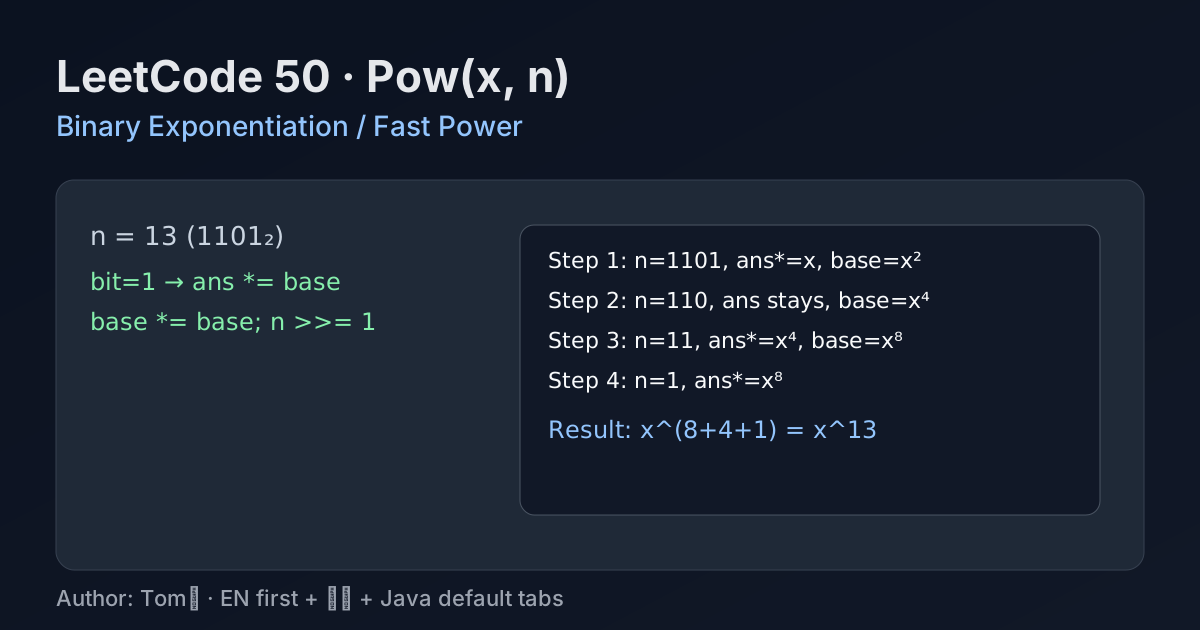
Use exponent bits instead of multiplying x exactly |n| times. If the current bit of n is 1, multiply answer by current base. Every step squares the base and shifts exponent right by 1.
Brute Force and Limitations
Multiplying x by itself |n| times costs O(|n|). This is too slow when n is large (up to about 2 billion in 32-bit range).
Optimal Algorithm Steps (Iterative Fast Power)
1) Convert n to long to safely handle Integer.MIN_VALUE.
2) If exponent is negative, invert base: x = 1/x, exponent = -exponent.
3) Initialize ans = 1, base = x.
4) While exponent > 0: if low bit is 1, ans *= base; then base *= base, exponent >>= 1.
5) Return ans.
Complexity Analysis
Time: O(log |n|).
Space: O(1).
Common Pitfalls
- Negating 32-bit Integer.MIN_VALUE directly overflows; use long first.
- Forgetting to invert base for negative exponent.
- Using recursion without care on language stack/precision details.
- Confusing bit check (exp & 1) with decimal odd/even checks in string form.
Reference Implementations (Java / Go / C++ / Python / JavaScript)
class Solution {
    public double myPow(double x, int n) {
        long exp = n;
        if (exp < 0) {
            x = 1.0 / x;
            exp = -exp;
        }

        double ans = 1.0;
        double base = x;
        while (exp > 0) {
            if ((exp & 1L) == 1L) {
                ans *= base;
            }
            base *= base;
            exp >>= 1;
        }
        return ans;
    }
}
func myPow(x float64, n int) float64 {
exp := int64(n)
if exp < 0 {
x = 1.0 / x
exp = -exp
}
ans := 1.0
base := x
for exp > 0 {
if exp&1 == 1 {
ans *= base
}
base *= base
exp >>= 1
}
return ans
}class Solution {
public:
double myPow(double x, int n) {
long long exp = n;
if (exp < 0) {
x = 1.0 / x;
exp = -exp;
}
double ans = 1.0;
double base = x;
while (exp > 0) {
if (exp & 1LL) ans *= base;
base *= base;
exp >>= 1;
}
return ans;
}
};class Solution:
def myPow(self, x: float, n: int) -> float:
exp = n
if exp < 0:
x = 1.0 / x
exp = -exp
ans = 1.0
base = x
while exp > 0:
if exp & 1:
ans *= base
base *= base
exp >>= 1
return ansvar myPow = function(x, n) {
let exp = BigInt(n);
if (exp < 0n) {
x = 1 / x;
exp = -exp;
}
let ans = 1;
let base = x;
while (exp > 0n) {
if ((exp & 1n) === 1n) {
ans *= base;
}
base *= base;
exp >>= 1n;
}
return ans;
};中文
题目概述
实现 pow(x, n),计算 x^n,其中 n 可能是负数。
核心思路
用“二进制拆幂”代替逐次乘法:检查指数当前最低位是否为 1,若是则把当前底数乘到答案上;每轮把底数平方、指数右移一位。
基线解法与不足
朴素做法是连乘 |n| 次,时间复杂度 O(|n|),当指数很大时会超时。
最优算法步骤(迭代快速幂)
1)先把 n 转成更大整数类型(如 long),避免最小负数取反溢出。
2)若指数为负,先把底数变成 1/x,指数取正。
3)初始化 ans=1,base=x。
4)循环:若最低位为 1 则 ans*=base;然后 base*=base,指数右移。
5)返回答案。
复杂度分析
时间复杂度:O(log |n|)。
空间复杂度:O(1)。
常见陷阱
- 直接对 int 的最小负数取反会溢出。
- 负指数时忘记先倒数。
- 位运算判断写错(最低位判断应该是 exp & 1)。
- 递归版虽然也可做,但实现时更容易忽略边界。
多语言参考实现(Java / Go / C++ / Python / JavaScript)
class Solution {
    public double myPow(double x, int n) {
        long exp = n;
        if (exp < 0) {
            x = 1.0 / x;
            exp = -exp;
        }

        double ans = 1.0;
        double base = x;
        while (exp > 0) {
            if ((exp & 1L) == 1L) {
                ans *= base;
            }
            base *= base;
            exp >>= 1;
        }
        return ans;
    }
}
func myPow(x float64, n int) float64 {
exp := int64(n)
if exp < 0 {
x = 1.0 / x
exp = -exp
}
ans := 1.0
base := x
for exp > 0 {
if exp&1 == 1 {
ans *= base
}
base *= base
exp >>= 1
}
return ans
}class Solution {
public:
double myPow(double x, int n) {
long long exp = n;
if (exp < 0) {
x = 1.0 / x;
exp = -exp;
}
double ans = 1.0;
double base = x;
while (exp > 0) {
if (exp & 1LL) ans *= base;
base *= base;
exp >>= 1;
}
return ans;
}
};class Solution:
def myPow(self, x: float, n: int) -> float:
exp = n
if exp < 0:
x = 1.0 / x
exp = -exp
ans = 1.0
base = x
while exp > 0:
if exp & 1:
ans *= base
base *= base
exp >>= 1
return ansvar myPow = function(x, n) {
let exp = BigInt(n);
if (exp < 0n) {
x = 1 / x;
exp = -exp;
}
let ans = 1;
let base = x;
while (exp > 0n) {
if ((exp & 1n) === 1n) {
ans *= base;
}
base *= base;
exp >>= 1n;
}
return ans;
};
Comments