LeetCode 2529: Maximum Count of Positive Integer and Negative Integer (Dual Binary Boundaries)
LeetCode 2529Binary SearchArrayToday we solve LeetCode 2529 - Maximum Count of Positive Integer and Negative Integer. Because the array is sorted, boundary binary search gives a clean and fast answer.
Source: https://leetcode.com/problems/maximum-count-of-positive-integer-and-negative-integer/
English
Problem Summary
Given a sorted integer array nums, return the larger count between negative numbers and positive numbers. Zeros are ignored.
Key Insight
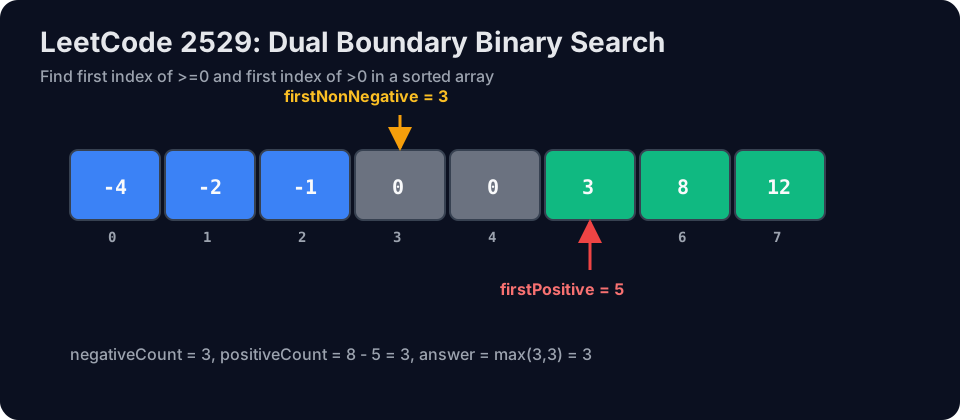
In a sorted array, negatives are on the left, zeros in the middle, positives on the right. So we only need two split points:
firstNonNegative: first index with value>= 0firstPositive: first index with value> 0
Then:
negativeCount = firstNonNegativepositiveCount = n - firstPositive
Optimal Algorithm
Run two lower-bound style binary searches with different conditions and compute the max count.
Complexity Analysis
Time: O(log n).
Space: O(1).
Reference Implementations (Java / Go / C++ / Python / JavaScript)
class Solution {
    public int maximumCount(int[] nums) {
        int n = nums.length;
        int firstNonNegative = lowerBound(nums, 0); // first >= 0
        int firstPositive = upperBoundZero(nums);   // first > 0
        int negativeCount = firstNonNegative;
        int positiveCount = n - firstPositive;
        return Math.max(negativeCount, positiveCount);
    }

    private int lowerBound(int[] nums, int target) {
        int l = 0, r = nums.length;
        while (l < r) {
            int m = l + (r - l) / 2;
            if (nums[m] >= target) r = m;
            else l = m + 1;
        }
        return l;
    }

    private int upperBoundZero(int[] nums) {
        int l = 0, r = nums.length;
        while (l < r) {
            int m = l + (r - l) / 2;
            if (nums[m] > 0) r = m;
            else l = m + 1;
        }
        return l;
    }
}
func maximumCount(nums []int) int {
n := len(nums)
firstNonNegative := lowerBound(nums, 0) // first >= 0
firstPositive := upperBoundZero(nums) // first > 0
negativeCount := firstNonNegative
positiveCount := n - firstPositive
if negativeCount > positiveCount {
return negativeCount
}
return positiveCount
}
func lowerBound(nums []int, target int) int {
l, r := 0, len(nums)
for l < r {
m := l + (r-l)/2
if nums[m] >= target {
r = m
} else {
l = m + 1
}
}
return l
}
func upperBoundZero(nums []int) int {
l, r := 0, len(nums)
for l < r {
m := l + (r-l)/2
if nums[m] > 0 {
r = m
} else {
l = m + 1
}
}
return l
}class Solution {
public:
int maximumCount(vector& nums) {
int n = nums.size();
int firstNonNegative = lowerBound(nums, 0); // first >= 0
int firstPositive = upperBoundZero(nums); // first > 0
int negativeCount = firstNonNegative;
int positiveCount = n - firstPositive;
return max(negativeCount, positiveCount);
}
private:
int lowerBound(const vector& nums, int target) {
int l = 0, r = nums.size();
while (l < r) {
int m = l + (r - l) / 2;
if (nums[m] >= target) r = m;
else l = m + 1;
}
return l;
}
int upperBoundZero(const vector& nums) {
int l = 0, r = nums.size();
while (l < r) {
int m = l + (r - l) / 2;
if (nums[m] > 0) r = m;
else l = m + 1;
}
return l;
}
}; class Solution:
def maximumCount(self, nums: list[int]) -> int:
n = len(nums)
first_non_negative = self.lower_bound(nums, 0) # first >= 0
first_positive = self.upper_bound_zero(nums) # first > 0
negative_count = first_non_negative
positive_count = n - first_positive
return max(negative_count, positive_count)
def lower_bound(self, nums: list[int], target: int) -> int:
l, r = 0, len(nums)
while l < r:
m = l + (r - l) // 2
if nums[m] >= target:
r = m
else:
l = m + 1
return l
def upper_bound_zero(self, nums: list[int]) -> int:
l, r = 0, len(nums)
while l < r:
m = l + (r - l) // 2
if nums[m] > 0:
r = m
else:
l = m + 1
return lvar maximumCount = function(nums) {
const n = nums.length;
const firstNonNegative = lowerBound(nums, 0); // first >= 0
const firstPositive = upperBoundZero(nums); // first > 0
const negativeCount = firstNonNegative;
const positiveCount = n - firstPositive;
return Math.max(negativeCount, positiveCount);
};
function lowerBound(nums, target) {
let l = 0, r = nums.length;
while (l < r) {
const m = l + ((r - l) >> 1);
if (nums[m] >= target) r = m;
else l = m + 1;
}
return l;
}
function upperBoundZero(nums) {
let l = 0, r = nums.length;
while (l < r) {
const m = l + ((r - l) >> 1);
if (nums[m] > 0) r = m;
else l = m + 1;
}
return l;
}中文
题目概述
给定一个有序整数数组 nums,返回“负数个数”和“正数个数”中的较大值;0 不计入任一方。
核心思路
因为数组有序,区间天然分成:负数区、零区、正数区。我们只要找到两个边界:
firstNonNegative:第一个>= 0的下标firstPositive:第一个> 0的下标
于是:
负数个数 = firstNonNegative正数个数 = n - firstPositive
最优算法
做两次二分边界搜索(lower bound 风格),最后取两者最大值。
复杂度分析
时间复杂度:O(log n)。
空间复杂度:O(1)。
多语言参考实现(Java / Go / C++ / Python / JavaScript)
class Solution {
    public int maximumCount(int[] nums) {
        int n = nums.length;
        int firstNonNegative = lowerBound(nums, 0); // first >= 0
        int firstPositive = upperBoundZero(nums);   // first > 0
        int negativeCount = firstNonNegative;
        int positiveCount = n - firstPositive;
        return Math.max(negativeCount, positiveCount);
    }

    private int lowerBound(int[] nums, int target) {
        int l = 0, r = nums.length;
        while (l < r) {
            int m = l + (r - l) / 2;
            if (nums[m] >= target) r = m;
            else l = m + 1;
        }
        return l;
    }

    private int upperBoundZero(int[] nums) {
        int l = 0, r = nums.length;
        while (l < r) {
            int m = l + (r - l) / 2;
            if (nums[m] > 0) r = m;
            else l = m + 1;
        }
        return l;
    }
}
func maximumCount(nums []int) int {
n := len(nums)
firstNonNegative := lowerBound(nums, 0) // first >= 0
firstPositive := upperBoundZero(nums) // first > 0
negativeCount := firstNonNegative
positiveCount := n - firstPositive
if negativeCount > positiveCount {
return negativeCount
}
return positiveCount
}
func lowerBound(nums []int, target int) int {
l, r := 0, len(nums)
for l < r {
m := l + (r-l)/2
if nums[m] >= target {
r = m
} else {
l = m + 1
}
}
return l
}
func upperBoundZero(nums []int) int {
l, r := 0, len(nums)
for l < r {
m := l + (r-l)/2
if nums[m] > 0 {
r = m
} else {
l = m + 1
}
}
return l
}class Solution {
public:
int maximumCount(vector& nums) {
int n = nums.size();
int firstNonNegative = lowerBound(nums, 0); // first >= 0
int firstPositive = upperBoundZero(nums); // first > 0
int negativeCount = firstNonNegative;
int positiveCount = n - firstPositive;
return max(negativeCount, positiveCount);
}
private:
int lowerBound(const vector& nums, int target) {
int l = 0, r = nums.size();
while (l < r) {
int m = l + (r - l) / 2;
if (nums[m] >= target) r = m;
else l = m + 1;
}
return l;
}
int upperBoundZero(const vector& nums) {
int l = 0, r = nums.size();
while (l < r) {
int m = l + (r - l) / 2;
if (nums[m] > 0) r = m;
else l = m + 1;
}
return l;
}
}; class Solution:
def maximumCount(self, nums: list[int]) -> int:
n = len(nums)
first_non_negative = self.lower_bound(nums, 0) # first >= 0
first_positive = self.upper_bound_zero(nums) # first > 0
negative_count = first_non_negative
positive_count = n - first_positive
return max(negative_count, positive_count)
def lower_bound(self, nums: list[int], target: int) -> int:
l, r = 0, len(nums)
while l < r:
m = l + (r - l) // 2
if nums[m] >= target:
r = m
else:
l = m + 1
return l
def upper_bound_zero(self, nums: list[int]) -> int:
l, r = 0, len(nums)
while l < r:
m = l + (r - l) // 2
if nums[m] > 0:
r = m
else:
l = m + 1
return lvar maximumCount = function(nums) {
const n = nums.length;
const firstNonNegative = lowerBound(nums, 0); // first >= 0
const firstPositive = upperBoundZero(nums); // first > 0
const negativeCount = firstNonNegative;
const positiveCount = n - firstPositive;
return Math.max(negativeCount, positiveCount);
};
function lowerBound(nums, target) {
let l = 0, r = nums.length;
while (l < r) {
const m = l + ((r - l) >> 1);
if (nums[m] >= target) r = m;
else l = m + 1;
}
return l;
}
function upperBoundZero(nums) {
let l = 0, r = nums.length;
while (l < r) {
const m = l + ((r - l) >> 1);
if (nums[m] > 0) r = m;
else l = m + 1;
}
return l;
}
Comments