LeetCode 229: Majority Element II (Extended Boyer-Moore with Two Candidates)
LeetCode 229ArrayBoyer-MooreToday we solve LeetCode 229 - Majority Element II.
Source: https://leetcode.com/problems/majority-element-ii/
English
Problem Summary
Given an integer array nums, return all values that appear more than ⌊n/3⌋ times. The output can contain at most two numbers.
Key Insight
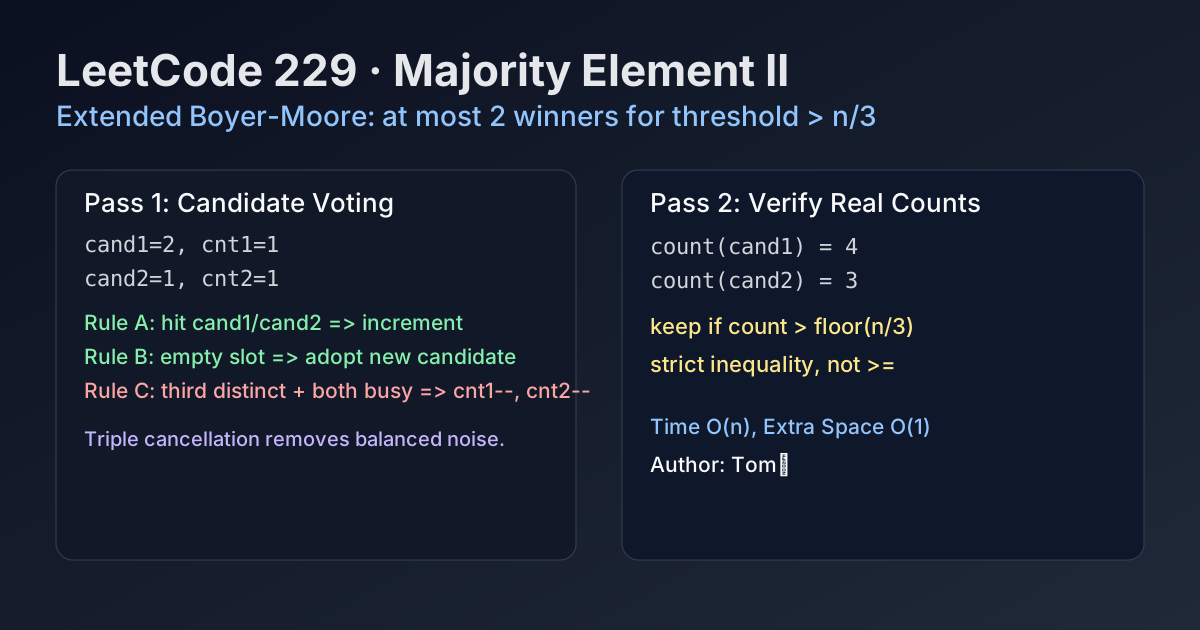
If a value must appear more than n/3 times, there can be at most 2 such values. So we only need to maintain two candidate slots and their vote counters. When we meet a new number and both counters are non-zero, we decrement both counters (triple cancellation).
Brute Force and Limitations
Use a hash map to count frequencies and filter values with count > n/3. It is simple and runs in O(n) time, but needs O(n) extra space.
Optimal Algorithm Steps
1) First pass: run extended Boyer-Moore with two candidates cand1, cand2 and counters cnt1, cnt2.
2) Second pass: count real frequencies of these two candidates.
3) Add candidate(s) whose count is strictly greater than n/3.
Complexity Analysis
Let n be array length.
Time: O(n) (two linear passes).
Space: O(1) extra.
Common Pitfalls
- Forgetting the second verification pass.
- Checking >= n/3 instead of strict > n/3.
- Not handling candidate equality carefully when collecting answers.
Reference Implementations (Java / Go / C++ / Python / JavaScript)
class Solution {
    public List<Integer> majorityElement(int[] nums) {
        int cand1 = 0, cand2 = 1;
        int cnt1 = 0, cnt2 = 0;

        for (int x : nums) {
            if (x == cand1) {
                cnt1++;
            } else if (x == cand2) {
                cnt2++;
            } else if (cnt1 == 0) {
                cand1 = x;
                cnt1 = 1;
            } else if (cnt2 == 0) {
                cand2 = x;
                cnt2 = 1;
            } else {
                cnt1--;
                cnt2--;
            }
        }

        cnt1 = 0;
        cnt2 = 0;
        for (int x : nums) {
            if (x == cand1) cnt1++;
            else if (x == cand2) cnt2++;
        }

        List<Integer> ans = new ArrayList<>();
        int limit = nums.length / 3;
        if (cnt1 > limit) ans.add(cand1);
        if (cnt2 > limit) ans.add(cand2);
        return ans;
    }
}
func majorityElement(nums []int) []int {
cand1, cand2 := 0, 1
cnt1, cnt2 := 0, 0
for _, x := range nums {
if x == cand1 {
cnt1++
} else if x == cand2 {
cnt2++
} else if cnt1 == 0 {
cand1, cnt1 = x, 1
} else if cnt2 == 0 {
cand2, cnt2 = x, 1
} else {
cnt1--
cnt2--
}
}
cnt1, cnt2 = 0, 0
for _, x := range nums {
if x == cand1 {
cnt1++
} else if x == cand2 {
cnt2++
}
}
limit := len(nums) / 3
ans := make([]int, 0, 2)
if cnt1 > limit {
ans = append(ans, cand1)
}
if cnt2 > limit {
ans = append(ans, cand2)
}
return ans
}class Solution {
public:
vector<int> majorityElement(vector<int>& nums) {
int cand1 = 0, cand2 = 1;
int cnt1 = 0, cnt2 = 0;
for (int x : nums) {
if (x == cand1) {
cnt1++;
} else if (x == cand2) {
cnt2++;
} else if (cnt1 == 0) {
cand1 = x;
cnt1 = 1;
} else if (cnt2 == 0) {
cand2 = x;
cnt2 = 1;
} else {
cnt1--;
cnt2--;
}
}
cnt1 = 0;
cnt2 = 0;
for (int x : nums) {
if (x == cand1) cnt1++;
else if (x == cand2) cnt2++;
}
vector<int> ans;
int limit = (int)nums.size() / 3;
if (cnt1 > limit) ans.push_back(cand1);
if (cnt2 > limit) ans.push_back(cand2);
return ans;
}
};class Solution:
def majorityElement(self, nums: List[int]) -> List[int]:
cand1, cand2 = 0, 1
cnt1 = cnt2 = 0
for x in nums:
if x == cand1:
cnt1 += 1
elif x == cand2:
cnt2 += 1
elif cnt1 == 0:
cand1, cnt1 = x, 1
elif cnt2 == 0:
cand2, cnt2 = x, 1
else:
cnt1 -= 1
cnt2 -= 1
cnt1 = cnt2 = 0
for x in nums:
if x == cand1:
cnt1 += 1
elif x == cand2:
cnt2 += 1
limit = len(nums) // 3
ans = []
if cnt1 > limit:
ans.append(cand1)
if cnt2 > limit:
ans.append(cand2)
return ansvar majorityElement = function(nums) {
let cand1 = 0, cand2 = 1;
let cnt1 = 0, cnt2 = 0;
for (const x of nums) {
if (x === cand1) {
cnt1++;
} else if (x === cand2) {
cnt2++;
} else if (cnt1 === 0) {
cand1 = x;
cnt1 = 1;
} else if (cnt2 === 0) {
cand2 = x;
cnt2 = 1;
} else {
cnt1--;
cnt2--;
}
}
cnt1 = 0;
cnt2 = 0;
for (const x of nums) {
if (x === cand1) cnt1++;
else if (x === cand2) cnt2++;
}
const limit = Math.floor(nums.length / 3);
const ans = [];
if (cnt1 > limit) ans.push(cand1);
if (cnt2 > limit) ans.push(cand2);
return ans;
};中文
题目概述
给定整数数组 nums,找出所有出现次数严格大于 ⌊n/3⌋ 的元素。答案最多只会有两个数字。
核心思路
若某个元素出现次数 > n/3,这样的元素最多只能有 2 个。所以维护两个候选值和两个计数器即可。遇到第三种不同元素且两个计数都非零时,同时减一,表示三者相互抵消。
暴力解法与不足
可以用哈希表统计每个数字出现次数,再筛选大于 n/3 的元素,时间 O(n),但需要 O(n) 额外空间。
最优算法步骤
1)第一遍:执行扩展版 Boyer-Moore 投票,维护两个候选值与计数。
2)第二遍:重新统计这两个候选值的真实次数。
3)把次数严格大于 n/3 的候选值加入答案。
复杂度分析
设数组长度为 n。
时间复杂度:O(n)(两次线性扫描)。
空间复杂度:O(1) 额外空间。
常见陷阱
- 忘记做第二遍验证,直接输出候选值。
- 把判断条件写成 >= n/3(应为严格 > n/3)。
- 收集答案时没有处理候选值重复/互斥逻辑。
多语言参考实现(Java / Go / C++ / Python / JavaScript)
class Solution {
    public List<Integer> majorityElement(int[] nums) {
        int cand1 = 0, cand2 = 1;
        int cnt1 = 0, cnt2 = 0;

        for (int x : nums) {
            if (x == cand1) {
                cnt1++;
            } else if (x == cand2) {
                cnt2++;
            } else if (cnt1 == 0) {
                cand1 = x;
                cnt1 = 1;
            } else if (cnt2 == 0) {
                cand2 = x;
                cnt2 = 1;
            } else {
                cnt1--;
                cnt2--;
            }
        }

        cnt1 = 0;
        cnt2 = 0;
        for (int x : nums) {
            if (x == cand1) cnt1++;
            else if (x == cand2) cnt2++;
        }

        List<Integer> ans = new ArrayList<>();
        int limit = nums.length / 3;
        if (cnt1 > limit) ans.add(cand1);
        if (cnt2 > limit) ans.add(cand2);
        return ans;
    }
}
func majorityElement(nums []int) []int {
cand1, cand2 := 0, 1
cnt1, cnt2 := 0, 0
for _, x := range nums {
if x == cand1 {
cnt1++
} else if x == cand2 {
cnt2++
} else if cnt1 == 0 {
cand1, cnt1 = x, 1
} else if cnt2 == 0 {
cand2, cnt2 = x, 1
} else {
cnt1--
cnt2--
}
}
cnt1, cnt2 = 0, 0
for _, x := range nums {
if x == cand1 {
cnt1++
} else if x == cand2 {
cnt2++
}
}
limit := len(nums) / 3
ans := make([]int, 0, 2)
if cnt1 > limit {
ans = append(ans, cand1)
}
if cnt2 > limit {
ans = append(ans, cand2)
}
return ans
}class Solution {
public:
vector<int> majorityElement(vector<int>& nums) {
int cand1 = 0, cand2 = 1;
int cnt1 = 0, cnt2 = 0;
for (int x : nums) {
if (x == cand1) {
cnt1++;
} else if (x == cand2) {
cnt2++;
} else if (cnt1 == 0) {
cand1 = x;
cnt1 = 1;
} else if (cnt2 == 0) {
cand2 = x;
cnt2 = 1;
} else {
cnt1--;
cnt2--;
}
}
cnt1 = 0;
cnt2 = 0;
for (int x : nums) {
if (x == cand1) cnt1++;
else if (x == cand2) cnt2++;
}
vector<int> ans;
int limit = (int)nums.size() / 3;
if (cnt1 > limit) ans.push_back(cand1);
if (cnt2 > limit) ans.push_back(cand2);
return ans;
}
};class Solution:
def majorityElement(self, nums: List[int]) -> List[int]:
cand1, cand2 = 0, 1
cnt1 = cnt2 = 0
for x in nums:
if x == cand1:
cnt1 += 1
elif x == cand2:
cnt2 += 1
elif cnt1 == 0:
cand1, cnt1 = x, 1
elif cnt2 == 0:
cand2, cnt2 = x, 1
else:
cnt1 -= 1
cnt2 -= 1
cnt1 = cnt2 = 0
for x in nums:
if x == cand1:
cnt1 += 1
elif x == cand2:
cnt2 += 1
limit = len(nums) // 3
ans = []
if cnt1 > limit:
ans.append(cand1)
if cnt2 > limit:
ans.append(cand2)
return ansvar majorityElement = function(nums) {
let cand1 = 0, cand2 = 1;
let cnt1 = 0, cnt2 = 0;
for (const x of nums) {
if (x === cand1) {
cnt1++;
} else if (x === cand2) {
cnt2++;
} else if (cnt1 === 0) {
cand1 = x;
cnt1 = 1;
} else if (cnt2 === 0) {
cand2 = x;
cnt2 = 1;
} else {
cnt1--;
cnt2--;
}
}
cnt1 = 0;
cnt2 = 0;
for (const x of nums) {
if (x === cand1) cnt1++;
else if (x === cand2) cnt2++;
}
const limit = Math.floor(nums.length / 3);
const ans = [];
if (cnt1 > limit) ans.push(cand1);
if (cnt2 > limit) ans.push(cand2);
return ans;
};
Comments