LeetCode 203: Remove Linked List Elements (Dummy Head + Single Pass)
LeetCode 203Linked ListPointer RewiringToday we solve LeetCode 203 - Remove Linked List Elements.
Source: https://leetcode.com/problems/remove-linked-list-elements/
English
Problem Summary
Given the head of a linked list and an integer val, remove all nodes whose value equals val, and return the new head.
Key Insight
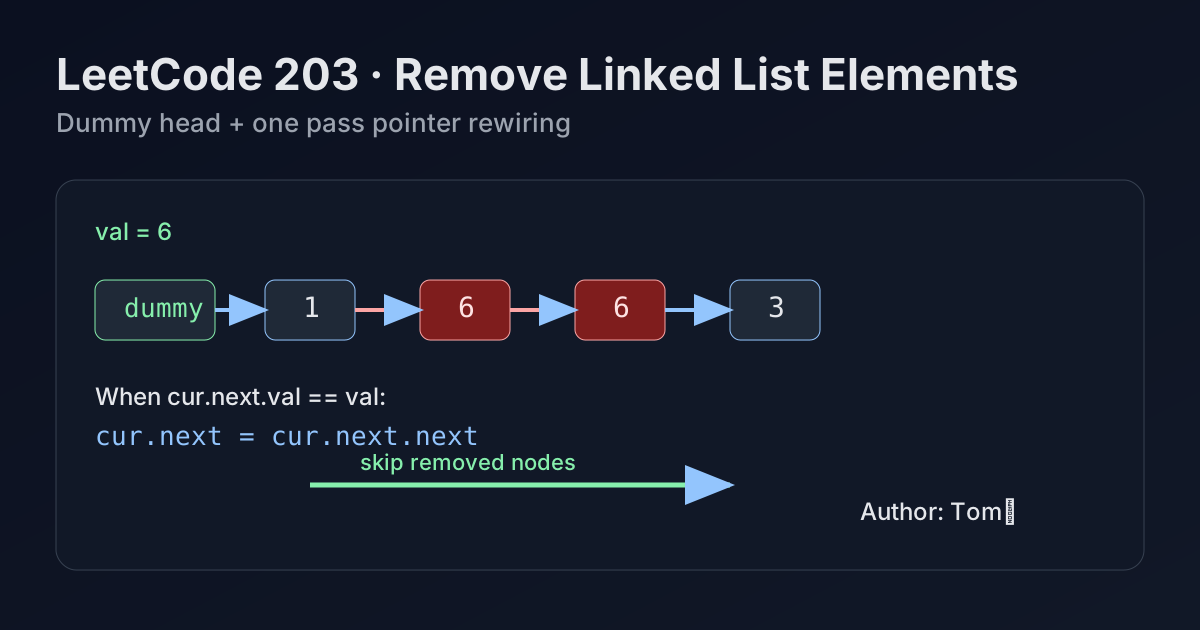
Use a dummy node before head and keep a pointer cur at the previous kept node. Then:
- If
cur.next.val == val, bypass it:cur.next = cur.next.next. - Otherwise move forward:
cur = cur.next.
The dummy node unifies deletion logic, especially when the original head must be removed.
Complexity
Time: O(n). Space: O(1).
Reference Implementations (Java / Go / C++ / Python / JavaScript)
/**
 * Definition for singly-linked list.
 * public class ListNode {
 *     int val;
 *     ListNode next;
 *     ListNode() {}
 *     ListNode(int val) { this.val = val; }
 *     ListNode(int val, ListNode next) { this.val = val; this.next = next; }
 * }
 */
class Solution {
    public ListNode removeElements(ListNode head, int val) {
        ListNode dummy = new ListNode(0, head);
        ListNode cur = dummy;

        while (cur.next != null) {
            if (cur.next.val == val) {
                cur.next = cur.next.next;
            } else {
                cur = cur.next;
            }
        }
        return dummy.next;
    }
}
/**
* type ListNode struct {
* Val int
* Next *ListNode
* }
*/
func removeElements(head *ListNode, val int) *ListNode {
dummy := &ListNode{Next: head}
cur := dummy
for cur.Next != nil {
if cur.Next.Val == val {
cur.Next = cur.Next.Next
} else {
cur = cur.Next
}
}
return dummy.Next
}/**
* Definition for singly-linked list.
* struct ListNode {
* int val;
* ListNode *next;
* ListNode() : val(0), next(nullptr) {}
* ListNode(int x) : val(x), next(nullptr) {}
* ListNode(int x, ListNode *next) : val(x), next(next) {}
* };
*/
class Solution {
public:
ListNode* removeElements(ListNode* head, int val) {
ListNode dummy(0, head);
ListNode* cur = &dummy;
while (cur->next != nullptr) {
if (cur->next->val == val) {
cur->next = cur->next->next;
} else {
cur = cur->next;
}
}
return dummy.next;
}
};# Definition for singly-linked list.
# class ListNode:
# def __init__(self, val=0, next=None):
# self.val = val
# self.next = next
class Solution:
def removeElements(self, head: Optional[ListNode], val: int) -> Optional[ListNode]:
dummy = ListNode(0, head)
cur = dummy
while cur.next:
if cur.next.val == val:
cur.next = cur.next.next
else:
cur = cur.next
return dummy.next/**
* function ListNode(val, next) {
* this.val = (val===undefined ? 0 : val)
* this.next = (next===undefined ? null : next)
* }
*/
/**
* @param {ListNode} head
* @param {number} val
* @return {ListNode}
*/
var removeElements = function(head, val) {
const dummy = new ListNode(0, head);
let cur = dummy;
while (cur.next !== null) {
if (cur.next.val === val) {
cur.next = cur.next.next;
} else {
cur = cur.next;
}
}
return dummy.next;
};中文
题目概述
给定链表头节点 head 和整数 val,删除链表中所有值等于 val 的节点,返回新的头节点。
核心思路
在原链表前添加一个哑节点 dummy,并让指针 cur 始终指向“已保留部分的最后一个节点”。遍历时:
- 若
cur.next.val == val,执行删除:cur.next = cur.next.next; - 否则保留当前节点并前进:
cur = cur.next。
这样即使头节点需要被删除,也能用同一套逻辑处理,无需特殊分支。
复杂度分析
时间复杂度:O(n);空间复杂度:O(1)。
多语言参考实现(Java / Go / C++ / Python / JavaScript)
/**
 * Definition for singly-linked list.
 * public class ListNode {
 *     int val;
 *     ListNode next;
 *     ListNode() {}
 *     ListNode(int val) { this.val = val; }
 *     ListNode(int val, ListNode next) { this.val = val; this.next = next; }
 * }
 */
class Solution {
    public ListNode removeElements(ListNode head, int val) {
        ListNode dummy = new ListNode(0, head);
        ListNode cur = dummy;

        while (cur.next != null) {
            if (cur.next.val == val) {
                cur.next = cur.next.next;
            } else {
                cur = cur.next;
            }
        }
        return dummy.next;
    }
}
/**
* type ListNode struct {
* Val int
* Next *ListNode
* }
*/
func removeElements(head *ListNode, val int) *ListNode {
dummy := &ListNode{Next: head}
cur := dummy
for cur.Next != nil {
if cur.Next.Val == val {
cur.Next = cur.Next.Next
} else {
cur = cur.Next
}
}
return dummy.Next
}/**
* Definition for singly-linked list.
* struct ListNode {
* int val;
* ListNode *next;
* ListNode() : val(0), next(nullptr) {}
* ListNode(int x) : val(x), next(nullptr) {}
* ListNode(int x, ListNode *next) : val(x), next(next) {}
* };
*/
class Solution {
public:
ListNode* removeElements(ListNode* head, int val) {
ListNode dummy(0, head);
ListNode* cur = &dummy;
while (cur->next != nullptr) {
if (cur->next->val == val) {
cur->next = cur->next->next;
} else {
cur = cur->next;
}
}
return dummy.next;
}
};# Definition for singly-linked list.
# class ListNode:
# def __init__(self, val=0, next=None):
# self.val = val
# self.next = next
class Solution:
def removeElements(self, head: Optional[ListNode], val: int) -> Optional[ListNode]:
dummy = ListNode(0, head)
cur = dummy
while cur.next:
if cur.next.val == val:
cur.next = cur.next.next
else:
cur = cur.next
return dummy.next/**
* function ListNode(val, next) {
* this.val = (val===undefined ? 0 : val)
* this.next = (next===undefined ? null : next)
* }
*/
/**
* @param {ListNode} head
* @param {number} val
* @return {ListNode}
*/
var removeElements = function(head, val) {
const dummy = new ListNode(0, head);
let cur = dummy;
while (cur.next !== null) {
if (cur.next.val === val) {
cur.next = cur.next.next;
} else {
cur = cur.next;
}
}
return dummy.next;
};
Comments