LeetCode 1512: Number of Good Pairs (Frequency Counting with Incremental Combinations)
LeetCode 1512Hash TableCountingToday we solve LeetCode 1512 - Number of Good Pairs.
Source: https://leetcode.com/problems/number-of-good-pairs/
English
Problem Summary
Given an integer array nums, count pairs (i, j) such that i < j and nums[i] == nums[j].
Key Insight
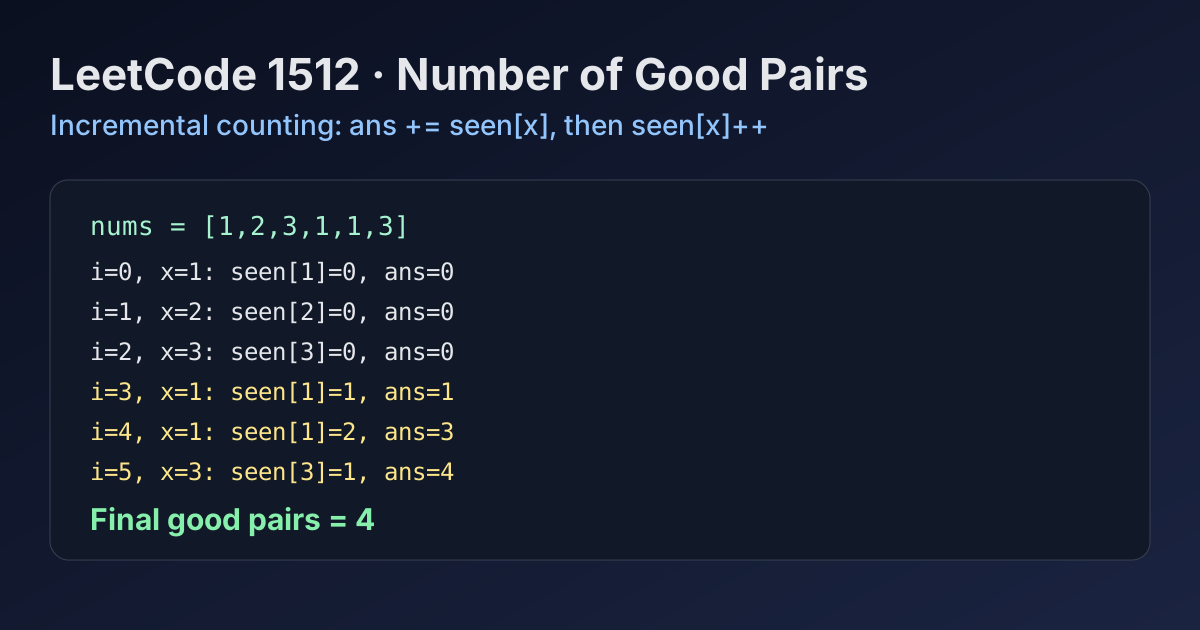
When we process numbers from left to right, if current value x has appeared k times before, then current index forms exactly k new good pairs. So we can accumulate answers on the fly.
Algorithm
1) Initialize ans = 0 and a frequency map freq.
2) For each x in nums: add freq[x] to ans, then increment freq[x].
3) Return ans.
Complexity
Time: O(n).
Space: O(k), where k is number of distinct values.
Reference Implementations (Java / Go / C++ / Python / JavaScript)
import java.util.HashMap;
import java.util.Map;

class Solution {
    public int numIdenticalPairs(int[] nums) {
        Map freq = new HashMap<>();
        int ans = 0;
        for (int x : nums) {
            int seen = freq.getOrDefault(x, 0);
            ans += seen;
            freq.put(x, seen + 1);
        }
        return ans;
    }
}
func numIdenticalPairs(nums []int) int {
freq := make(map[int]int)
ans := 0
for _, x := range nums {
ans += freq[x]
freq[x]++
}
return ans
}class Solution {
public:
int numIdenticalPairs(vector& nums) {
unordered_map freq;
int ans = 0;
for (int x : nums) {
ans += freq[x];
++freq[x];
}
return ans;
}
}; from collections import defaultdict
from typing import List
class Solution:
def numIdenticalPairs(self, nums: List[int]) -> int:
freq = defaultdict(int)
ans = 0
for x in nums:
ans += freq[x]
freq[x] += 1
return ans/**
* @param {number[]} nums
* @return {number}
*/
var numIdenticalPairs = function(nums) {
const freq = new Map();
let ans = 0;
for (const x of nums) {
const seen = freq.get(x) || 0;
ans += seen;
freq.set(x, seen + 1);
}
return ans;
};中文
题目概述
给定整数数组 nums,统计满足 i < j 且 nums[i] == nums[j] 的下标对数量。
核心思路
从左到右遍历时,若当前值 x 已出现 k 次,那么当前位置会新增 k 个好数对。因此可以边遍历边累计答案。
算法步骤
1)初始化答案 ans = 0,以及频次表 freq。
2)遍历每个 x:先把 freq[x] 加到 ans,再将 freq[x] 加一。
3)返回 ans。
复杂度分析
时间复杂度:O(n)。
空间复杂度:O(k),其中 k 为不同数字个数。
多语言参考实现(Java / Go / C++ / Python / JavaScript)
import java.util.HashMap;
import java.util.Map;

class Solution {
    public int numIdenticalPairs(int[] nums) {
        Map freq = new HashMap<>();
        int ans = 0;
        for (int x : nums) {
            int seen = freq.getOrDefault(x, 0);
            ans += seen;
            freq.put(x, seen + 1);
        }
        return ans;
    }
}
func numIdenticalPairs(nums []int) int {
freq := make(map[int]int)
ans := 0
for _, x := range nums {
ans += freq[x]
freq[x]++
}
return ans
}class Solution {
public:
int numIdenticalPairs(vector& nums) {
unordered_map freq;
int ans = 0;
for (int x : nums) {
ans += freq[x];
++freq[x];
}
return ans;
}
}; from collections import defaultdict
from typing import List
class Solution:
def numIdenticalPairs(self, nums: List[int]) -> int:
freq = defaultdict(int)
ans = 0
for x in nums:
ans += freq[x]
freq[x] += 1
return ans/**
* @param {number[]} nums
* @return {number}
*/
var numIdenticalPairs = function(nums) {
const freq = new Map();
let ans = 0;
for (const x of nums) {
const seen = freq.get(x) || 0;
ans += seen;
freq.set(x, seen + 1);
}
return ans;
};
Comments