LeetCode 1207: Unique Number of Occurrences (Frequency Map + Seen Set)
LeetCode 1207Hash TableCountingToday we solve LeetCode 1207 - Unique Number of Occurrences.
Source: https://leetcode.com/problems/unique-number-of-occurrences/
English
Problem Summary
Given an integer array arr, return true if the number of occurrences of each distinct value is unique; otherwise return false.
Key Insight
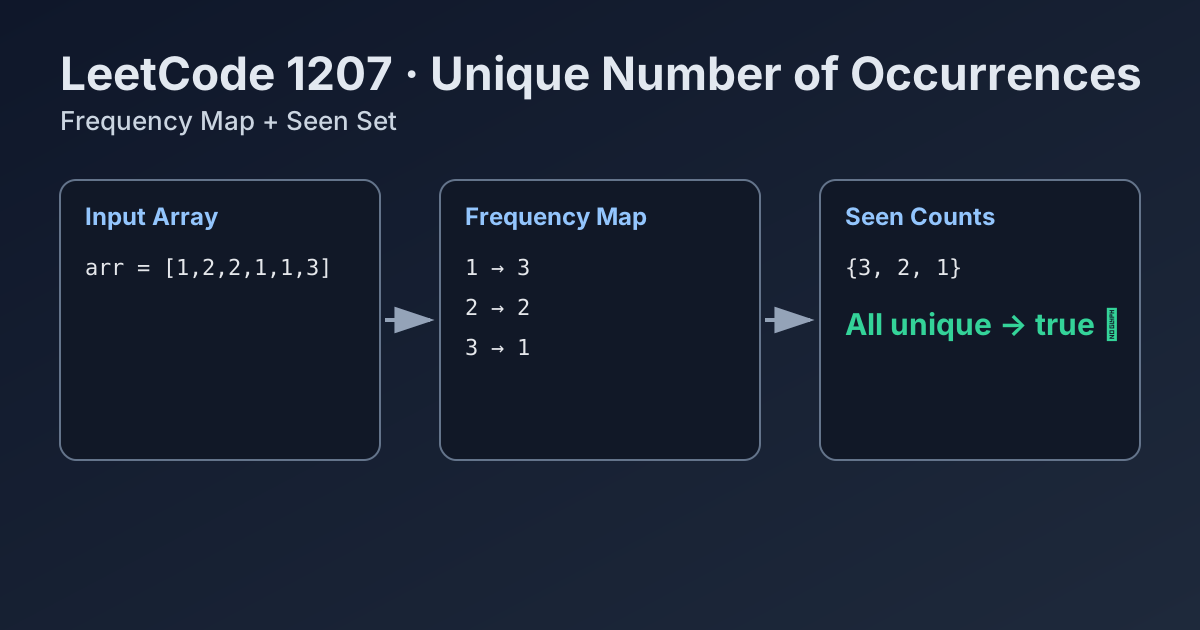
This is a two-layer uniqueness check: first count how many times each value appears, then verify that no two values share the same count. A hash map handles counting, and a hash set tracks already-seen counts.
Algorithm
1) Build frequency map freq[value]++.
2) Iterate over all counts in freq.
3) If a count is already in seen, return false immediately.
4) Otherwise add the count into seen and continue.
5) If all counts are unique, return true.
Complexity
Time: O(n) where n = arr.length.
Space: O(k) where k is number of distinct values.
Reference Implementations (Java / Go / C++ / Python / JavaScript)
import java.util.*;

class Solution {
    public boolean uniqueOccurrences(int[] arr) {
        Map<Integer, Integer> freq = new HashMap<>();
        for (int x : arr) {
            freq.put(x, freq.getOrDefault(x, 0) + 1);
        }

        Set<Integer> seen = new HashSet<>();
        for (int c : freq.values()) {
            if (!seen.add(c)) {
                return false;
            }
        }
        return true;
    }
}
func uniqueOccurrences(arr []int) bool {
freq := make(map[int]int)
for _, x := range arr {
freq[x]++
}
seen := make(map[int]bool)
for _, c := range freq {
if seen[c] {
return false
}
seen[c] = true
}
return true
}class Solution {
public:
bool uniqueOccurrences(vector<int>& arr) {
unordered_map<int, int> freq;
for (int x : arr) {
freq[x]++;
}
unordered_set<int> seen;
for (const auto& [v, c] : freq) {
if (seen.count(c)) {
return false;
}
seen.insert(c);
}
return true;
}
};class Solution:
def uniqueOccurrences(self, arr: list[int]) -> bool:
freq = {}
for x in arr:
freq[x] = freq.get(x, 0) + 1
seen = set()
for c in freq.values():
if c in seen:
return False
seen.add(c)
return True/**
* @param {number[]} arr
* @return {boolean}
*/
var uniqueOccurrences = function(arr) {
const freq = new Map();
for (const x of arr) {
freq.set(x, (freq.get(x) || 0) + 1);
}
const seen = new Set();
for (const c of freq.values()) {
if (seen.has(c)) {
return false;
}
seen.add(c);
}
return true;
};中文
题目概述
给你一个整数数组 arr,如果每个不同数字的出现次数都互不相同,返回 true;否则返回 false。
核心思路
这是一个“先统计,再判重”的问题:第一层用哈希表统计每个数字出现次数;第二层检查这些“次数”本身是否有重复。用一个集合保存已经出现过的次数即可。
算法步骤
1)遍历数组,构建 freq[value] 频次表。
2)遍历频次表中的每个次数 c。
3)如果 c 已在集合 seen 中,说明出现次数重复,直接返回 false。
4)否则将 c 放入 seen。
5)全部检查完没有冲突则返回 true。
复杂度分析
时间复杂度:O(n)。
空间复杂度:O(k),其中 k 是不同数字个数。
多语言参考实现(Java / Go / C++ / Python / JavaScript)
import java.util.*;

class Solution {
    public boolean uniqueOccurrences(int[] arr) {
        Map<Integer, Integer> freq = new HashMap<>();
        for (int x : arr) {
            freq.put(x, freq.getOrDefault(x, 0) + 1);
        }

        Set<Integer> seen = new HashSet<>();
        for (int c : freq.values()) {
            if (!seen.add(c)) {
                return false;
            }
        }
        return true;
    }
}
func uniqueOccurrences(arr []int) bool {
freq := make(map[int]int)
for _, x := range arr {
freq[x]++
}
seen := make(map[int]bool)
for _, c := range freq {
if seen[c] {
return false
}
seen[c] = true
}
return true
}class Solution {
public:
bool uniqueOccurrences(vector<int>& arr) {
unordered_map<int, int> freq;
for (int x : arr) {
freq[x]++;
}
unordered_set<int> seen;
for (const auto& [v, c] : freq) {
if (seen.count(c)) {
return false;
}
seen.insert(c);
}
return true;
}
};class Solution:
def uniqueOccurrences(self, arr: list[int]) -> bool:
freq = {}
for x in arr:
freq[x] = freq.get(x, 0) + 1
seen = set()
for c in freq.values():
if c in seen:
return False
seen.add(c)
return True/**
* @param {number[]} arr
* @return {boolean}
*/
var uniqueOccurrences = function(arr) {
const freq = new Map();
for (const x of arr) {
freq.set(x, (freq.get(x) || 0) + 1);
}
const seen = new Set();
for (const c of freq.values()) {
if (seen.has(c)) {
return false;
}
seen.add(c);
}
return true;
};
Comments