LeetCode 1046: Last Stone Weight (Max-Heap Repeated Extraction)
LeetCode 1046HeapPriority QueueToday we solve LeetCode 1046 - Last Stone Weight.
Source: https://leetcode.com/problems/last-stone-weight/
English
Problem Summary
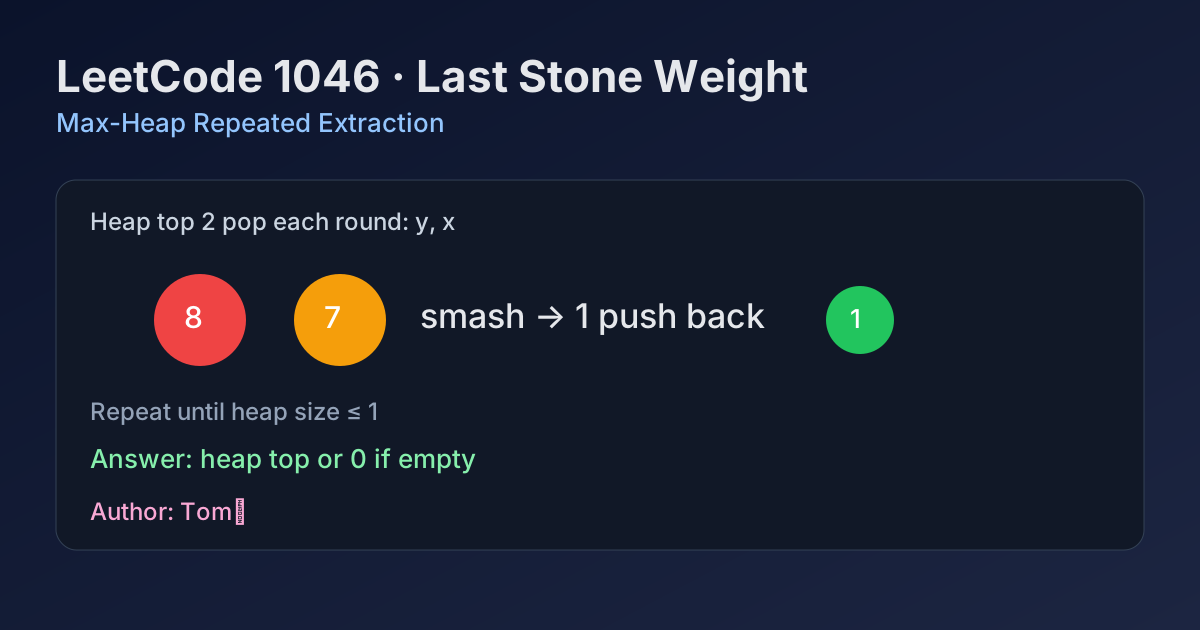
Given an array stones, each turn you pick the two heaviest stones x and y (x <= y) and smash them. If x == y, both are destroyed. Otherwise, the new stone with weight y - x is pushed back. Return the final remaining weight, or 0 if none remains.
Key Insight
Each round needs quick access to the two current maximum values, so a max-heap (priority queue) is the natural fit.
Brute Force and Limitations
A naive way is repeatedly sorting to get two largest stones. That costs O(n log n) per round, which is unnecessary. Heap reduces each extraction/insertion to O(log n).
Optimal Algorithm Steps
1) Build a max-heap with all stones.
2) While heap size > 1, pop two largest y and x.
3) If y != x, push y - x back.
4) Return heap top if exists, else return 0.
Complexity Analysis
Time: O(n log n) in total.
Space: O(n).
Common Pitfalls
- Using min-heap by mistake without negation/ordering fix.
- Forgetting to push back y - x when weights differ.
- Returning wrong value when heap becomes empty.
Reference Implementations (Java / Go / C++ / Python / JavaScript)
class Solution {
    public int lastStoneWeight(int[] stones) {
        PriorityQueue<Integer> pq = new PriorityQueue<>((a, b) -> b - a);
        for (int stone : stones) pq.offer(stone);

        while (pq.size() > 1) {
            int y = pq.poll();
            int x = pq.poll();
            if (y != x) {
                pq.offer(y - x);
            }
        }
        return pq.isEmpty() ? 0 : pq.peek();
    }
}
type MaxHeap []int
func (h MaxHeap) Len() int { return len(h) }
func (h MaxHeap) Less(i, j int) bool { return h[i] > h[j] }
func (h MaxHeap) Swap(i, j int) { h[i], h[j] = h[j], h[i] }
func (h *MaxHeap) Push(x any) { *h = append(*h, x.(int)) }
func (h *MaxHeap) Pop() any {
old := *h
n := len(old)
x := old[n-1]
*h = old[:n-1]
return x
}
func lastStoneWeight(stones []int) int {
h := MaxHeap(stones)
heap.Init(&h)
for h.Len() > 1 {
y := heap.Pop(&h).(int)
x := heap.Pop(&h).(int)
if y != x {
heap.Push(&h, y-x)
}
}
if h.Len() == 0 {
return 0
}
return h[0]
}class Solution {
public:
int lastStoneWeight(vector<int>& stones) {
priority_queue<int> pq;
for (int s : stones) pq.push(s);
while (pq.size() > 1) {
int y = pq.top(); pq.pop();
int x = pq.top(); pq.pop();
if (y != x) pq.push(y - x);
}
return pq.empty() ? 0 : pq.top();
}
};import heapq
class Solution:
def lastStoneWeight(self, stones: list[int]) -> int:
heap = [-s for s in stones]
heapq.heapify(heap)
while len(heap) > 1:
y = -heapq.heappop(heap)
x = -heapq.heappop(heap)
if y != x:
heapq.heappush(heap, -(y - x))
return -heap[0] if heap else 0class MaxHeap {
constructor() { this.a = []; }
size() { return this.a.length; }
peek() { return this.a[0]; }
push(x) {
const a = this.a;
a.push(x);
let i = a.length - 1;
while (i > 0) {
const p = (i - 1) >> 1;
if (a[p] >= a[i]) break;
[a[p], a[i]] = [a[i], a[p]];
i = p;
}
}
pop() {
const a = this.a;
const top = a[0];
const x = a.pop();
if (a.length) {
a[0] = x;
let i = 0;
while (true) {
let l = i * 2 + 1, r = l + 1, m = i;
if (l < a.length && a[l] > a[m]) m = l;
if (r < a.length && a[r] > a[m]) m = r;
if (m === i) break;
[a[i], a[m]] = [a[m], a[i]];
i = m;
}
}
return top;
}
}
var lastStoneWeight = function(stones) {
const h = new MaxHeap();
for (const s of stones) h.push(s);
while (h.size() > 1) {
const y = h.pop();
const x = h.pop();
if (y !== x) h.push(y - x);
}
return h.size() ? h.peek() : 0;
};中文
题目概述
给你一个数组 stones。每一轮取最重的两块石头 y 和 x(x <= y)相撞:若 x == y 两块都消失;否则会剩下新石头 y - x 并放回。返回最后剩下的石头重量;如果没有则返回 0。
核心思路
每一步都要高效拿到“当前最大两块”,所以使用大顶堆(优先队列)最合适。
暴力解法与不足
暴力可每轮排序再取前两项,但每轮排序代价高。用堆后,取最大和插入都只需 O(log n)。
最优算法步骤
1)把所有石头放入大顶堆。
2)当堆大小大于 1 时,弹出两块最重石头 y 和 x。
3)若 y != x,把 y - x 压回堆。
4)堆空返回 0,否则返回堆顶。
复杂度分析
时间复杂度:O(n log n)。
空间复杂度:O(n)。
常见陷阱
- 把小顶堆当大顶堆使用但未做符号转换/比较器修正。
- 两块不相等时忘记把差值放回堆。
- 最后堆空时返回值处理错误。
多语言参考实现(Java / Go / C++ / Python / JavaScript)
class Solution {
    public int lastStoneWeight(int[] stones) {
        PriorityQueue<Integer> pq = new PriorityQueue<>((a, b) -> b - a);
        for (int stone : stones) pq.offer(stone);

        while (pq.size() > 1) {
            int y = pq.poll();
            int x = pq.poll();
            if (y != x) {
                pq.offer(y - x);
            }
        }
        return pq.isEmpty() ? 0 : pq.peek();
    }
}
type MaxHeap []int
func (h MaxHeap) Len() int { return len(h) }
func (h MaxHeap) Less(i, j int) bool { return h[i] > h[j] }
func (h MaxHeap) Swap(i, j int) { h[i], h[j] = h[j], h[i] }
func (h *MaxHeap) Push(x any) { *h = append(*h, x.(int)) }
func (h *MaxHeap) Pop() any {
old := *h
n := len(old)
x := old[n-1]
*h = old[:n-1]
return x
}
func lastStoneWeight(stones []int) int {
h := MaxHeap(stones)
heap.Init(&h)
for h.Len() > 1 {
y := heap.Pop(&h).(int)
x := heap.Pop(&h).(int)
if y != x {
heap.Push(&h, y-x)
}
}
if h.Len() == 0 {
return 0
}
return h[0]
}class Solution {
public:
int lastStoneWeight(vector<int>& stones) {
priority_queue<int> pq;
for (int s : stones) pq.push(s);
while (pq.size() > 1) {
int y = pq.top(); pq.pop();
int x = pq.top(); pq.pop();
if (y != x) pq.push(y - x);
}
return pq.empty() ? 0 : pq.top();
}
};import heapq
class Solution:
def lastStoneWeight(self, stones: list[int]) -> int:
heap = [-s for s in stones]
heapq.heapify(heap)
while len(heap) > 1:
y = -heapq.heappop(heap)
x = -heapq.heappop(heap)
if y != x:
heapq.heappush(heap, -(y - x))
return -heap[0] if heap else 0class MaxHeap {
constructor() { this.a = []; }
size() { return this.a.length; }
peek() { return this.a[0]; }
push(x) {
const a = this.a;
a.push(x);
let i = a.length - 1;
while (i > 0) {
const p = (i - 1) >> 1;
if (a[p] >= a[i]) break;
[a[p], a[i]] = [a[i], a[p]];
i = p;
}
}
pop() {
const a = this.a;
const top = a[0];
const x = a.pop();
if (a.length) {
a[0] = x;
let i = 0;
while (true) {
let l = i * 2 + 1, r = l + 1, m = i;
if (l < a.length && a[l] > a[m]) m = l;
if (r < a.length && a[r] > a[m]) m = r;
if (m === i) break;
[a[i], a[m]] = [a[m], a[i]];
i = m;
}
}
return top;
}
}
var lastStoneWeight = function(stones) {
const h = new MaxHeap();
for (const s of stones) h.push(s);
while (h.size() > 1) {
const y = h.pop();
const x = h.pop();
if (y !== x) h.push(y - x);
}
return h.size() ? h.peek() : 0;
};
Comments